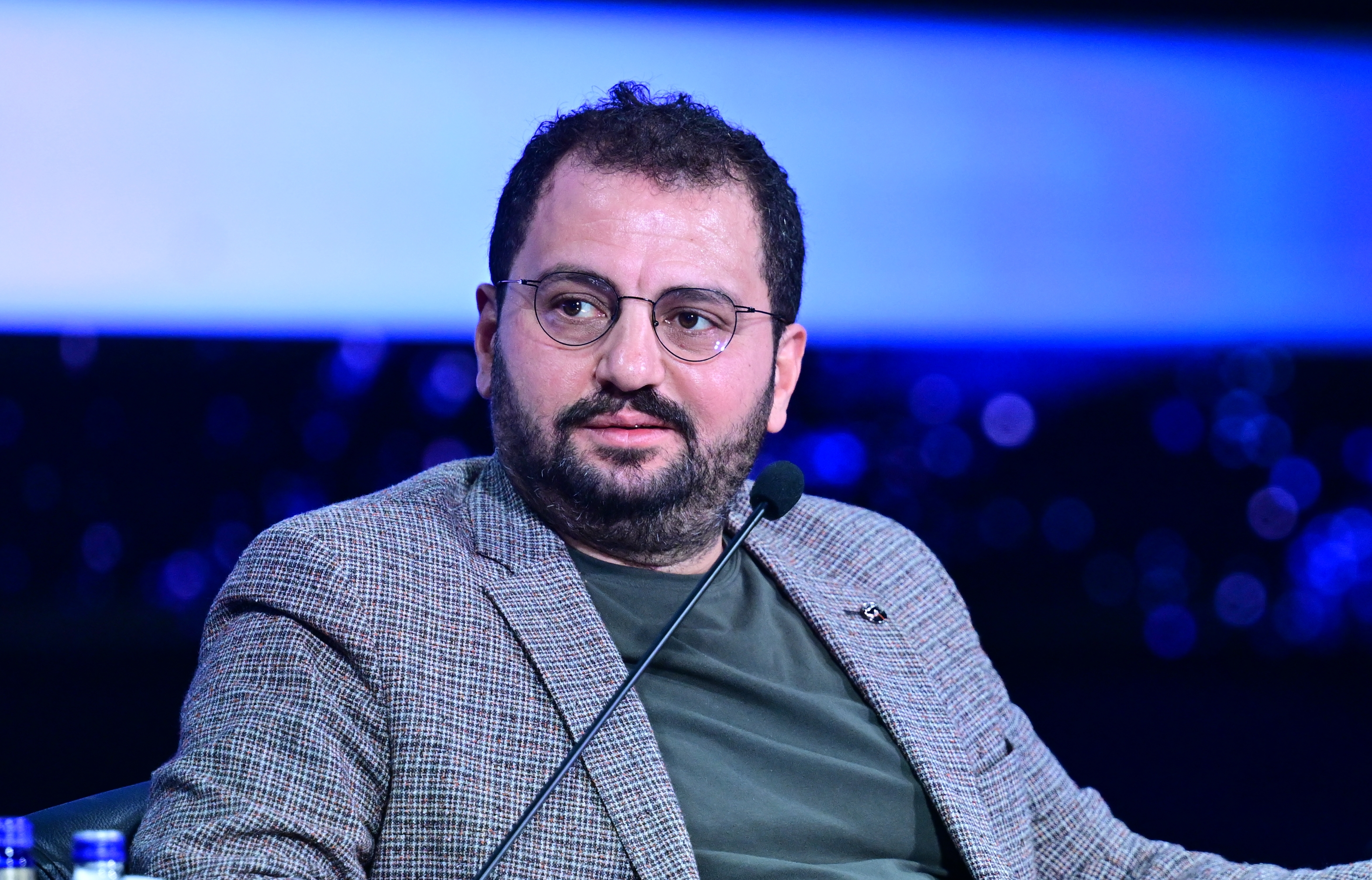
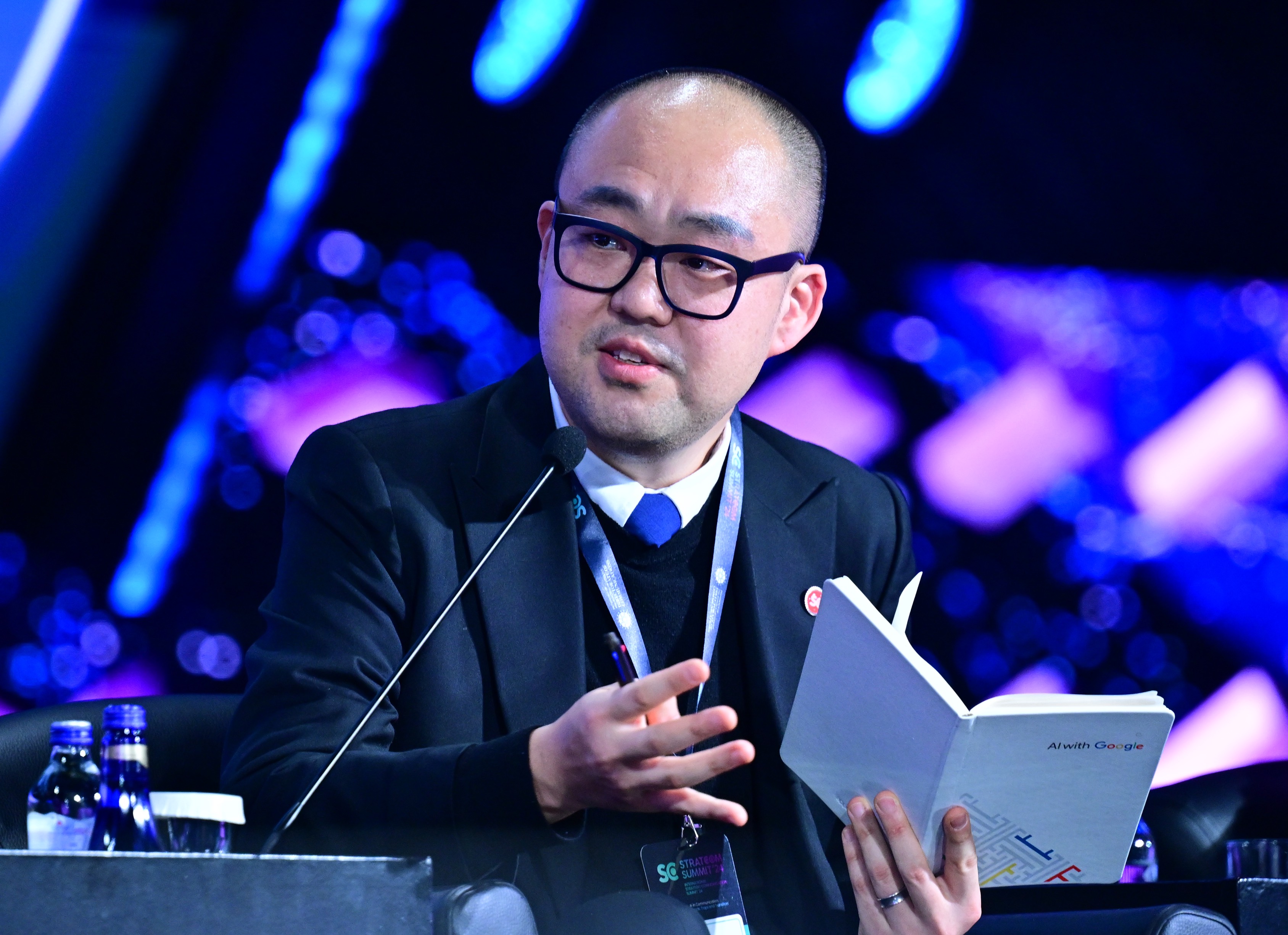
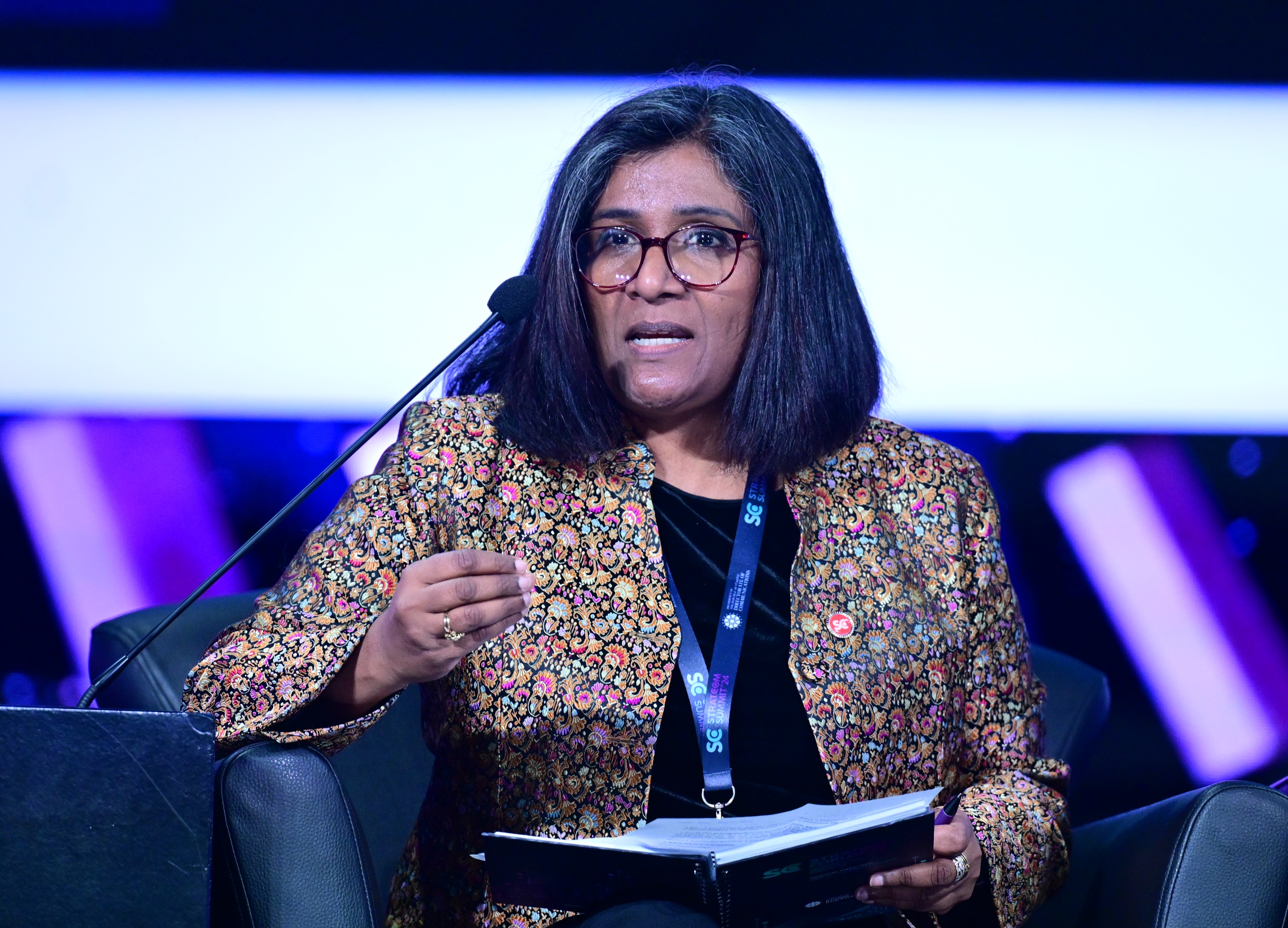
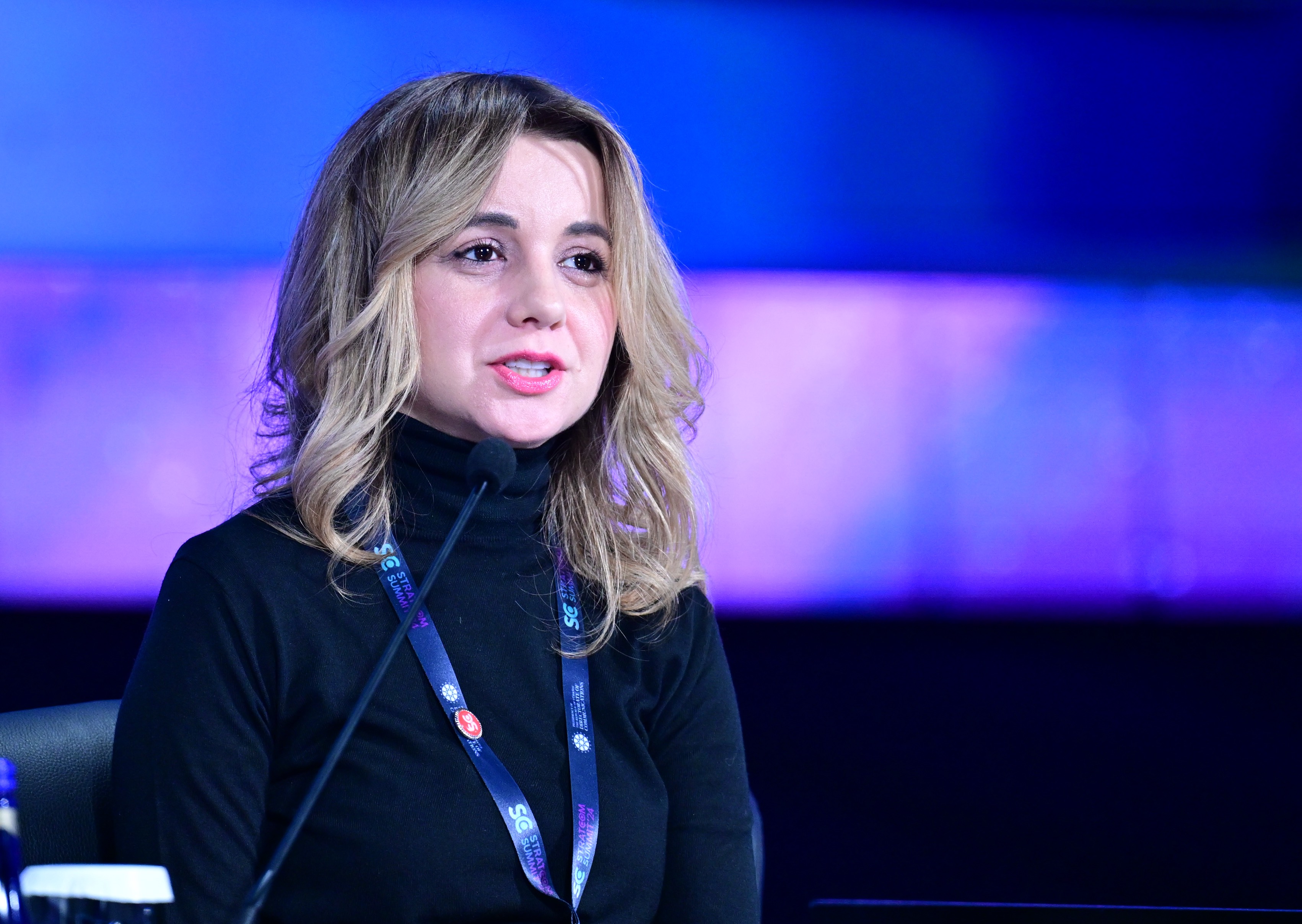
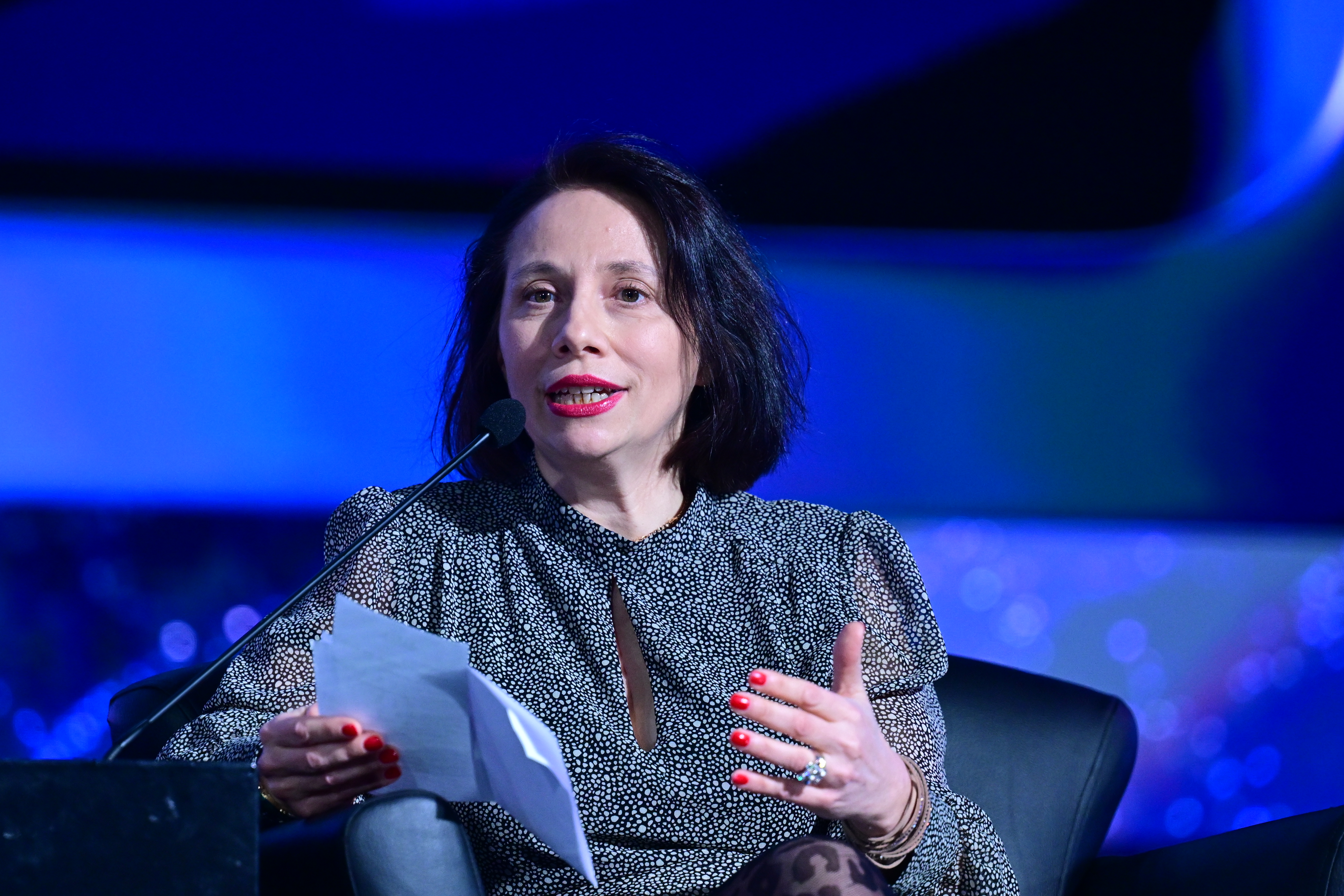
At the fourth International Strategic Communication Summit (Stratcom Summit'24) organised by our Presidency's Directorate of Communications under the theme "AI in Communication: Trends, Traps and Transition," a panel titled "AI’s Impact on Journalism: Balancing Accuracy, Objectivity, and the Threat of Deepfakes" was held.
At the panel moderated by Foundation for Political, Economic and Social Research (SETA) Washington DC Executive Director Dr Kadir Üstün, Prof. Melodena Stephens from the Mohammed Bin Rashid School of Government, Presidency of the Republic of Türkiye Directorate of Communications R&D and Project Coordinator Assoc. Prof. İsmail Çağlar, AVA Research & Consulting Director Anca Daciana Goron, AJP News Agency Multilingual News Team Manager Saejin Park, and Jeune Afrique Deputy Editor and Novelist Josephine Dedet participated as speakers.
Prof. Stephens underscored the fact that journalists are accountable for their word choices, pointing out that a single word has the potential to trigger crises or wars.
Stating that words have tremendous power and that only a journalist is capable of using them, Stephens said, "A word can trigger wars, mend broken hearts or give hope. I believe that this is the most critical distinction between AI journalism and journalism. Indeed, artificial intelligence is capable of employing words in a selective manner; however, it lacks emotions and sentiments."
Stephens stated that another critical characteristic that sets journalists and reporters apart from artificial intelligence is that "they are aware of the ability to determine what to say and what not to say."
Stephens underscored the distinctive role of journalists in the comprehension and interpretation of events, asserting that "journalists have the power to change people's minds and hearts."
Noting that a passion for the truth, validating information, and establishing a trusting relationship with the source are crucial factors for journalists, Stephens said:
"This trust can be established by artificial intelligence; however, it can also be destroyed in an instant. An AI product is verified hundreds of times, and this verification is carried out by people. This means that a product created with artificial intelligence is still in need of human verification. The use of artificial intelligence is increasing by the day. On the other hand, we don't know the source of the data. What you can do in 25 years can be done in a few minutes. How do we verify this data? We cannot return to the past and search for this in a dark box. We have to do it with technology once again."
"As the Directorate of Communications, we support artificial intelligence initiatives"
Assoc. Prof. Çağlar stated that throughout history, people have initially reacted to every technological innovation with amazement and admiration and that the same excitement is currently being felt in the face of artificial intelligence.
Çağlar noted that as the Directorate of Communications, they have been discussing and researching how artificial intelligence works, what is behind it, as well as its ethical aspects and went on to say:
"Algorithms stand out on the technological side of artificial intelligence. We engage in ethical questioning on algorithms. Today, we are talking about algorithmic neutrality in the world, Türkiye, and the Directorate of Communications in relation to artificial intelligence. We are discussing how to overcome the biases that have infiltrated the algorithms, and we are working on solutions."
Çağlar stated that the Directorate of Communications is committed to supporting artificial intelligence initiatives and assisting artificial intelligence entrepreneurs in addressing ethical concerns.
Stating that artificial intelligence users lacking extensive technical expertise should understand the background of it, Çağlar added:
"All AI entrepreneurs should understand the background of it. As an institution, we are addressing artificial intelligence from its technical, ethical, cognitive and intellectual perspectives, analysing it, and advancing our endeavours in this direction.
Emphasising that upholding impartiality and accuracy in the face of the deepfake threat entails its own challenges, Çağlar noted that new emerging technologies are imperative to expose deepfake scams.
AVA Research and Consulting Director Anca Daciana Goron stated that governments and institutions use artificial intelligence both for useful purposes and as the most powerful manipulation tool.
Emphasising that artificial intelligence in the wrong hands leads to serious victimisation, Goron said, “I think we are still in the early stages of the threat posed by deepfake. I would like to be optimistic, but the threat is obvious when we look at the current situation. We are discussing technologies that can access human thought. It will alter not only one's face but also one's voice. It will escalate into a much more dangerous process, resulting in serious victimisation. This needs to be addressed. This is only possible with collaboration.”
''Artificial intelligence is slowing the learning curve of young journalists''
AJP News Agency Multilingual News Team Manager Park discussed his active use of artificial intelligence as a journalist.
Park stated that they have used artificial intelligence to edit and shorten the news, but after a year, serious issues arose.
Emphasising that the information obtained through the use of artificial intelligence must be checked many times, Park said, “It has become apparent over time that there is a risk of providing false information. As a result, after such a process, we had to return to our traditional understanding of news.”
Park stated that artificial intelligence is slowing the learning curve of young journalists and underlined that it essentially serves to preserve the process of passing along knowledge from more senior and experienced people to newcomers.
Declaring that artificial intelligence is a double-edged sword, Park said, ''When used by a successful reporter, it works incredibly well; when used by an inept reporter, it causes disaster."
Jeune Afrique Deputy Editor and Novelist Josephine Dedet discussed the dangers of deepfake content, stating that deepfake content is produced about a wide range of people, from American presidents to famous actors, and that refuting them is a lengthy process.
Dedet noted that artificial intelligence serves an important function for journalists in terms of information access and that it saves reporters time in this regard.
Dedet emphasised that reporters using artificial intelligence must check the content; otherwise, they may face serious problems.