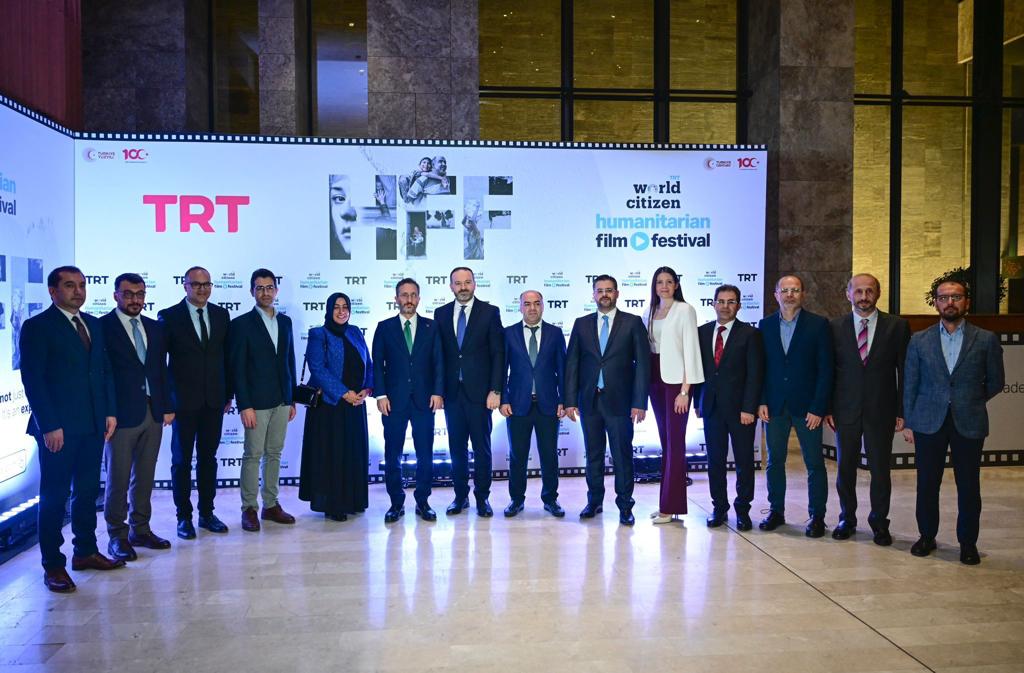
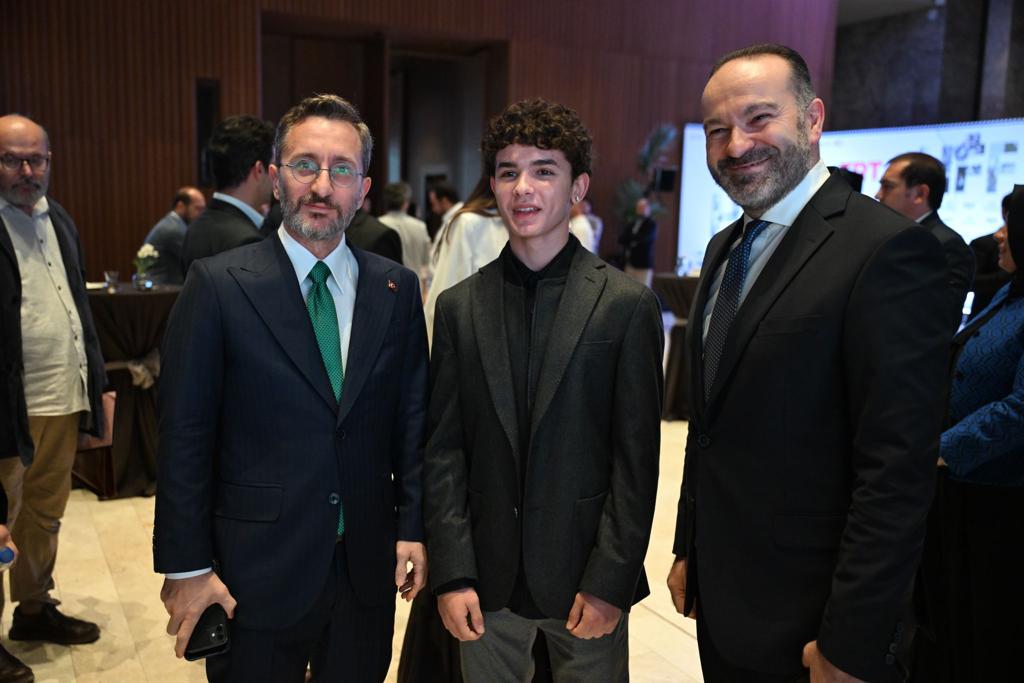
The Presidency's Director of Communications, Fahrettin Altun, delivered a speech at the "Humanitarian Film Festival" award ceremony organised by TRT World Citizen, and said, "Such events, with the power of art, serve as a reminder of our responsibility and moral duty as humans in this world."
Director of Communications Altun commenced his address at the Atatürk Cultural Centre during the "Humanitarian Film Festival" award ceremony hosted by TRT World Citizen by expressing, "We hope that this festival will be an auspicious occasion for all humanity, as it represents a significant embodiment of TRT's human-oriented broadcasting policy, which has been diligently pursued in recent years under the motto 'human is the essence'."
Underlining that the entire world is at a critical juncture due to economic crises, pandemics, famine, climate change, and ongoing conflicts, Director of Communications Altun stated that he found this festival, which draws attention to millions of people in pain and despair through the power of art, to be extremely valuable.
Director of Communications Altun said:
There were high hopes that conflicts and crises would largely end and the world would finally be able to live peacefully just before the turn of the 21st century.
With the end of the bipolar world order that emerged immediately after the Second World War, Western politicians and social scientists in particular began to herald the arrival of the twenty-first century as a time of prevailing prosperity and peace.
However, it soon became clear that this herald was all about exporting military conflicts, economic crises, social explosions, and human tragedies largely to non-Western regions. In other words, peace and prosperity were heralded not for all humanity but rather for those societies and groups that aligned with the Western definition of "humanity".
The rest of the world would be left to face its destiny as a battleground for proxy wars, regional conflicts, hunger, and famine. As we approach the end of the first quarter of the 21st century, humanity is confronted with numerous human tragedies, the repercussions of which we feel acutely at the global level, on a scale and diversity unprecedented in history. The suffering that people endure is utterly indescribable. Even today, war and violent conflicts continue to claim the lives of millions of people or, at best, leave them with no choice but to abandon their homes.
According to UN High Commissioner for Refugees data as of mid-2023, approximately 110 million people worldwide are forcibly displaced for various reasons. The UN data at this time unequivocally illustrates the situation that erodes our sense of justice: Low- and middle-income countries host 76% of all refugees and individuals seeking international protection for various reasons.
The more prosperous developed countries, on the other hand, have consistently evaded taking responsibility for the crisis. These populations of irregular migrants, mostly comprised of Syrians, Ukrainians, Afghans, South Sudanese and Myanmarese, unfortunately represent only a fraction of the suffering endured by mankind.
Again today, millions of people are suffering from hunger and famine, lacking access to clean water and even the most basic health services. It is anticipated that 222 million people from 53 different countries will face food insecurity in our world, which is undergoing the greatest food crisis in modern history as a result of conflicts, climate change, and global recession. Hundreds of thousands of people are struggling to live as homeless even in the world's most developed countries. As a result, crime rates are rapidly rising in many areas, causing social disruptions that can last for decades and result in the loss of generations.
According to OECD data, there are approximately 600,000 homeless people in the United States alone. Furthermore, millions of people today face constant oppression and violence as a result of their ethnic, sectarian, ideological, or religious affiliation.
One of the most visible manifestations of this is the rise of Islamophobia and attacks on Muslims in some Western countries, which are regarded as the cradle of democracy and where it is claimed that there is no interference with freedom of expression and lifestyle.
Children forcibly driven to the front lines of conflicts by terrorist organisations such as the PKK/YPG and DAESH, and children working as labourers at profit-driven large corporations, on the other hand, are another tragedy revealing the human condition today. Similarly, the plight of women, who face discrimination and violence simply because of their gender, is the unseen face of the twenty-first century world. All of these elements comprise the general humanitarian landscape of the twenty-first century, on which great hopes are placed. Many international organisations and many civil initiatives are highly specialised in keeping such statistics.
Keeping statistics and publishing pages of reports full of numbers and graphs, while necessary, fail to raise awareness of the suffering endured by millions of oppressed and needy people in the relatively more privileged segments of humanity.
What it means to be in pain and need can be told to us in ways other than numbers that appeal to our minds, such as the films competing here, through artfully created narratives that touch our hearts. The primary factor that will mobilise us in opposition to humanitarian crises is not catastrophes reduced to numbers or categories but rather a personal comprehension of such suffering and the lives of those who endure it.
The TRT World Citizen Humanitarian Film Festival has assumed the responsibility to achieve this objective since 2018. Therefore, this festival unifies and convenes filmmakers who produce works that will help us understand the oppressed, those in need, and those suffering around the world.
This is precisely why I consider this festival organised by TRT to be extraordinarily beneficial. Due to the fact that such events provide us with the opportunity to observe, comprehend, and empathise with the numerous human narratives that elude our focus amidst our busy daily schedules. It serves as a reminder, in a sense, of our moral duty and responsibility as human beings in this world through the power of art.
With confidence, I state that the Republic of Türkiye's moral heritage has consistently advised us to view the world primarily through the lens of humanity and conscientiousness, which it has established as the horizon of action. Our country's efforts exerted in various geographies through a humanitarian foreign policy have been recorded in history as being of utmost importance in establishing peace, justice, stability, and security on a regional and international scale.
Today, Türkiye is at the forefront of the global pursuit for justice, led by President Recep Tayyip Erdoğan, and boldly declares, "The World is Bigger than Five" and "A Fairer World is Possible." Anatolia is the home for people who are the first to offer assistance whenever they encounter an oppressed person or a person in need, consider sharing what they possess to be the epitome of virtue, and believe remaining silent in the face of injustice to be among the gravest of offences. We have witnessed the latest example of this in Israel's inhumane attacks on Gaza. In an effort to expedite the ending of the conflicts and the ensuing humanitarian tragedy in Gaza, Türkiye became one of the first countries to demonstrate responsibility through tangible proposals, including assuming the role of guarantor for a ceasefire and deploying aid to the region.
While Western countries attempted to legitimise Israel's attacks, which were blatant war crimes, Türkiye united against Israel's oppression in Gaza and other parts of Palestine through the Great Palestine Rally.
Our President Recep Tayyip Erdoğan persists in voicing the truth boldly despite the evident hypocrisy and timidity exhibited by ostensibly democratic and civilised countries. As Türkiye, we are in favour of prioritising the humanitarian approach to solving global and regional issues and keeping diplomatic channels open at all times. Additionally, we prioritise developing preemptive and preventive mechanisms to address crises and tragedies, as well as the efficient use of contemporary instruments of interstate interaction, including public diplomacy. It is heartening that, as part of these efforts, our public broadcaster TRT successfully brought our nation's conviction that it is never acceptable to abstain from responsibility for global peace and stability and its sensitivity to this matter into its own orbit.
Additionally, the TRT World Citizen Humanitarian Film Festival has emerged as an institutional expression of Türkiye's sensitivity regarding this matter. Given the global context that I just laid out, the fact that hundreds of films from around the world have applied to this festival this year is incredibly significant and profound. This film festival is an initiative that sheds light on numerous global issues and humanitarian crises that impact millions of innocent individuals through a unique point of view and by means of the expressive capacity of cinema.
We wholeheartedly support and really hope that this initiative will bring together you, our esteemed producers and directors, who truly serve humanity with the works you create, and that its impact continues to grow day by day.
On this occasion, I would like to extend my appreciation to TRT Director General Prof. Mehmet Zahid Sobacı, all TRT employees who have succeeded in this and similar international events while upholding "humanity and the entirety of humanitarian values", and especially my dear friends who supported this festival.
I am hopeful that this festival will significantly contribute to the promotion of justice, stability, peace, and prosperity for all members of humanity."
TRT Special Award given to Palestine, a poignant symbol of global unrest and conflict
Mehmet Zahid Sobacı, Director General of TRT, stated in his address at the ceremony that the festival is a venue for showcasing and rewarding productions that stir emotion, thought, perception, and response through their narrative, cinema, and exploration of human issues. Noting that the TRT Special Award had been given to Palestine, the region where horrific massacres occurred and which is a poignant symbol of global unrest and conflict in the world, Sobacı emphasised the significance of narrating the experiences of those whose cries go unheard and stated, "We must guarantee diversity, abundance, and the inclusion of eight billion individuals in the story, content, and international broadcasts. Given this context, our festival acquires a more profound significance. I am referring to recognising humanitarian crises as a global predicament and striving to develop solutions; demonstrating that a fairer world is indeed possible; and being willing to advocate for others."
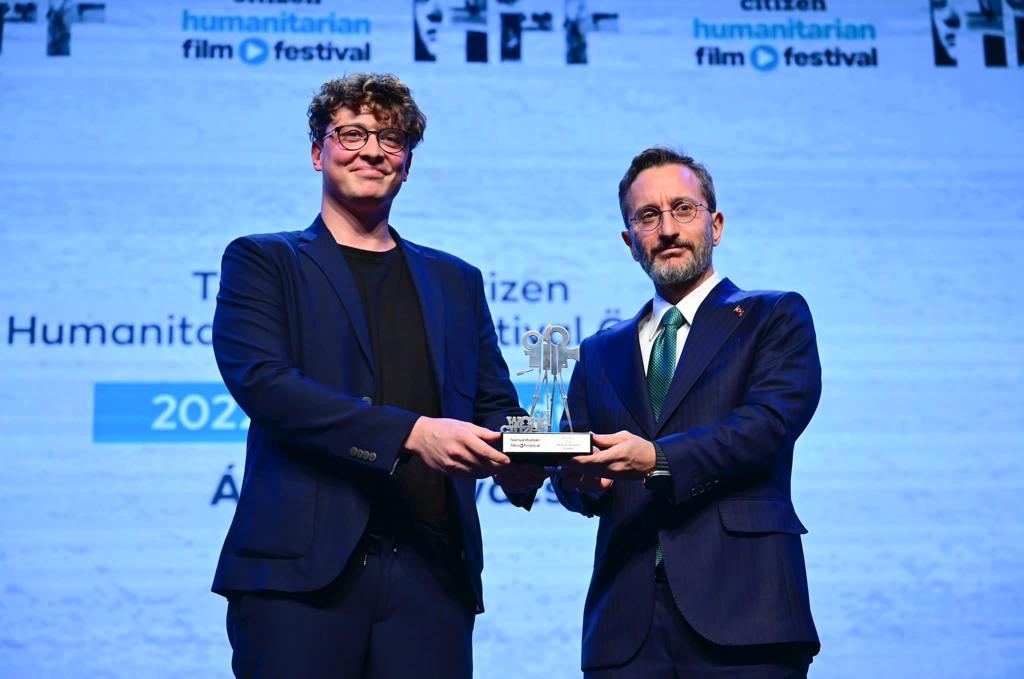
"Branka" directed by Ákos K. Kovács awarded the first prize
The festival, held for the fifth time, honoured the following filmmakers: Ákos K. Kovács of Hungary was awarded the First Prize for his film "Branka", Alireza Kazemipour of Iran was awarded the Second Prize for "Split Ends", and Samir Karahoda of Kosovo was awarded the Third Prize for "Displaced". "The Sprayer" by Farnoosh Abedi of Iran received the Climate Awareness Award, while "Night" by Ahmad Saleh of Palestine received the TRT Special Award.
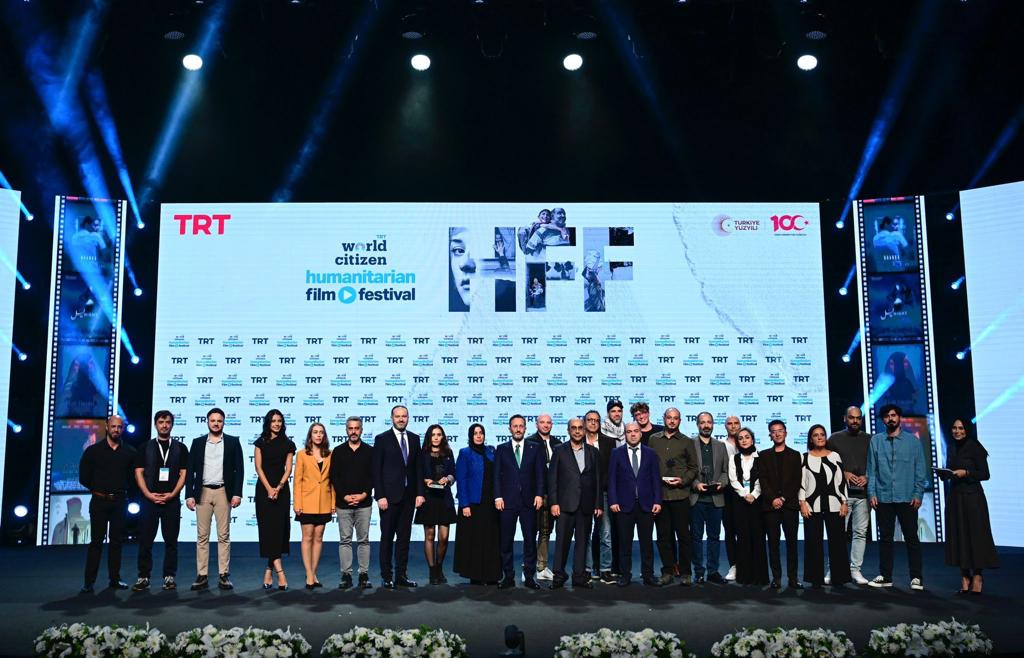
The award ceremony concluded with the participants and winners gathering for a family photograph, during which Palestinian director Ahmad Saleh, unable to attend in person, conveyed his message through a pre-recorded video.