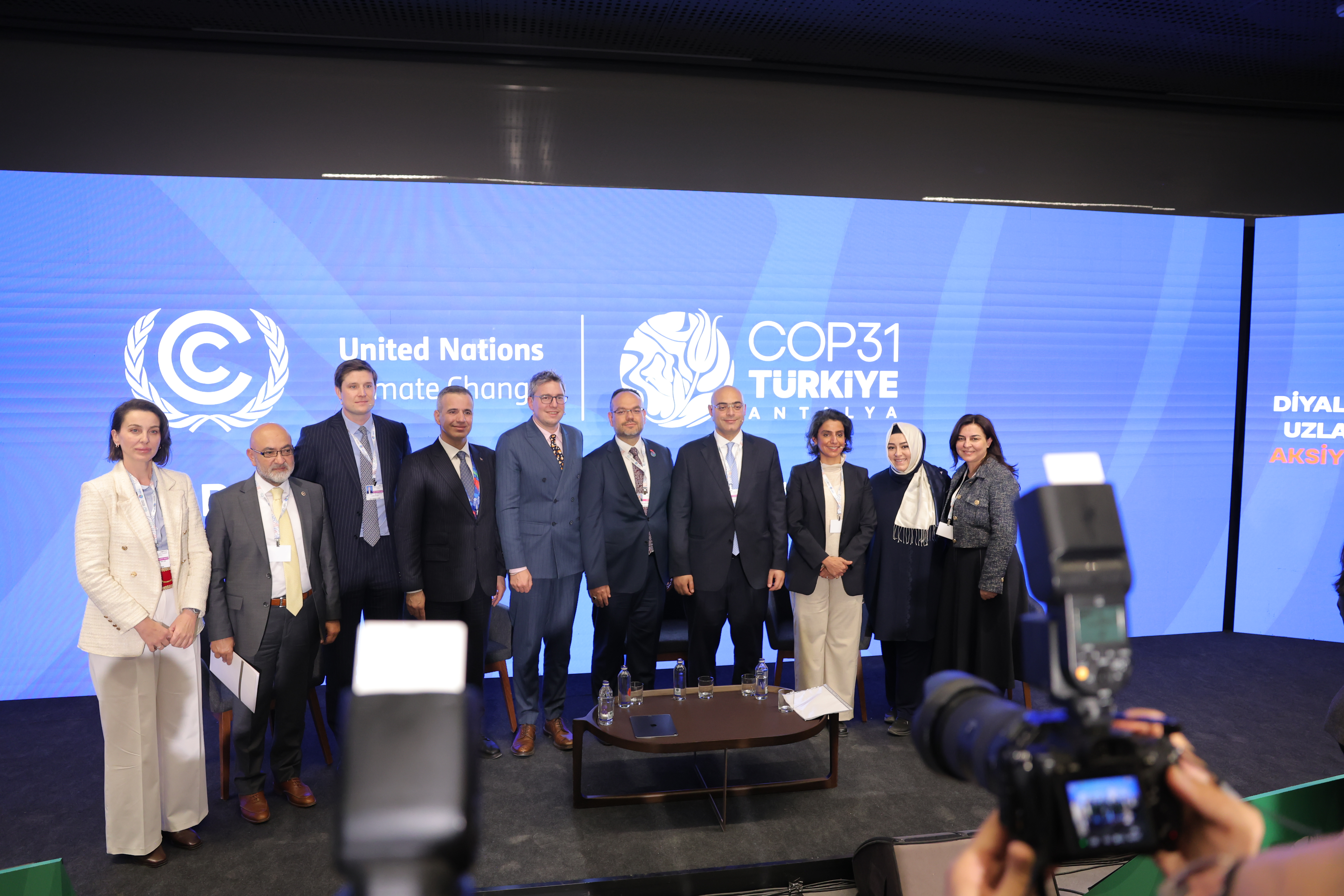
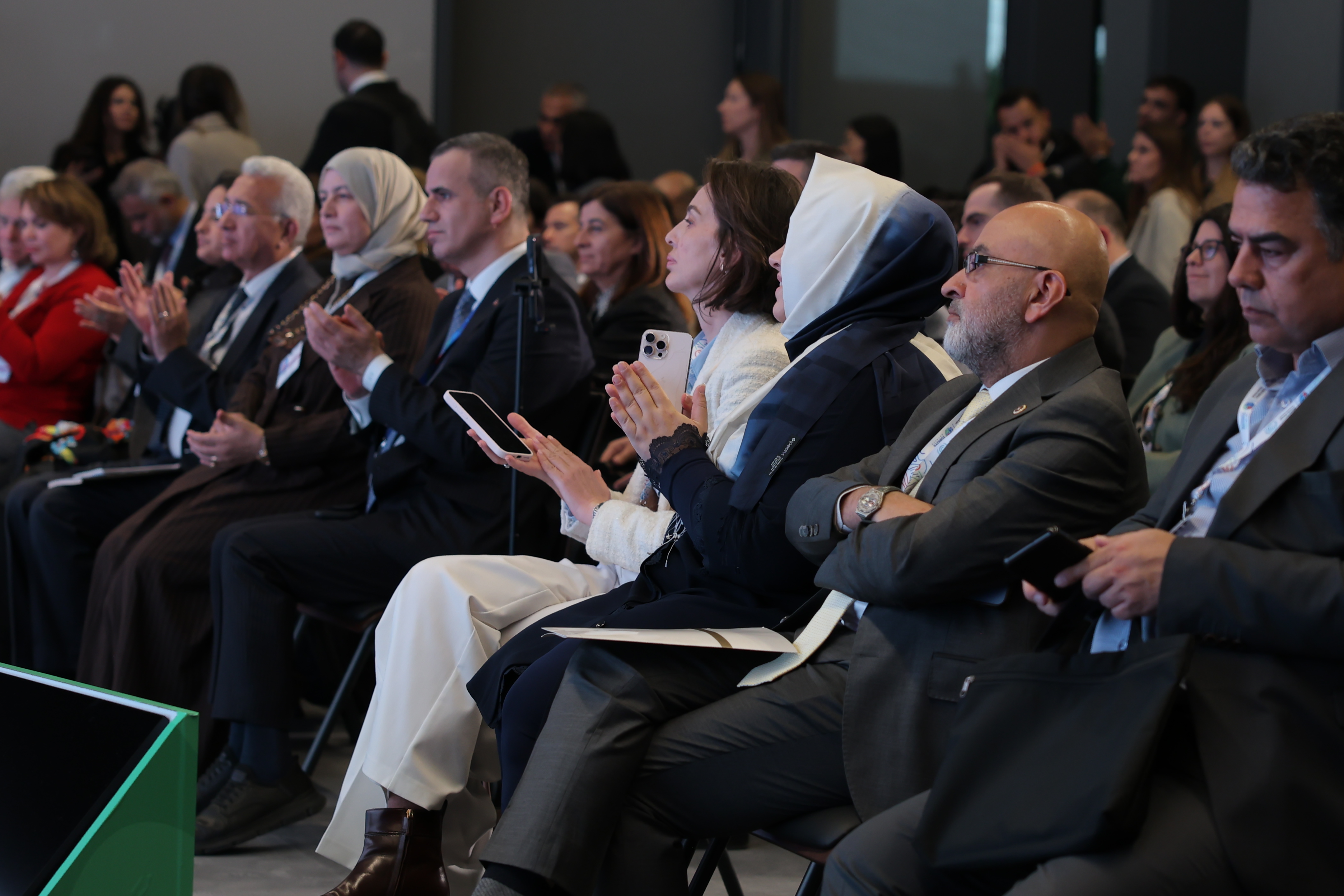
At the panel organised by the Directorate of Communications as part of COP31, discussions focused on the role of parliaments in translating global climate commitments into national policies, international cooperation, and country experiences in implementing climate policies.
The panel titled “A Roadmap for Parliaments: How Can Global Climate Commitments Be Implemented at the National Level?”, organised by the Directorate of Communications as part of COP31, was held in Antalya on 10 November 2026.
Parliamentarians from Europe, the Middle East and the Gulf region gathered at the panel hosted by the Directorate of Communications. During the session, countries shared their experiences in translating global climate targets into concrete national policies and legislative arrangements, as well as the role of parliaments in developing and implementing climate policies.
The panel was moderated by Jordan Morgan, the Director of Programmes at Forward Thinking. The panel featured Sven Clement, Chair of the Board of the Parliamentary Network on the World Bank & IMF and a Member of Luxembourg's Chamber of Deputies; Alia Al Khaled, a member of Kuwait’s National Assembly; Tuba Durgut, an AK Party MP for İstanbul; and Egyptian MP Dr Ahmed Fayed as speakers.
Speaking at the panel, Sven Clement, Chair of the Board of the Parliamentary Network on the World Bank and IMF and a Member of Luxembourg's Chamber of Deputies, emphasised the importance of supporting international commitments in the fight against climate change through national legislation, adequate financing, and effective oversight. Clement stressed the need to balance environmental targets with citizens' economic and social needs when implementing climate policies, citing examples such as Luxembourg’s climate law, increased climate finance in the budget, and free public transport. He also mentioned the role that parliaments play in budget oversight, ratifying international agreements, and monitoring governments' climate commitments.
Alia Al Khaled, a member of Kuwait's National Assembly, evaluated the common challenges confronting Gulf Cooperation Council (GCC) countries in combating climate change. Pointing to the impacts of high energy consumption, increasing demand for cooling, seawater desalination, and automobile-centric urbanisation on emissions in the region, Al Khaled highlighted increasing energy efficiency, transitioning to renewable energy sources, carbon pricing, and sustainable urban planning as priority policy areas. Moreover, Al Khaled shared a proposal to establish a high-level GCC Environmental Council to strengthen the coordination of environmental policies among GCC countries and emphasised the importance of regional cooperation in developing common standards and monitoring implementation.
Tuba Durgut, AK Party MP for İstanbul, said that, in addition to its environmental impacts, climate change has major implications for the economy, food security, energy systems, and social welfare. Noting that rising temperatures, drought, and water scarcity, particularly in the Mediterranean basin, have made combating climate change even more critical, Durgut stressed the importance of the legislative, budgetary, and supervisory mandate of parliaments in translating the targets under the Paris Agreement into national policies.
Reflecting on Türkiye's efforts to meet its 2053 net zero emissions target, Durgut said that the Climate Law enacted in 2025 was a significant step in strengthening climate change mitigation and adaptation policies. She also outlined the initiatives conducted in the fields of renewable energy, energy efficiency, sustainable resource management, and the circular economy within the framework of strategies and action plans for the 2024–2030 period. Touching upon the initiatives launched under the auspices of First Lady Emine Erdoğan, Durgut emphasised the importance of public awareness regarding environmental protection and sustainability.
Dr Ahmed Fayed, a Member of the Egyptian Parliament, said that political consensus is just as decisive as legislative regulations in combating climate change. Noting that they have drafted three standalone bills in Egypt focusing on carbon governance, measuring the carbon footprint, and expanding green spaces to accelerate the implementation of climate policies, Fayed added that submitting the bills separately was aimed at facilitating consensus among different political parties and members of the parliament.