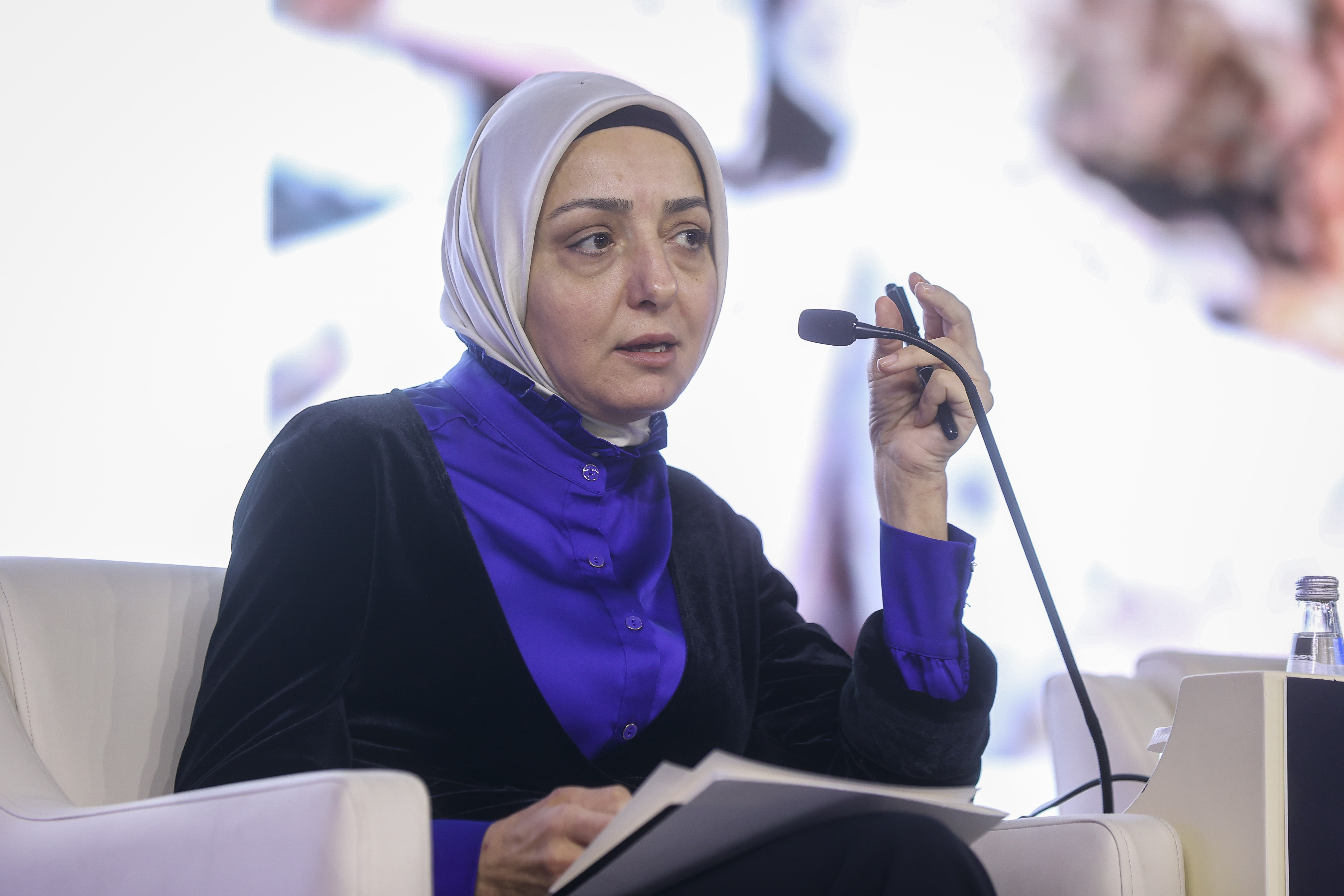
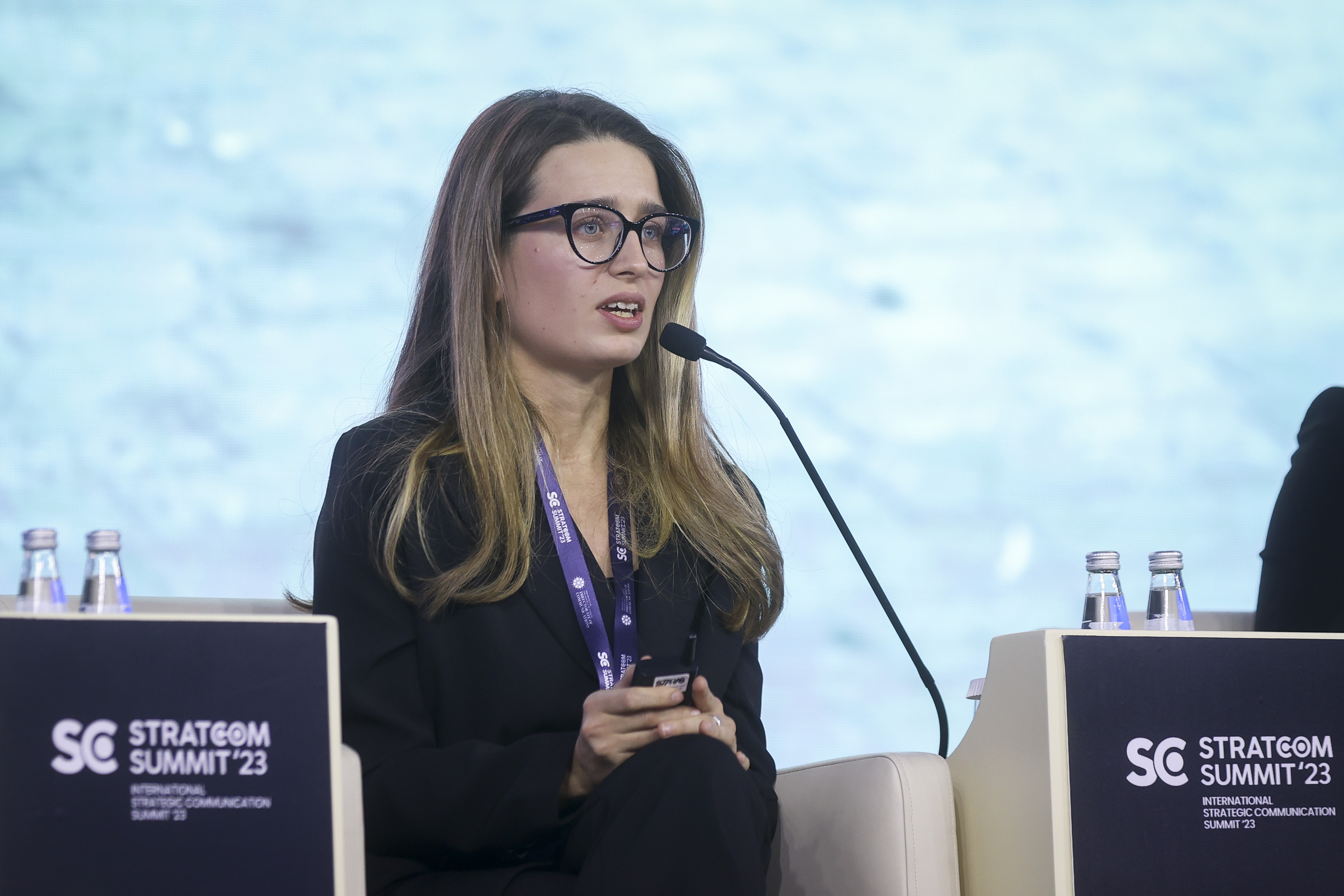
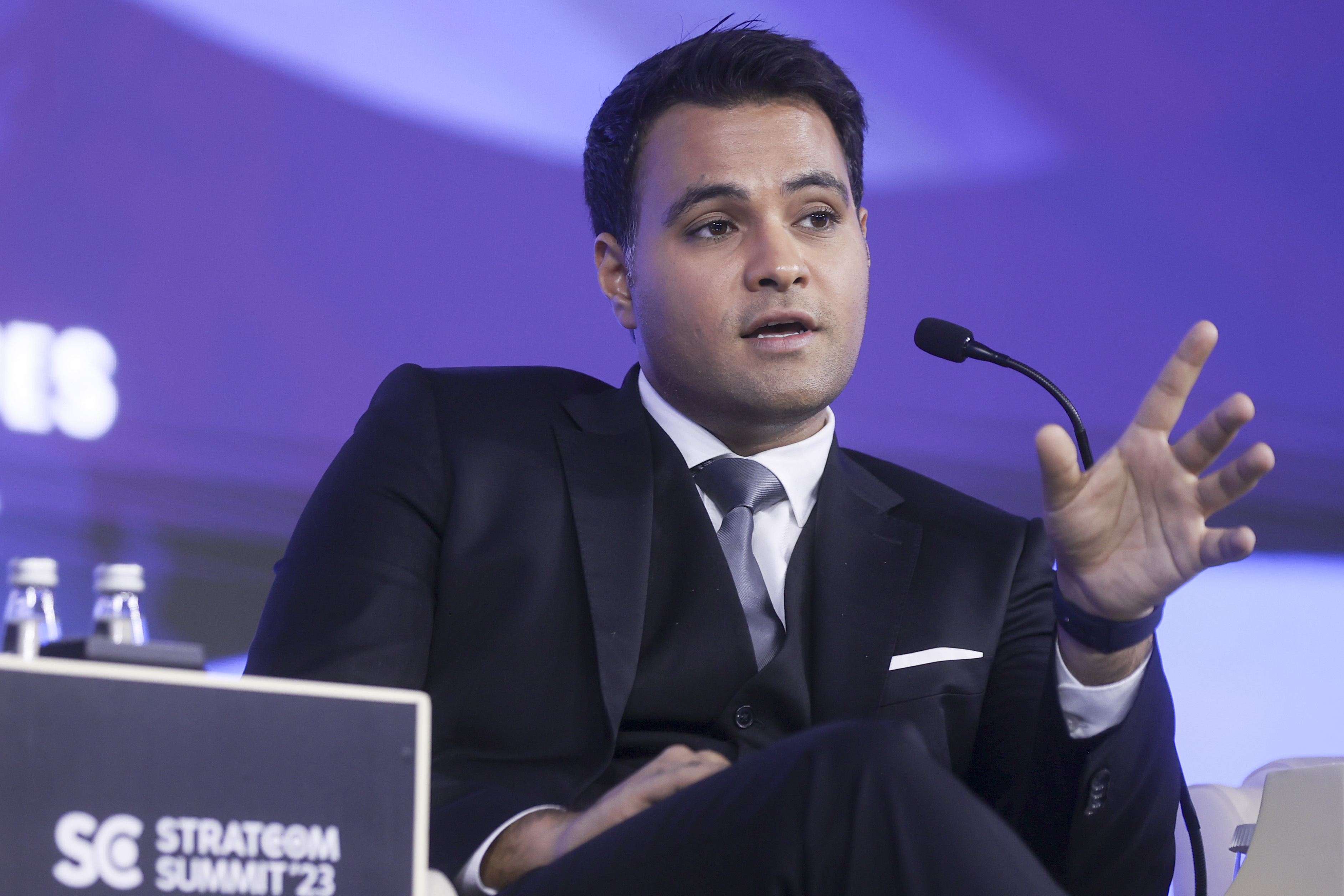
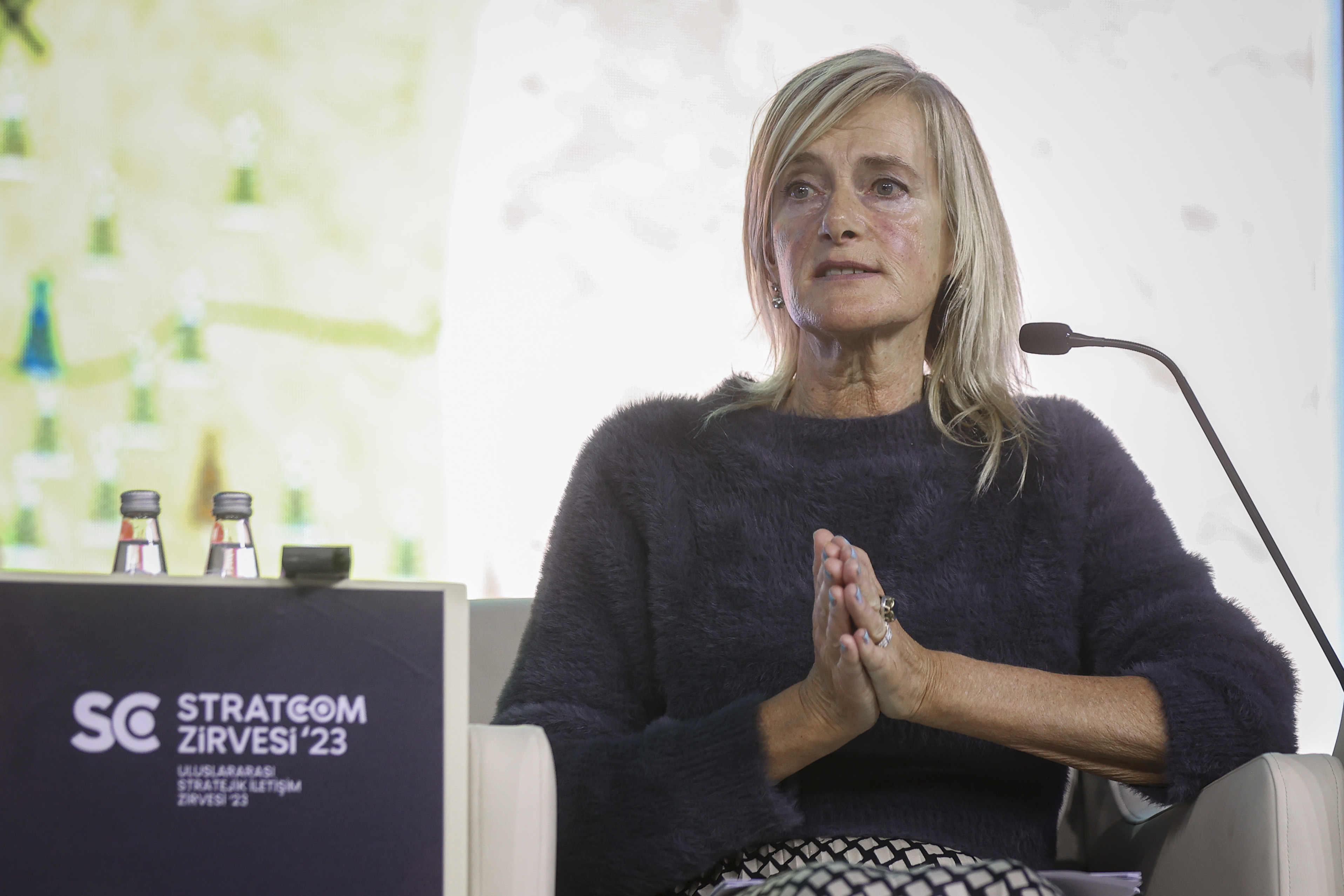
As part of the International Strategic Communication Summit (Stratcom Summit'23), which our Directorate organised in Istanbul, the panel titled "Reality Through the Lens of Truth: Unveiling Humanitarian Crises and Conflicts" was held.
Valeria Giannotta (PhD), the Director of Observatory on Türkiye of CeSPI, moderated the panel and Saadet Oruç, Chief Advisor to the President of Türkiye; Pulitzer Prize-winning journalist Vasilisa Stepanenko; TRT World international news anchor and correspondent Jaffar Hasnain; and researcher Rena Netjes spoke at the panel.
Saadet Oruç began her speech by stating that Israel attacked more than 64 Palestinian journalists in Gaza during their efforts to defend the truth.
Oruç recalled that the Directorate of Communications' Centre for Combating Disinformation became an important source of information and stated, "Today, we are witnessing perhaps the most brutal massacre in the modern era. This massacre is being carried out by Israel."
Oruç stated that Israel was not only attacking Palestinians but also waging war on the truth and that the majority of the international media was acting as a proxy for this situation.
"Some of the international media have become proxies for Israel's fake news and massacre of the truth," Oruç said, adding that the Al Jazeera English channel reflected what was going on in Gaza, whereas CNN International and France 24 presented viewers with a different world.
Oruç said, "With these fake news, Israel is not only playing with the limits of our perception in our modern age; it is also playing with the limits of people's emotions in the modern age. In war, the terminology and words of all cultures, civilisations and humanity are absolutely inadequate to describe what is happening. When we look at the terminology used in the Western media, we see that they are really a proxy of the Israeli war machine."
Referring to a post shared by the BBC channel on the X social media platform, Oruç pointed out that the tweet said "Israelis were killed" but "Palestinians died."
Oruç noted that, while news of the prisoner exchange agreement reached between the Israeli government and Hamas showed Israeli prisoners being released in real time, news of Palestinian prisoners being reunited with their families was not reported in the Western media.
"We are trying to expose the truth to the entire world"
Vasilisa Stepanenko began her speech by discussing Russia's aggression against Ukraine.
Stepanenko stated that her life has changed since the war began, stating that she was a local reporter before deciding to cover the developments in the war.
Stepanenko presented excerpts from Russia's aggression against Ukraine and said, "This is the reality in Ukraine, and we as journalists are trying to expose the truth to the entire world. We are trying to do our best, even if it is difficult, even if it is very painful to watch."
Stepanenko stated that she preferred to be in war zones to document the facts, convey and publicise what occurred, and also expressed her pleasure to be at the Summit.
"Integrity, impartiality, independence, humanity and accountability"
Jaffar Hasnain stated that ethical and moral values were important and that, as a journalist, he learned the principles of integrity, impartiality, independence, humanity, and accountability.
Hasnain referred to the events between Israel and Hamas, and said, "The way the Western media covers the conflict is really disgusting." He also pointed out that it took 14 days for the Western media to carry the information about the death toll in Palestine on the front page of the newspapers.
Hasnain criticised the conflict's one-sided narrative, emphasising that the events did not begin on October 7 but rather had a history, and added, "International media does not mean Western media. Perspectives from all over the world must be considered."
"The realities on the ground contradict those reflected in the Western media"
Rena Netjes, a researcher, stated in her speech on how to preserve the truth that the Belgian and Dutch media did a good job covering Palestine.
She shared anecdotes from her time in Syria and said, "I have seen that the realities on the ground contradict those reflected in the Western media."
Netjes used the example of the PKK planting explosives in houses in Afrin and the Western media's misrepresentation of events.