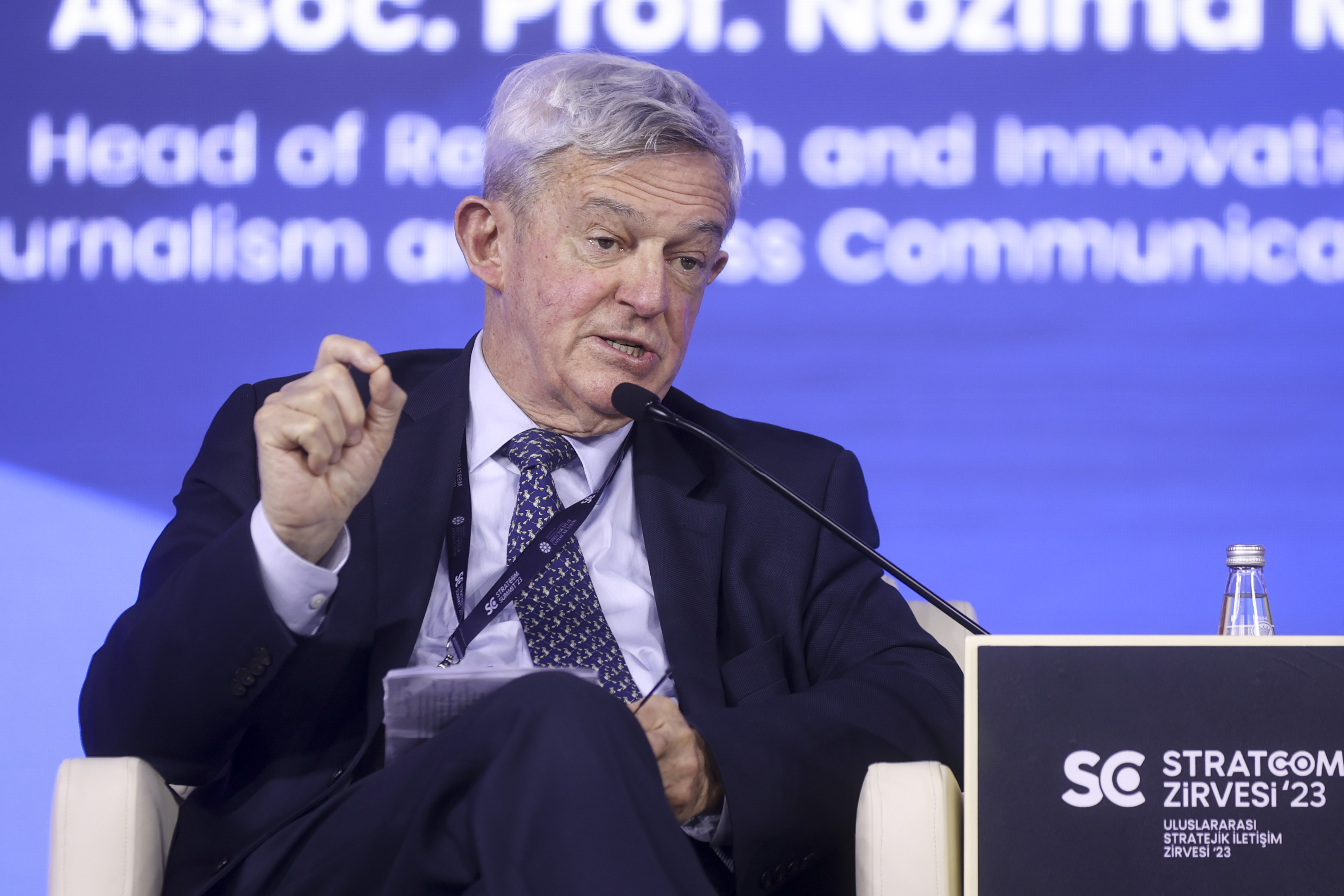
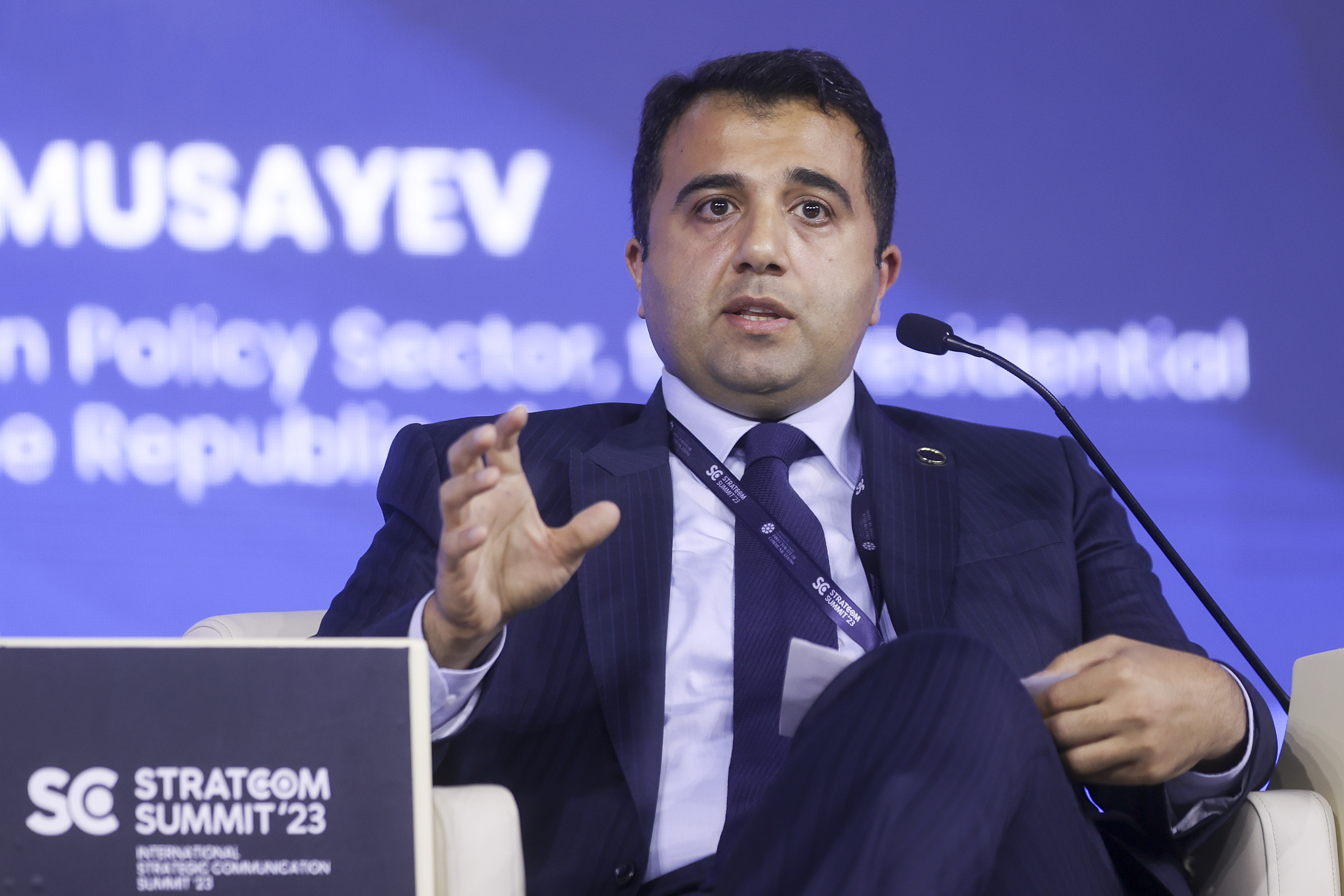
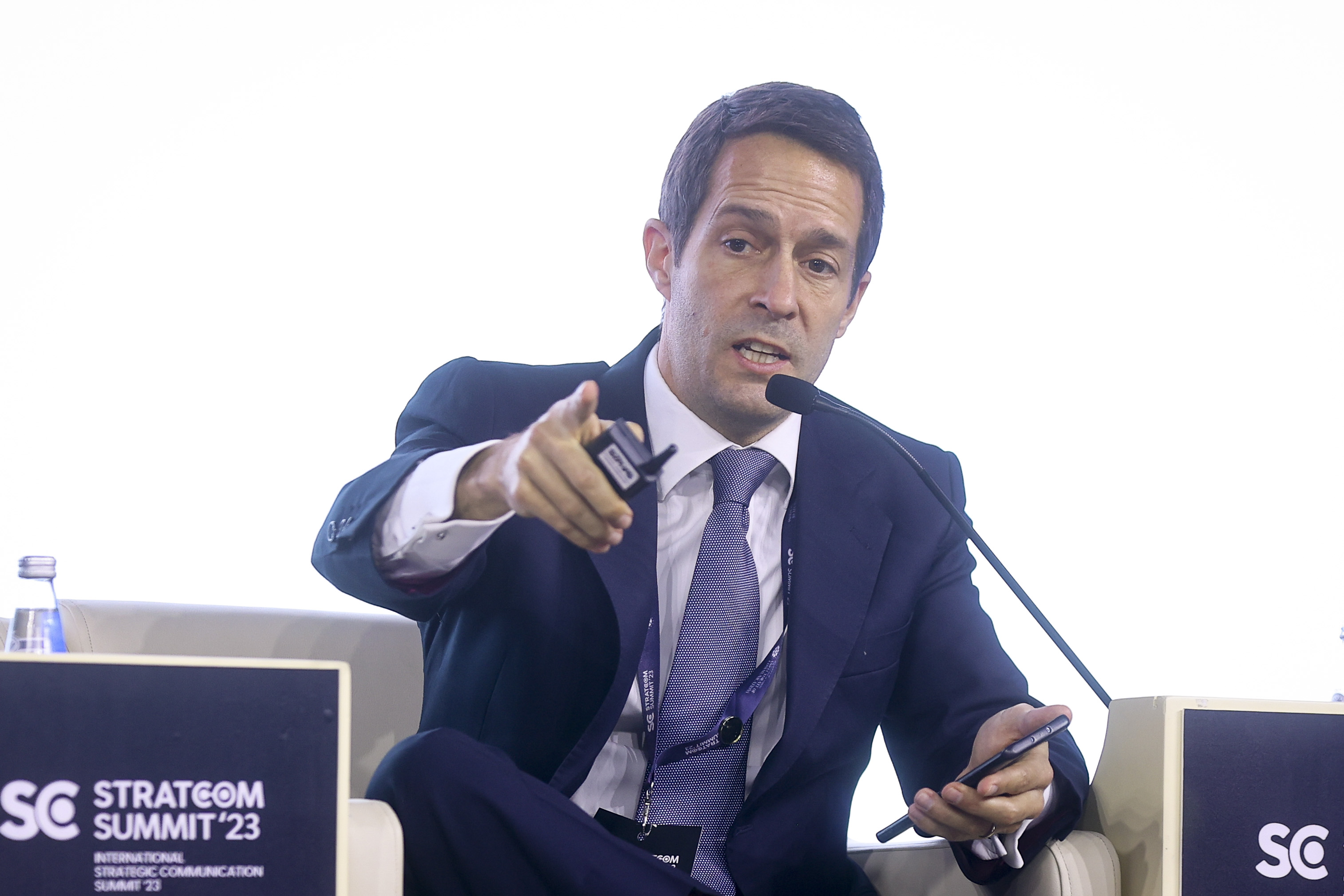
As part of the International Strategic Communication Summit (Stratcom Summit'23), which our Directorate organised in Istanbul, the panel on "New Dilemmas of Strategic Communication: Information Security and Transparency" was held.
Oliver MCTERNAN, Director and Co-Founder, Forward Thinking, Associate Professor Nozima MURATOVA, Vice Rector, University of Journalism and Mass Communications of Uzbekistan, Javid MUSAYEV, Head of the Communication Policy Sector, Administration of the President of the Republic of Azerbaijan and Nicholas BRUNEAU, United Nations Communication Consultant, participated in the panel moderated by Eldor TULYAKOV, Executive Director of the Development Strategy Center of Uzbekistan.
GDELT Project Founder Kalev Hannes LEETARU, who addressed the panel in the session entitled "Stratcom 5.0: New Technologies and Artificial Intelligence," emphasised the significance of news headlines retrieved from Google and the critical role of television as a medium through which one perceives the world.
Leetaru noted that speeches are promptly converted to text due to the development of artificial intelligence programmes, stating, "Machines can read between the lines just as humans can." Let me give you an example. When we ask, take everything mentioned about China yesterday and tell us in a nutshell whether China is strong or weak, beneficial or bad for my country, and machines can do these things now. For example, we could say, tell us briefly about the global investment made in Türkiye. All of this can now be done by machines."
Leetaru stated that artificial intelligence programmes are frequently discussed and that these programmes, unlike humans, do not have a thinking function and only perform one function.
"Journalism has changed over the years in terms of content, form and interaction with the masses"
Mcternan stated, "What is truth for us, what is fake news in today's parlance?" Making this distinction puts us in a difficult situation. It is very easy for information overload to impede us from making the correct analysis."
Mcternan stated that governments and small organisations require a communication strategy and that a clear vision for communication should be created.
Muratova emphasised the importance of people's and societies' security in strategic communication, saying, "Journalism has changed over the years in terms of content, form and interaction with the masses. In such a context, the following should be considered: What strategies should the media develop in order to effectively communicate?"
Muratova stated that fact-checking verification platforms against fake content should be developed and media organisations' internal policies should be changed to respond to the challenges of contemporary problems, and that "it is important for all participants in media environments to come together and exchange information for the truth."
Muratova underscored the importance of incorporating strategic communication as a component of the media, arguing that media literacy and qualified journalism share similar objectives, namely the pursuit of truth.
Musayev emphasised the importance of strategic communication for states and stated that disinformation can only be combated through an information ecosystem that is both accurate and impartial.
Referring to his country's strategic communication strategy during the Karabakh War, Musayev stated, "After Armenia's last provocation, Azerbaijan launched an operation to liberate its occupied lands. We were immediately subjected to massive fake news propaganda from Armenia."
Bruneau stated that social media is the primary source of news rather than traditional media outlets, with Instagram and YouTube being the most popular platforms for information gathering in Türkiye.