As part of the International Strategic Communication Summit (Stratcom Summit'23), which our Directorate organised in Istanbul, the panel on "Communicative Complexities in Hybrid Crises" was held.
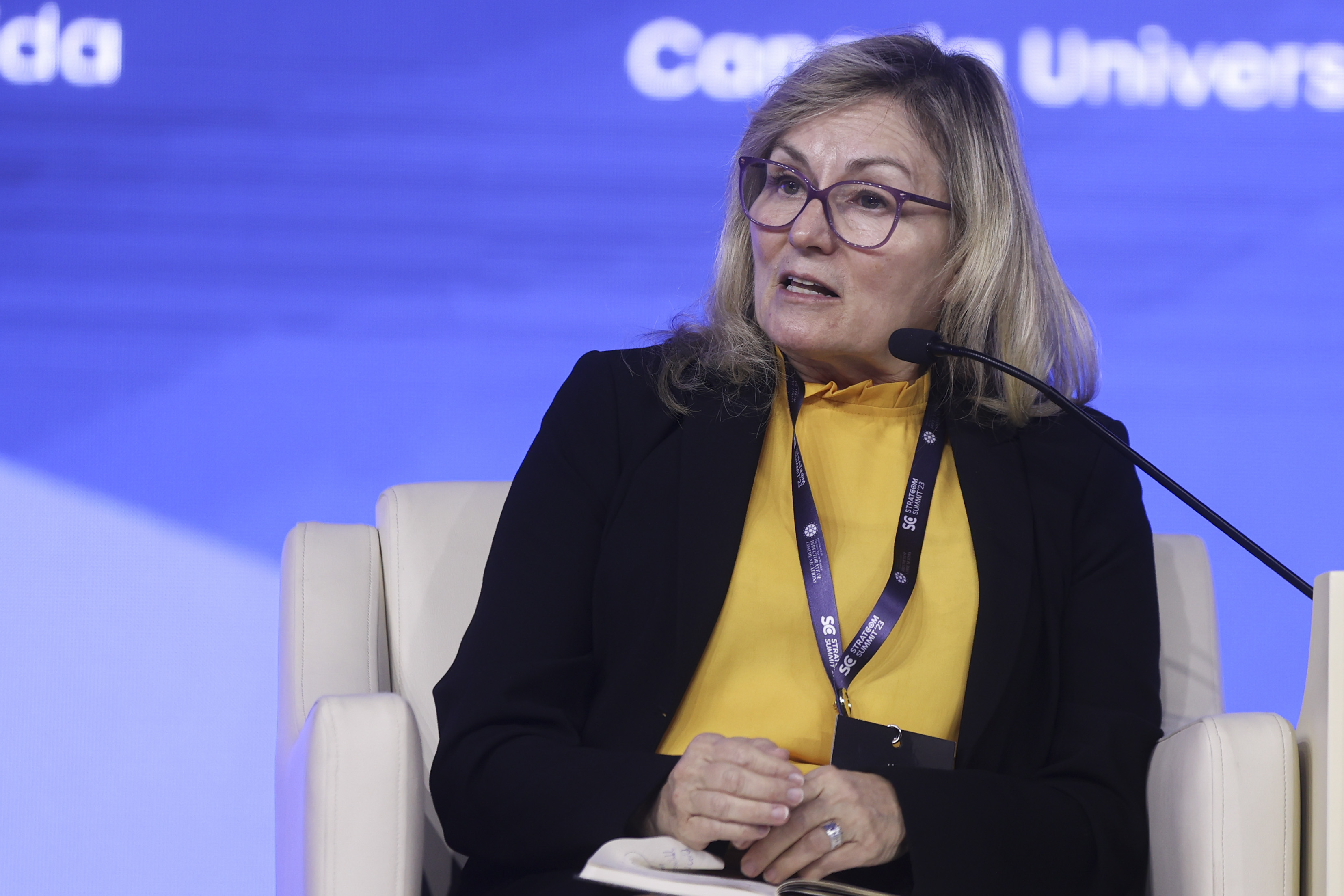
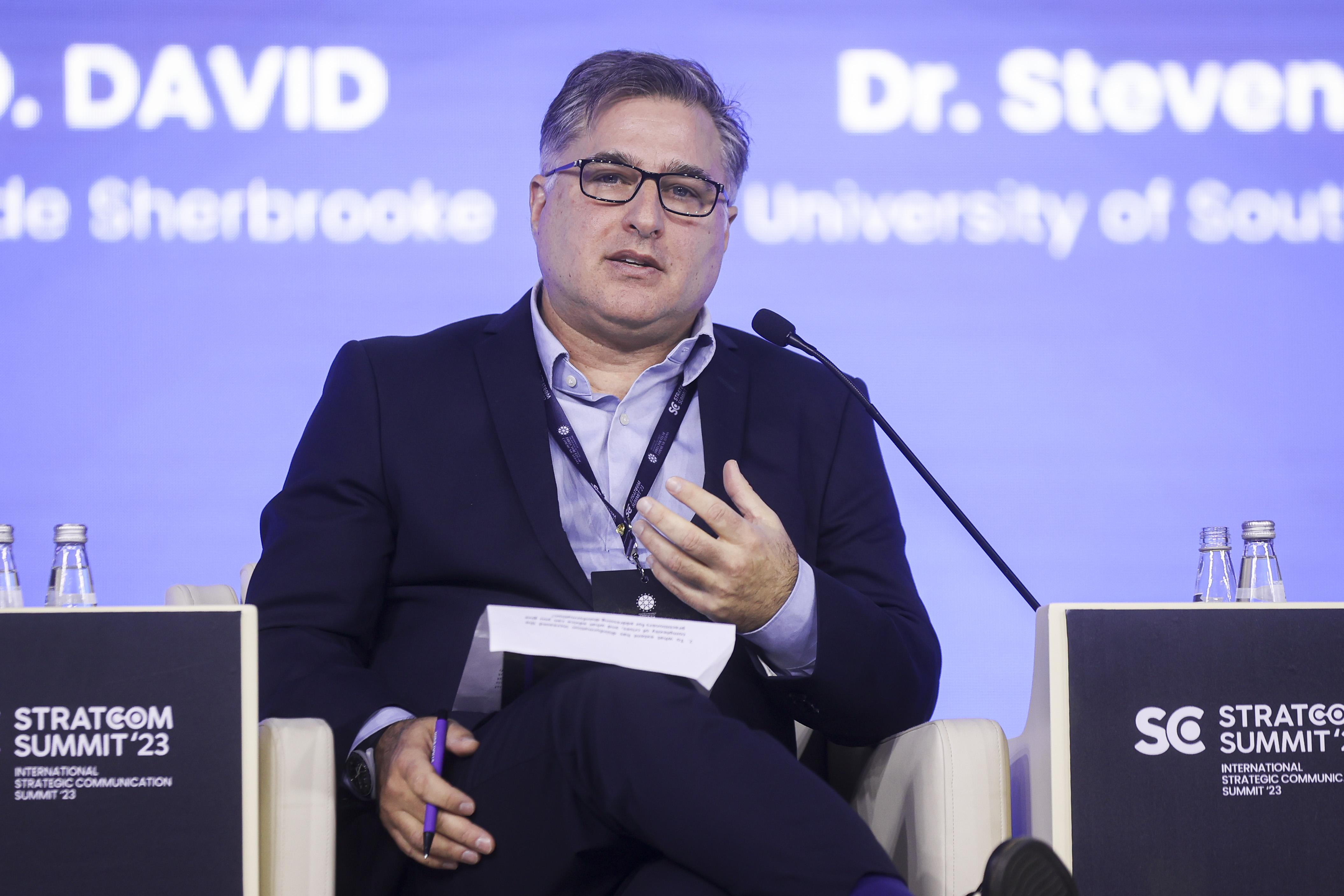
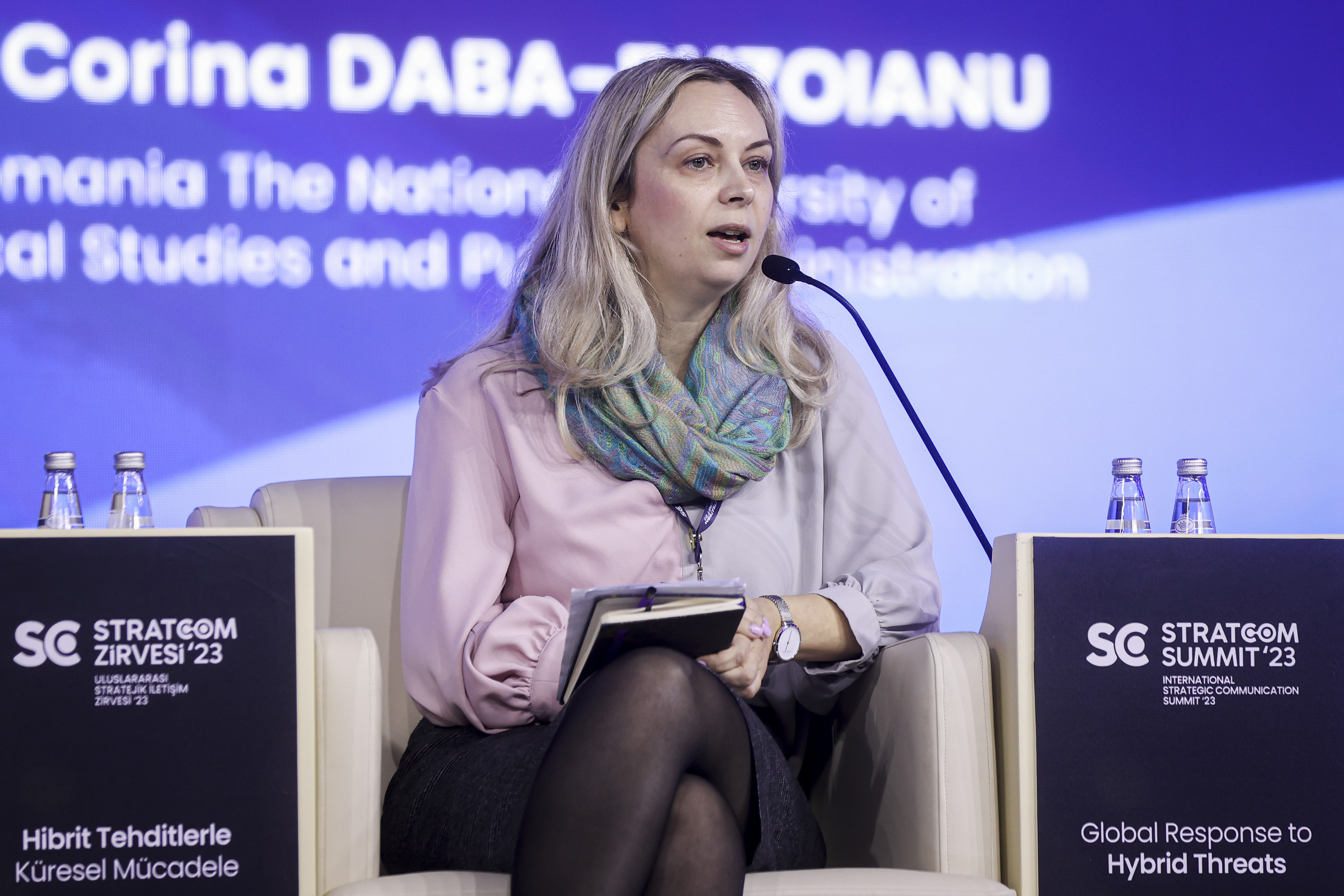
The panel was moderated by Prof. Timothy Sellnow from the University of Central Florida, and the speakers on the panel included Dr. Deanna Sellnow from the same university, Prof. Marc D. David from the University of Sherbrooke, Canada, Dr. Steven Venette from the University of Southern Mississippi, and Dr. Corina Daba Buzoianu from the Romanian National University of Political Studies and Public Administration.
Prof. Deanna Sellnow from Central Florida University explained what was learned before, during, and after the crisis and stated that they implemented different practises and engaged in the decision-making process during these periods.
This, according to Sellnow, is accomplished through dialogues and a repertoire: "We then consider competing narratives. These are coming from different sources, and we are trying to communicate through different communication channels, interpersonally with the public and through channels such as social media."
Noting that the issue becomes a bit more complicated when it comes to hybrid crises and hybrid threats, Sellnow said that certain forms are involved in the process at the time of the crisis and at this point, one has to go back to the theory of confusion.
Sellnow stated that it is imperative for all stakeholders to maintain effective communication with other channels in order to ensure that decisions are made with due regard for environmental, social, and human factors.
Prof. Sellnow stated that after determining the issues at hand, common and permanent benefits should be made available to all stakeholders in order to stay on track. Prof. Sellnow noted:
"Communication and hybrid threats are more than just tools for us; they are a kind of fuel that propels us forward." We must respect the impact we have on each other in a picture in which we both affect and are affected by each other."
Expertise in strategic planning and communication skills in times of crisis
Prof. David of the University of Sherbrooke, Canada, spoke about his research and stated that expertise in strategic planning and communication skills should be clearly demonstrated in times of crisis.
"This is particularly crucial when responding to crises that involve communication-related actions," he said, referencing the COVID-19 pandemic.
According to David, one of the most significant challenges during the pandemic was the attempt by numerous public health officials and experts who served as authorities on strategic communication and attempted to disseminate information on a technical level. David emphasised that complexity constitutes the second challenge.
David reflected on the fact that the internet became an integral part of our lives approximately twenty-five years ago and observed that it has contributed to the complexity of communication.
David continued, pointing out that developing technologies are fragmenting traditional media:
"In addition to the emergence of novel modes of communication, the introduction of algorithms has further complicated social media. Because for many communication strategists, understanding algorithms is an important issue, and we need to talk about artificial intelligence separately. This is a completely revolutionary digital communication strategy that has the potential to create significant gaps in the strategic communication environment; one of the most important aspects of crisis communication is that stakeholders work well together."
""A well-coordinated approach with multiple messages"
Dr Venette from the University of Southern Mississippi stated that a single approach to how stakeholders can be involved during a crisis will not suffice.
"My recommendation is to use a well-coordinated approach with multiple messages. Similar teams and similar ideas can give these messages," Venette said, pointing out the importance of good coordination between these teams.
Venette stated that people can perceive these messages in line with their specific needs and that a single message can prevent this.
Venette stated that different stakeholders and actors should have access to quality, qualified, and reliable information. "(Stakeholders) should be able to select this information according to their needs at the required time," he said.
Venette emphasised that a key advantage of using multiple well-coordinated messages is to "reduce stress".
There are new types of crises as well as new types of audiences
From the National University of Political Studies and Public Administration, Dr. Buzoianu also talked about crisis communication, noting that there are not only new types of crises but also new types of audiences.
"We need to consider the impact of emerging social media platforms and social media on our lives, our economy, and our societies," Buzoianu said, adding that crisis communication on social media involves many questions rather than answers.
Buzoianu said, "There is much we don't know about the role of social media in crisis communication and crisis, but what we do know is that social media is empowering communities and audiences like never before. In the past, these audiences and neighbours were ignored, left behind, and remained silent, but now they can be part of the conversation and start talking about something they know nothing about. The fact that they have a voice and can reach other people makes them feel more empowered."
Buzoianu indicated that this is one of the roles of social media, and it is an important issue that needs to be addressed.