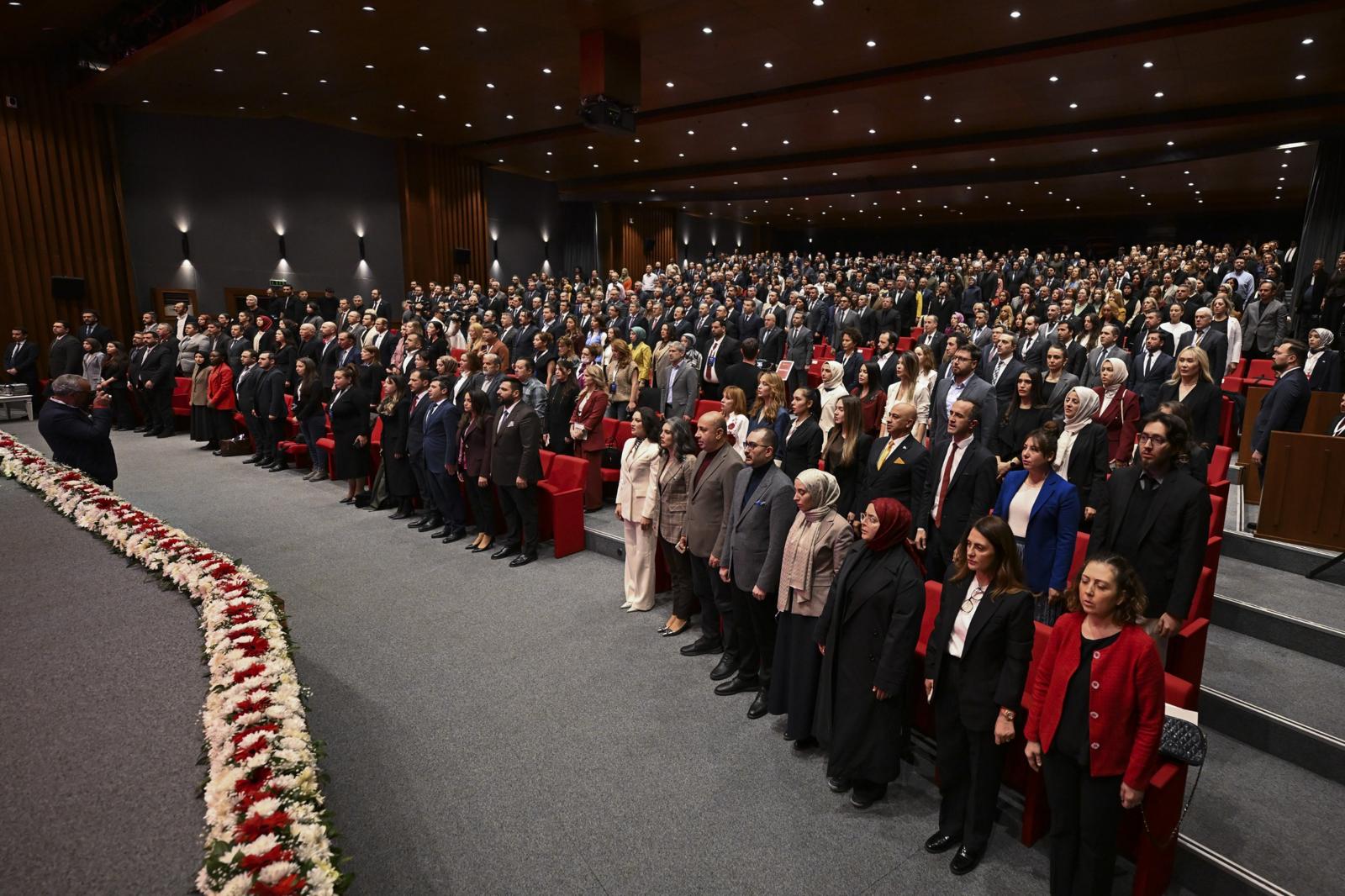
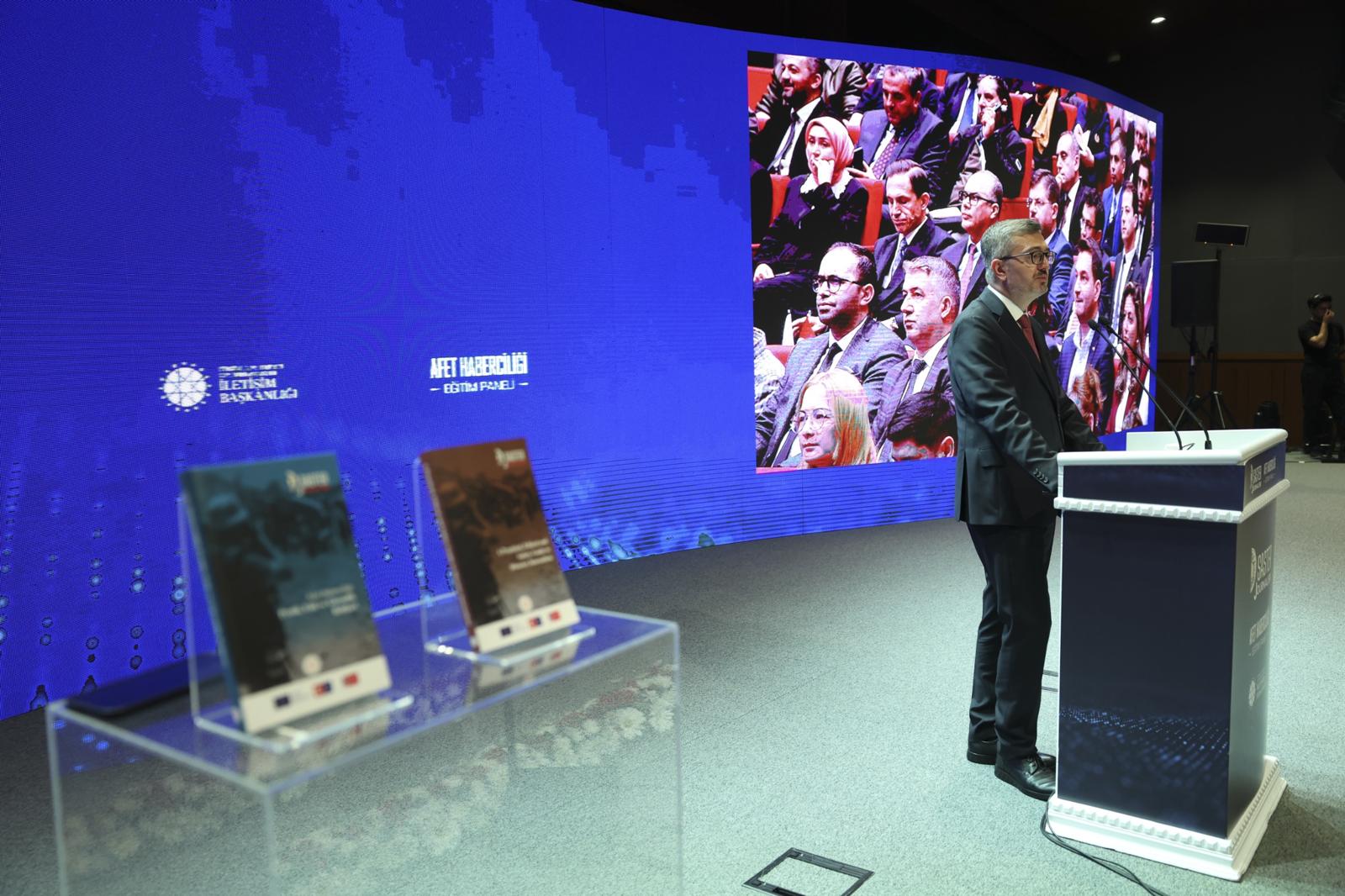
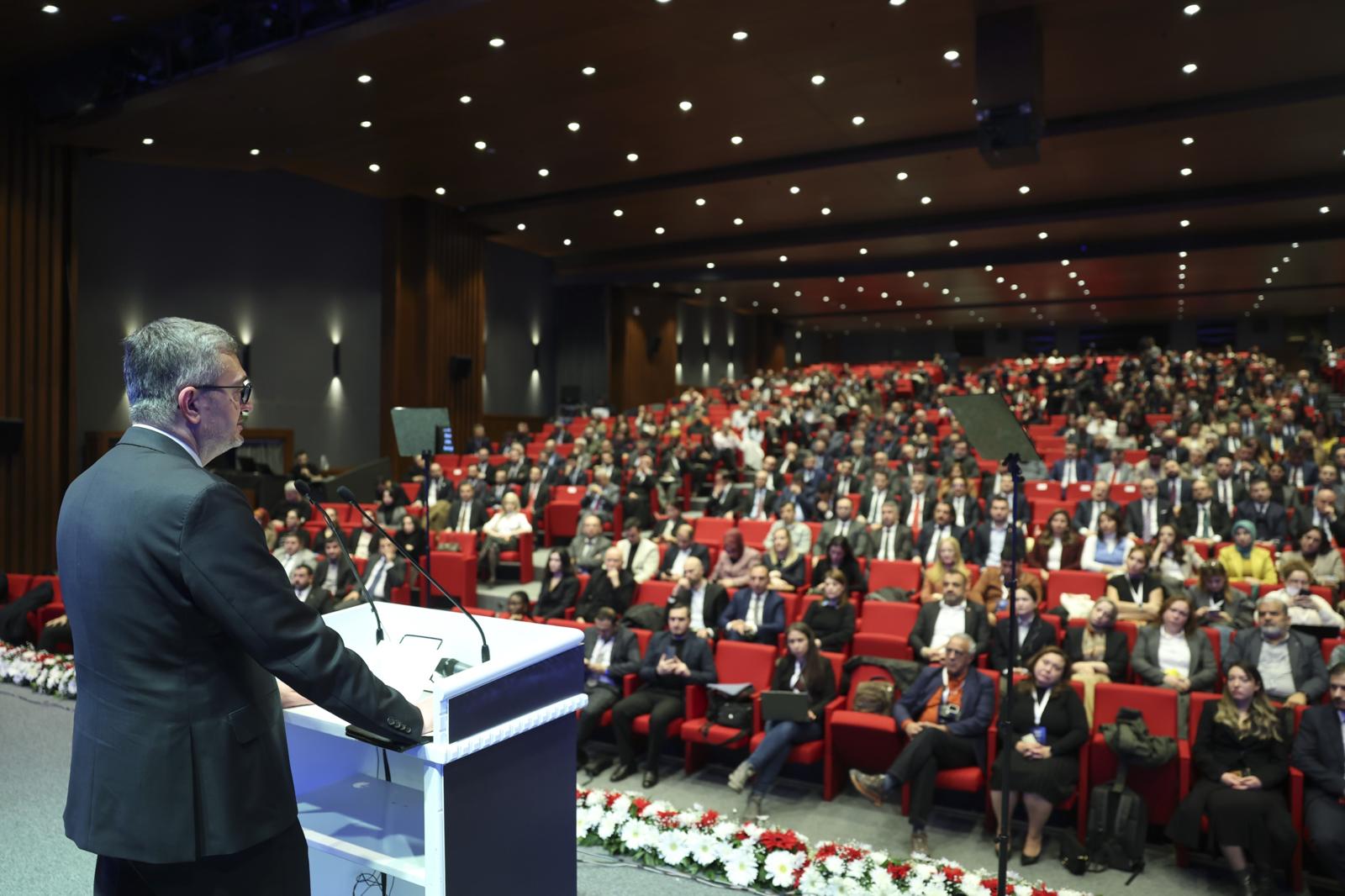
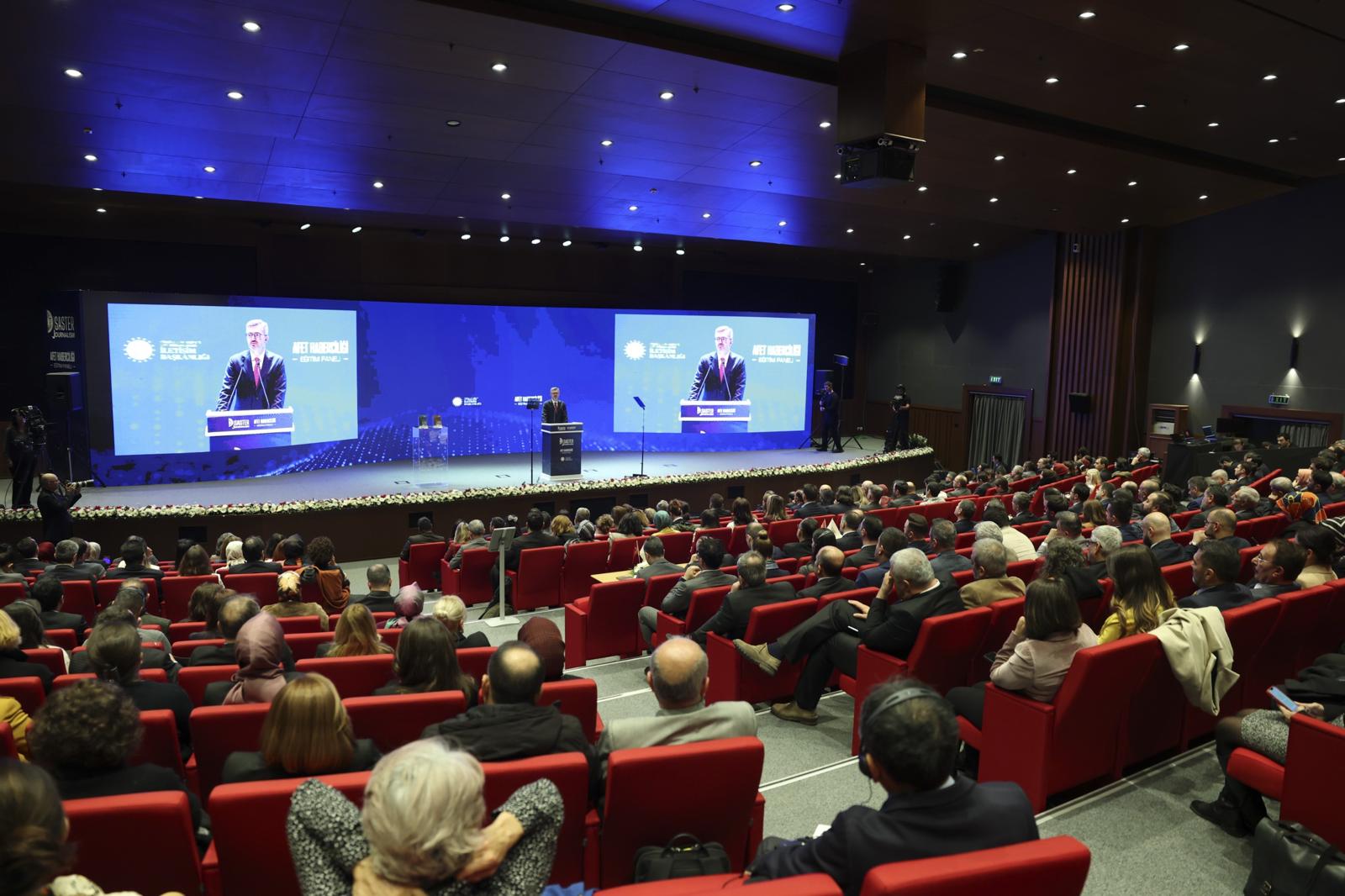
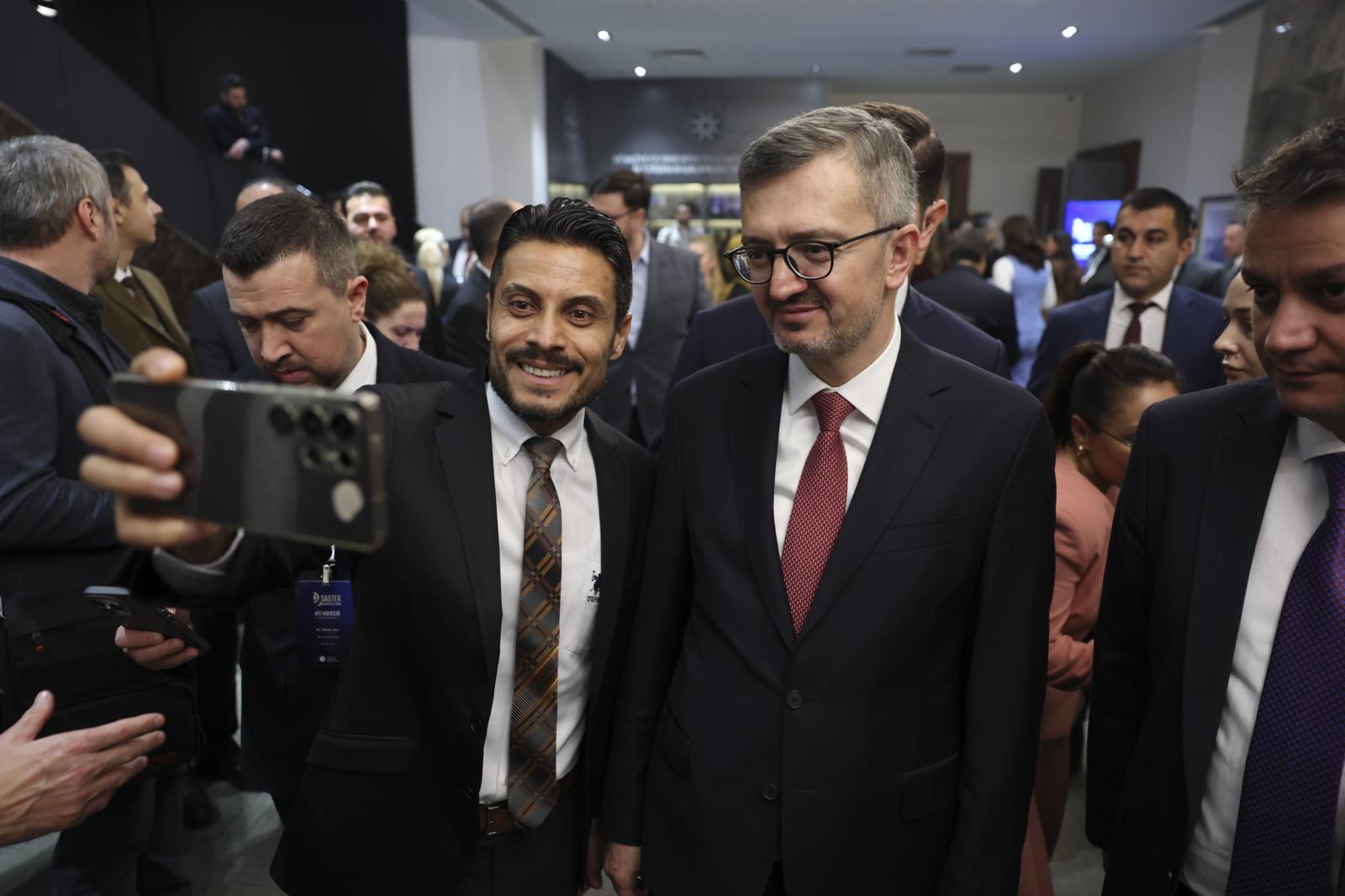
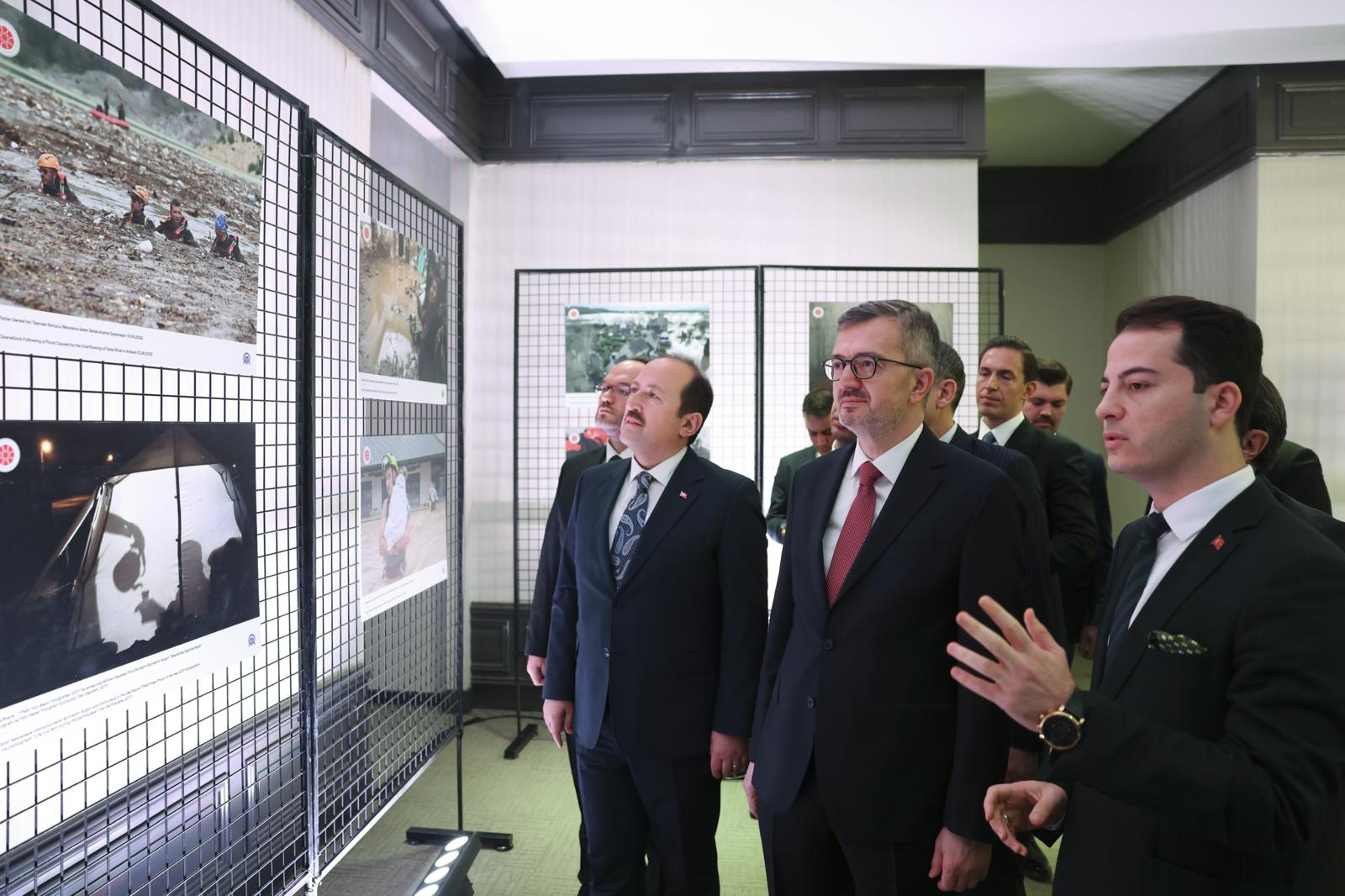
Presidency's Head of Communications Burhanettin Duran emphasised the indispensability of a human-centred and justice-oriented media system in his speech at the Disaster Journalism Training Panel organised by the Presidency's Directorate of Communications.
Head of Communications Duran thanked the project's lead institution, Selçuk University's Faculty of Communication, as well as other partners: the Radio and Television Supreme Council, the Konya Metropolitan Municipality Social Innovation Agency, the University of Primorska from Slovenia, the University of Kyiv from Ukraine, and the University of Vigo from Spain.
Remarking that they attached great importance to all stakeholders, from students studying in the field of communication to sector professionals, from policymakers to scientists, Head of Communications Duran stated that in such a period in which communication permeates and shapes all aspects of life, conducting joint efforts and thinking about and discussing how to manage the future with healthy communication was critical for a healthy communication and media ecosystem.
"A media system that serves the public good and has high standards is indispensable for us"
Head of Communications Duran emphasised that, as an institution, they were working with all their might to strengthen and further develop the country's communication ecosystem in line with the vision of "Century of Türkiye: Century of Communication" set forth by President Recep Tayyip Erdoğan.
"A media system that is human-centred and justice-oriented, serves the public good, and has high standards is indispensable for us. In this context, we strive to contribute to the practice and theory of communication through the publications and training videos we make, as well as the various seminars, meetings, and events we organise. In tandem, we are developing new grounds for cooperation. I would like to point out that today's panel is notable in that regard. This panel will yield significant insights regarding disaster journalism. Disaster journalism is more than a mere journalistic activity; it is also a field of expertise that concerns social solidarity, public order, state-nation communication, and even the protection of human lives during disasters. In this respect, it calls for great sensibility. It is well known that during times of disaster, people seek information, which is entirely natural. We see that this situation generates a high-volume flow of information; in other words, the requirements of the information age. Such a high-volume information flow, characterised by the prioritisation of speed over verification, can at times lead to consequences that cannot be undone."
"We are now in an era where it is challenging to distinguish fake information"
Head of Communications Duran emphasised that, alongside advancing technology, the communication landscape today is increasingly dictated by speed.
Highlighting that the emergence of innovations across numerous social media platforms and technologies is reshaping global politics, economics, and communications, Head of Communications Duran said:
"We acknowledge the critical importance of this reality. This communication landscape, intensified by the technological rivalry among major powers, increasingly unveils both its risks and the quest for hegemony. We are also aware that, in this context, states have had to establish autonomous strategic communication structures to preserve their national interests and ensure their security. We are now in an era when information is readily accessible, but it is increasingly challenging to distinguish real from fake information. This has become a critical issue, especially given the impact of artificial intelligence. Disinformation, fake and misleading news, and fictional content spread so quickly that depicting various disasters in different locations can sometimes lead to critical perceptions. In such circumstances, having a strategic and integrated crisis communication plan appears to be essential. Our primary responsibility here is to contribute, altogether, to institutionalised media and professional journalists.
Journalism, particularly during disasters, is critical, but journalists must first ensure their safety, then the safety of disaster victims, and position themselves in a way that does not impede but rather facilitates search and rescue efforts. We engage in numerous efforts guided by humanitarian values. I would like to thank press members engaged in disaster journalism for their efforts. They truly work in a challenging environment. This sacrifice would not be possible without a sincere respect for human life. In addition to these efforts, we must value professionalism. Because, while reflecting humanitarian values, we should not be in a non-professional position that may harm them later."
Media literacy
Head of Communications Duran stated that, while journalists and reporters have responsibilities, public awareness on this issue is equally essential.
Highlighting that media literacy emerges as a critically important element, especially during disasters, Head of Communications Duran remarked, "To put it in quotation marks, communication today has become too important to be left exclusively to members of the press. We can see how anyone with a smartphone can suddenly become a reporter. This can occur much faster, particularly during disasters. Therefore, it is highly valuable for those creating content in conventional, digital, and social media to remain aware of how their work will be perceived. We will continue our collaboration to raise media consumption awareness in which sources are questioned, verification mechanisms function properly, and sensitivity to AI-generated videos and photos is heightened."
"Over the course of five months after February 6, we identified and detected nearly 450 instances of disinformation."
Head of Communications Duran noted that, like the rest of the world, Türkiye has experienced exceptional events such as floods, disasters, forest fires, and earthquakes in recent years, the most significant of which were the February 6 earthquakes, dubbed the "Disaster of the Century".
Head of Communications Duran recalled that 14 million people in 11 cities were directly affected by the earthquakes and said, "We lost more than 53,000 of our citizens, which cast the entire country into mourning. Since the beginning of this disaster, we have worked together to heal our wounds in the spirit of national unity and solidarity. On this occasion, I reiterate my prayers for God's mercy on our citizens who died in the disaster, and I extend my heartfelt condolences to their families."
Emphasising that during the February 6 earthquakes, they witnessed the rapid spread of false, inaccurate, and incomplete information and faced severe information pollution and intense disinformation, Head of Communications Duran stated:
"As the Directorate of Communications, we worked to detect disinformation quickly and ensure that our citizens received accurate information. In this manner, over the course of five months after February 6, we identified and detected nearly 450 instances of disinformation. Throughout this period, we worked closely with our stakeholders and media organisations to ensure that the public received accurate information. We established mobile press centres to enable journalists to work in the field. We ensured the necessary coordination for journalists to reach the earthquake zone. We kept the international community informed by accurately, swiftly, and transparently informing international media outlets. We helped ensure that the information and announcements made by official institutions and authorities were disseminated quickly and accurately."
The book “Disaster Journalism” available in 5 languages
Head of Communications Duran stated that they continuously work to guide media professionals and aspiring journalists on disaster journalism.
Head of Communications Duran recalled that in 2024, they published the book Accurate Reporting and Media Ethics in multiple languages and carried out video projects on topics such as disasters, crises, war, health, and judicial reporting, featuring experienced professionals who shared their expertise. They also held the symposium titled “We Hear Your Voice: Journalism in Times of Disaster and Crisis” and continued their efforts with the Disaster Journalism Training Panel.
Head of Communications Duran stated that they will continue to undertake new projects in the coming period, adding, "I particularly attach importance to developing a disaster journalism curriculum that is internationally recognised as part of the current project. I consider the book 'Disaster Journalism', prepared in five languages within this same framework, to be extremely valuable. We will share this book with you. I hope it will be of benefit to both our students and our teacher, as well as to all media professionals pursuing this knowledge. The case studies and recommendations included in this book, which is structured around the themes of practice, ethics and safety, will provide indispensable contributions."
The Presidency's Head of Communications, Duran, expressed his gratitude to everyone who contributed to the panel and worked on the project.
Thanks to contributors
On the other hand, Head of Communications Duran shared a post on his NSosyal account regarding the panel.
In his message, Head of Communications Duran stated:
“I extend my thanks to all participants, first and foremost to Head of AFAD Ali Hamza Pehlivan, who contributed to the “Disaster Journalism Training Panel” organised by the Directorate of Communications. I also thank Selçuk University Faculty of Communication, the project’s implementing institution, as well as the project partners: the Radio and Television Supreme Council, Konya Metropolitan Municipality, the University of Primorska in Slovenia, the University of Kyiv in Ukraine, and the University of Vigo in Spain, for their contributions to the organisation and execution of our panel.”