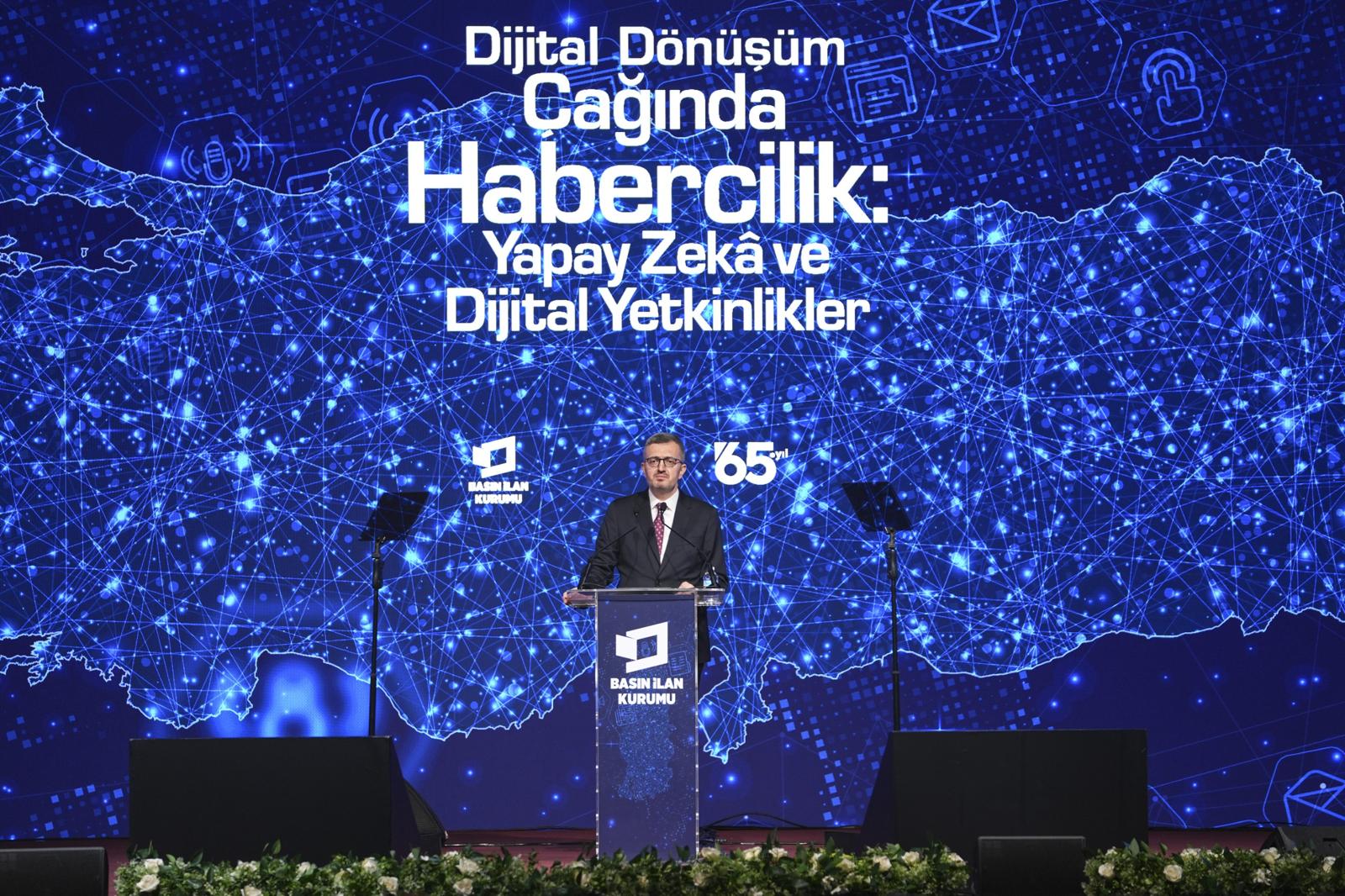
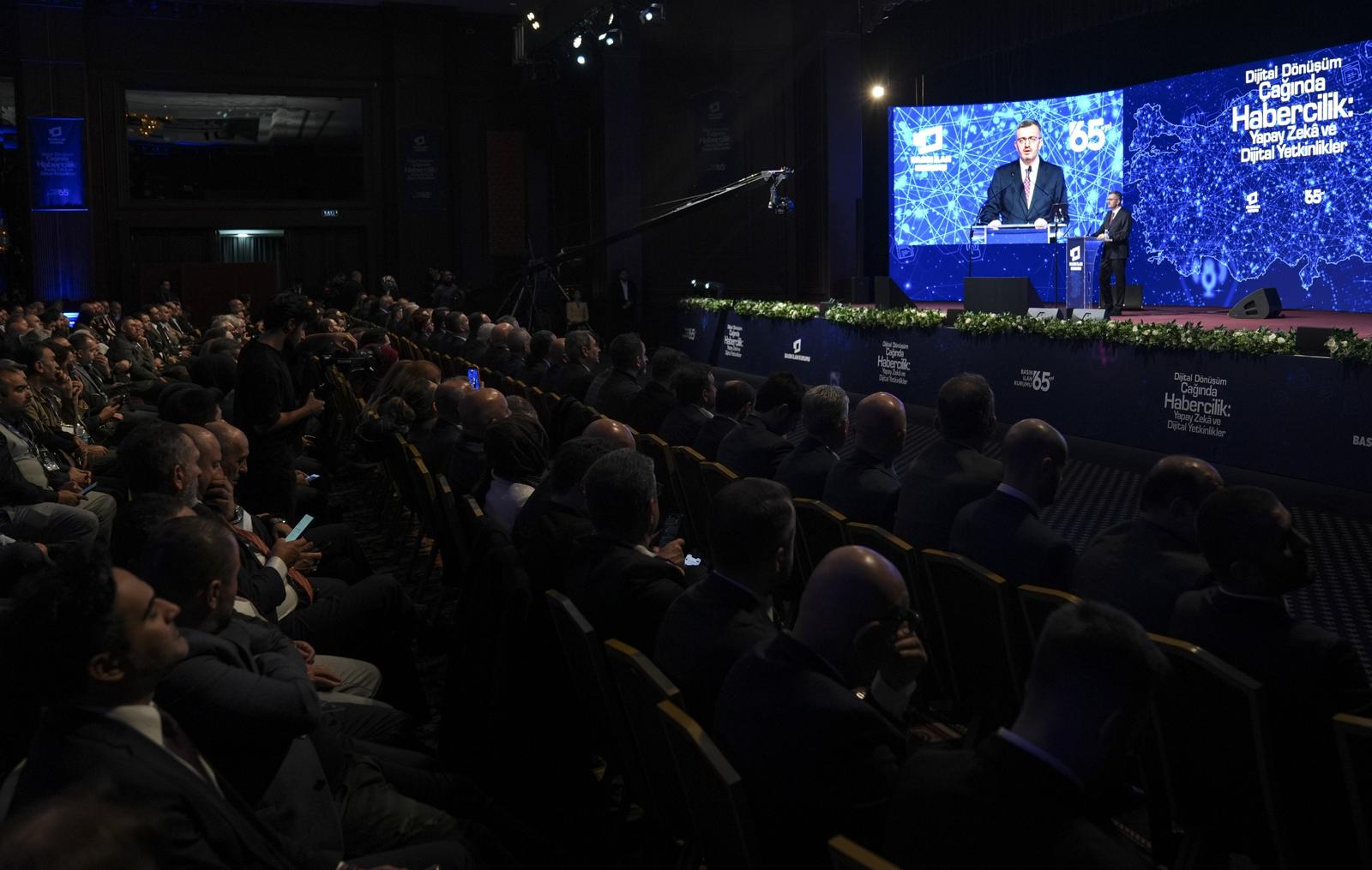
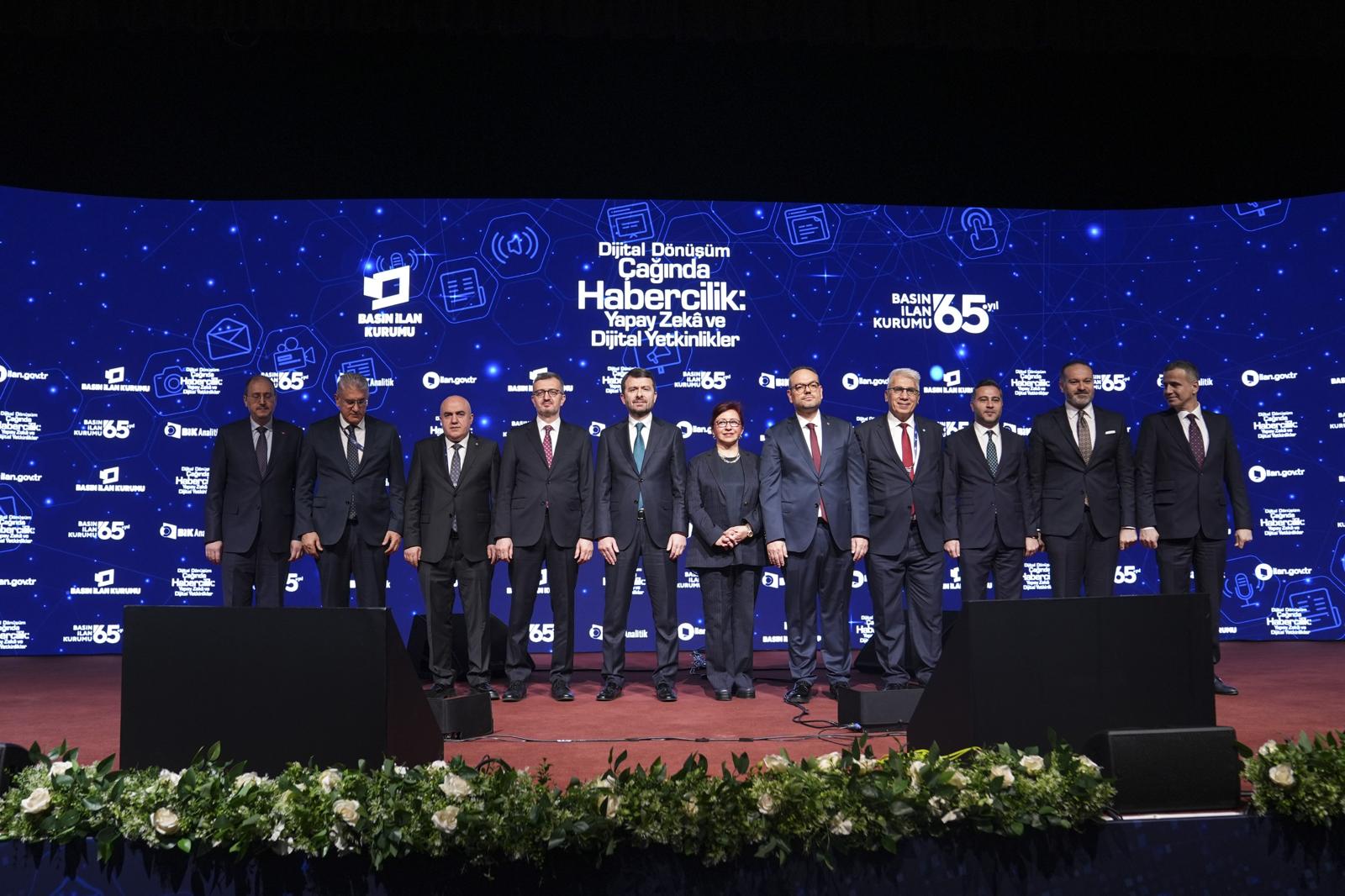
Addressing the panel titled “Journalism in the Age of Digital Transformation: Artificial Intelligence and Digital Competencies”, organised by the Press Advertisement Agency, Burhanettin Duran, the Presidency's Head of Communications, stated, "Our journalists should be active participants in the digital world, drawing upon our unique understanding of civilisation and our set of values."
Head of Communications Duran argued that we are living through an uncertain period in which the international order is eroding, states are openly engaging in unlawful acts, and massacres and genocide are being normalised, stating, "In fact, in this era, often described as 'the end of the world as we know it,' is also giving rise to a completely new media order." In this context, significant transformation and uncertainty are occurring simultaneously, including the digitalisation of the media system. This process, further expedited by artificial intelligence technology, radically alters the relationships people have with other people, with reality, and, certainly, with information.
Head of Communications Duran recognised that these processes significantly influence journalism, and therefore, it is essential to raise certain questions concerning the transforming landscape of journalism, saying, "In what ways are digitalisation and artificial intelligence reshaping the profession of journalism? What strategic governance framework should be employed to address this transformation? What is the significance of the information produced by journalists today? Our responses to these questions emphasise the necessity for a more thorough investigation of the concepts and contents that have infiltrated our lives as a result of digital transformation. We need to give these more thought. I believe this panel will serve that purpose."
Pointing out that speed is one of the most important features brought about by digitalisation, Head of Communications Duran stated that while this speed facilitates access to information, it also brings about risks, blurring the line between truth and falsehood.
Head of Communications Duran emphasised that algorithms represent another feature accompanying digitalisation and that the management of these algorithms by a select group of companies poses a significant risk, adding:
"Deepfake technologies, automated content generation, and networks of fake accounts are poisoning accurate information—the most vital asset of communication—and fuelling a crisis of trust. This allows for the rapid spread of communication failures that we call disinformation and manipulation. This, in turn, deepens the crisis of trust. This situation, also conceptualised as information disorder, now poses a serious threat to the establishment of what constitutes the truth. At this critical juncture, journalists are faced with entirely new responsibilities. One of our strongest safeguards against the aforementioned risks lies in media workers who practice journalism grounded in principles and ethical values, ensuring that the truth is both protected and meaningfully circulated. Certainly, I must also acknowledge the opportunities brought about by digitalisation in this context. These innovations provide us with important opportunities such as data analysis, automated news writing, trend detection, and content recommendation. They offer great conveniences."
"We cannot leave the responsibility to artificial intelligence"
Noting that the opportunities presented by digitalisation have somewhat reduced the workload of journalists, Head of Communications Duran said, "What guides us should not be artificial intelligence. Quick access offers a significant benefit; however, the role of journalists in delivering news that is deemed accurate and credible has become more essential than ever. Journalism and institutional media will not lose their influence, as assumed; on the contrary, they will become more important by taking on new functions, as verification, transparency, and the credibility of sources have now become strategic assets. We must verify the authenticity and reliability of everything we encounter on social media and in the digital realm. As a result, it is possible to predict the value of journalism that recognises and responds to this need."
Head of Communications Duran made the following remarks about the impact of innovations on transforming communication, media, and, particularly, journalism, and how this issue should be addressed:
"Here is how we can define the main framework. Our President Recep Tayyip Erdoğan's statement, 'No innovation that fails to elevate human beings and human values has any real worth,' can be interpreted as a principle. Human beings and human values are what matter the most. In this regard, as the Directorate of Communications, we approach communication technologies such as digitalisation and artificial intelligence through precisely this lens, assessing them as a field of strategic responsibility, together with both the opportunities they offer and the risks they generate. Of course, we take full advantage of the opportunities provided by new communication technologies, but we must also manage and mitigate their negative consequences. I had said, 'artificial intelligence represents a major opportunity that journalism should benefit from,' but it is never, and must never become, the subject itself. We cannot leave the responsibility to artificial intelligence. We obtain information by giving commands to artificial intelligence, but this information is ultimately guided by specific data. We should not view this as a final outcome; instead, the independence of individuals and journalists, professional ethics and principles, and public interest should take precedence over all else. These matters cannot be left to algorithms."
Head of Communications Duran warned that the weakening of journalism's fundamental qualities could lead to the phenomenon of speed over accuracy and visibility suppressing the truth, saying, "In such a media environment, it is clear that no one can be sure of the authenticity of the information they have. In such a chaotic environment, it is, of course, undesirable for certain global companies—and for some states acting in cooperation with them—to dominate the communication ecosystem and establish a form of hegemony. And this brings us to the issue of digital sovereignty. From Türkiye’s perspective, digital sovereignty is a very important component of our national sovereignty.”
"Directorate of Communications stands with journalists"
Head of Communications Duran stated that another key question that needs to be addressed is how to combat these challenges and how individuals can protect their own digital sovereignty.
"Without disregarding the importance of conventional media, we must act by taking into account innovations and their transformative effects,” Head of Communications Duran said, adding:
“In the past, the term ‘journalist’ referred to someone who determined the topic, conducted the research, wrote the news story, and signed their name beneath it. Today, this definition needs to be taken further. A journalist is now someone who can read data, understand algorithms, identify AI-assisted content, and maintain a strong awareness of digital security. Ensuring that journalists acquire these competencies is surely a responsibility that falls largely on us. As institutions operating within the communication ecosystem—foremost among them the Directorate of Communications, along with TRT, Anadolu Agency, and the Press Advertisement Agency—we stand ready to support our journalists in acquiring all necessary competencies and regard this as a duty. Under the leadership of our President, just as we have supported journalists in the communication community until now, we will continue to stand by them in the face of these new challenges.”
Head of Communications Duran emphasised that this effort will continue as part of the essential public service of informing the nation, adding, “The support provided by the Press Advertisement Agency to media outlets at both local and national levels serves exactly this purpose. The Press Advertisement Agency additionally functions as the fiscal foundation for these activities by offering loans to newspaper organisations, financial support to press associations, and interest-free loans to memebers of the media. Hence, our local and national media organisations throughout Türkiye fulfil a significant public duty in this manner."
Emphasising the importance of media organisations consistently remaining committed to their mission of delivering accurate information to the public, the Head of Communications, Duran, concluded his remarks as follows:
"Our journalists must assume the role of proactive participants within the digital realm, drawing upon the wisdom of our civilisation, our deeply rooted history, and our national values. They ought to be individuals who actively influence that digital environment, rather than those who merely adopt it passively. In this context, I believe that efforts to develop a domestic and national language, discourse, and narrative are both critical and indispensable. Without this, it may not be possible to transmit our national values, along with the memories and worldviews associated with them, to future generations. Confronted with such risks, I believe that a high level of awareness is required and that this has now become an integral part of journalists’ public responsibility."
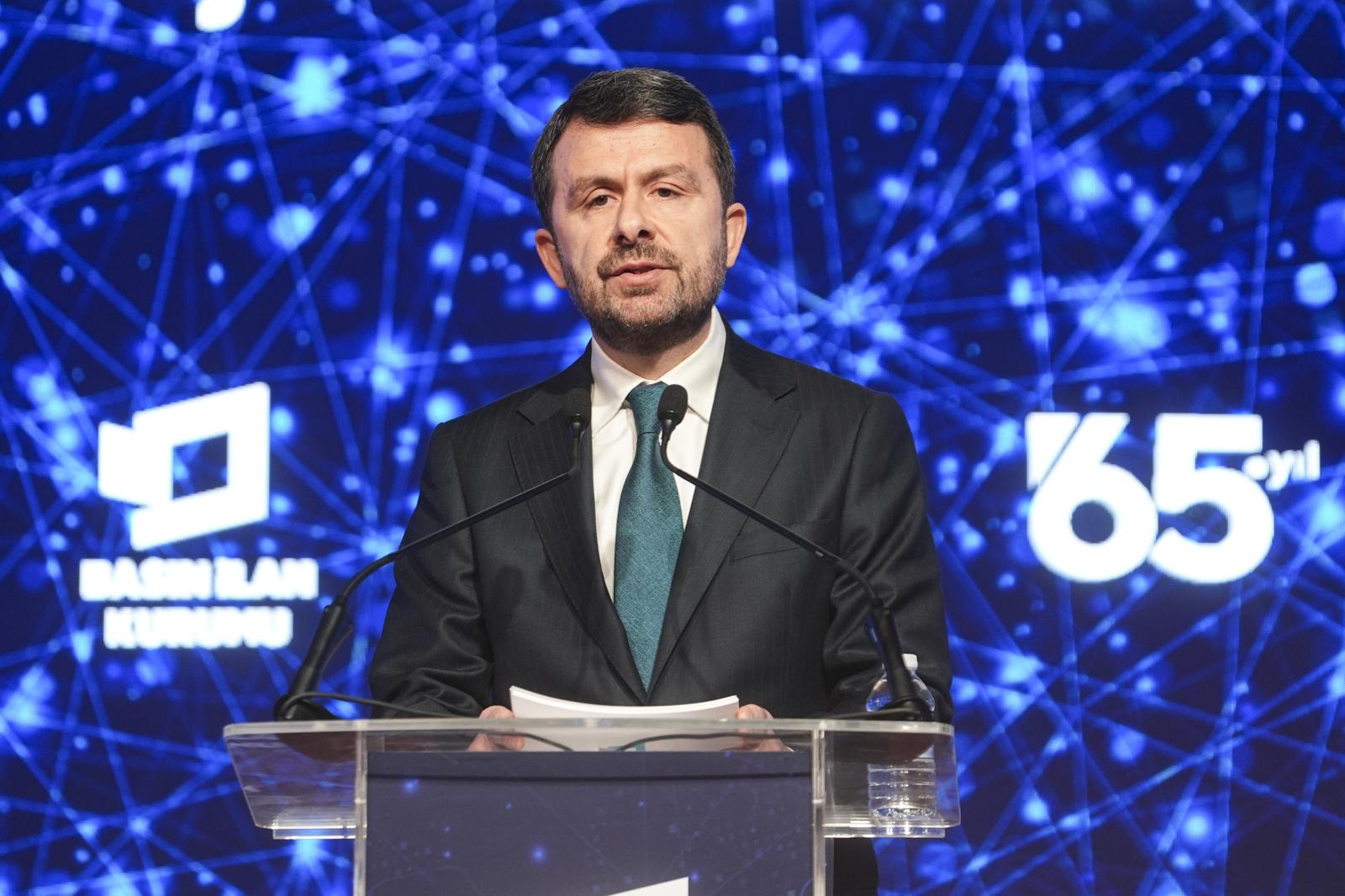
The programme was attended by Abdulkadir Çay, General Director of the Press Advertisement Agency, Emre Çebişli, Technology Coordinator of Anadolu Agency, as well as representatives from various media organisations, journalists, and academics.
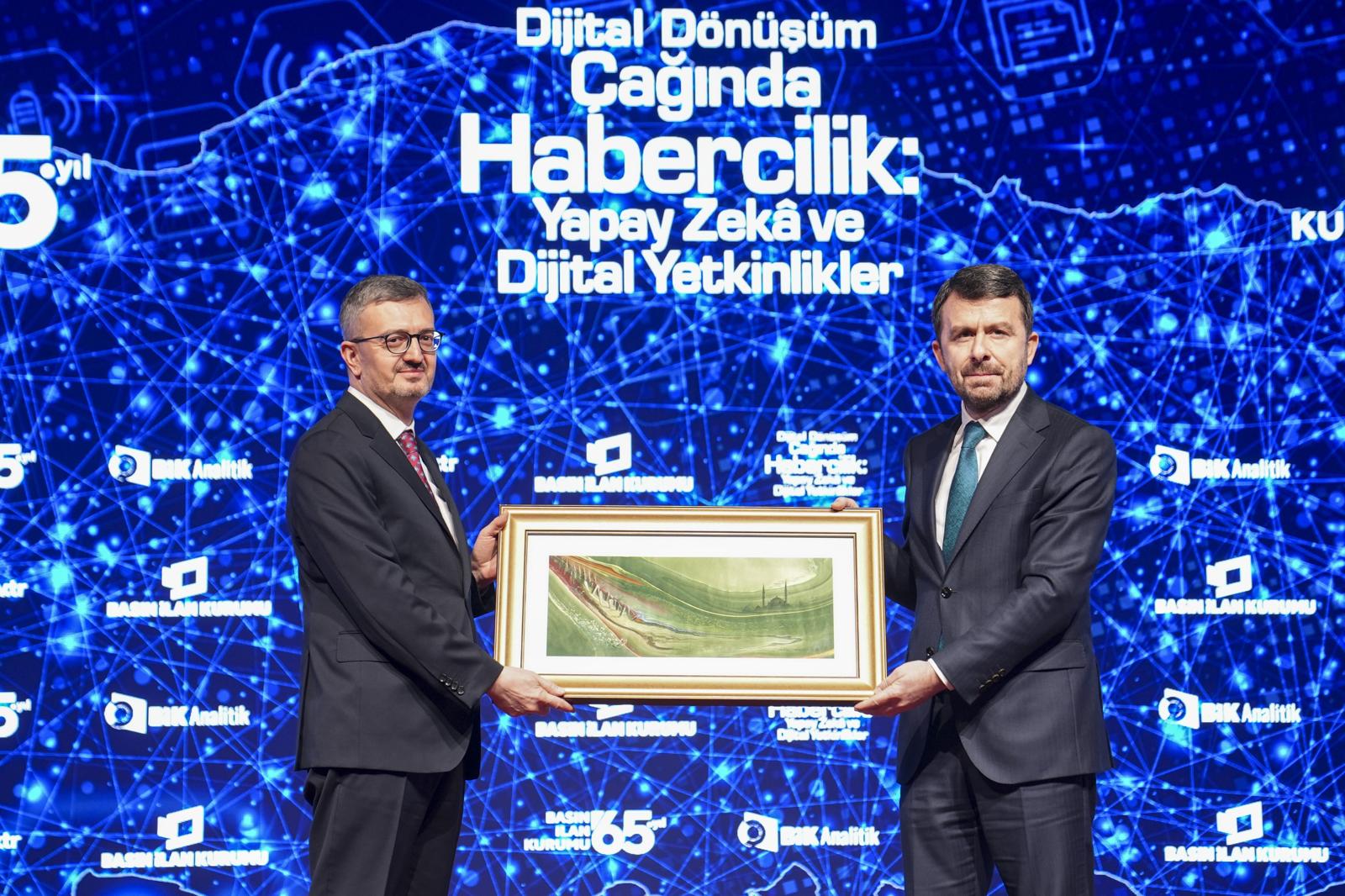
Following his address, Abdulkadir Çay presented a gift to the Head of Communications, Burhanettin Duran, after which a family photo was taken, and the programme proceeded with the panel sessions.
Furthermore the Head of Communications Duran shared a post on his NSosyal account regarding the panel.
In his post, Head of Communications Duran said, "I was delighted to participate in the panel titled 'Journalism in the Age of Digital Transformation: Artificial Intelligence and Digital Competencies”, organised by the Press Advertisement Agency. I hope that the panel, organised on the occasion of the 65th anniversary of the Press Advertisement Agency and 10 January Working Journalists' Day, will contribute to the development of a healthy communication ecosystem.”