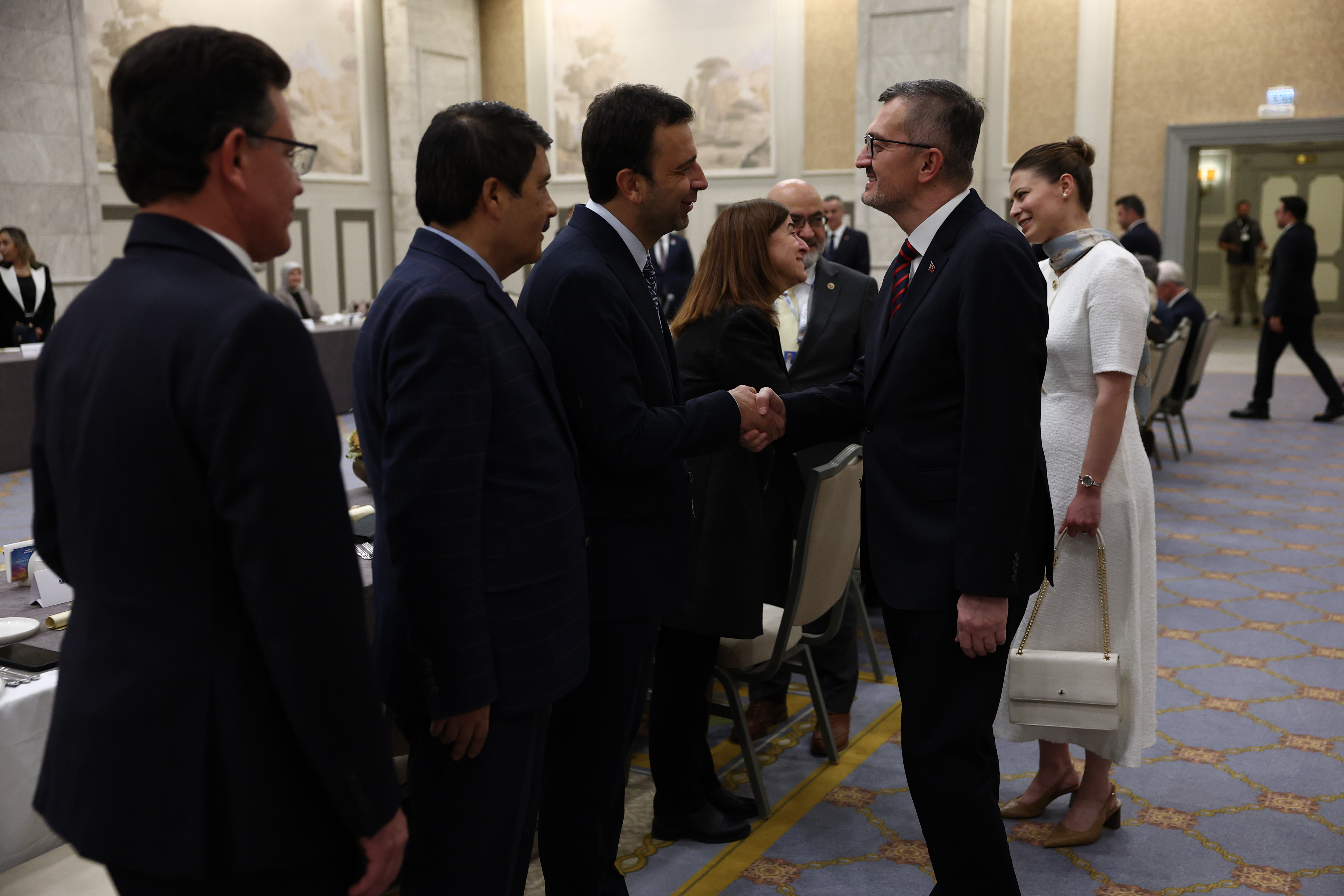
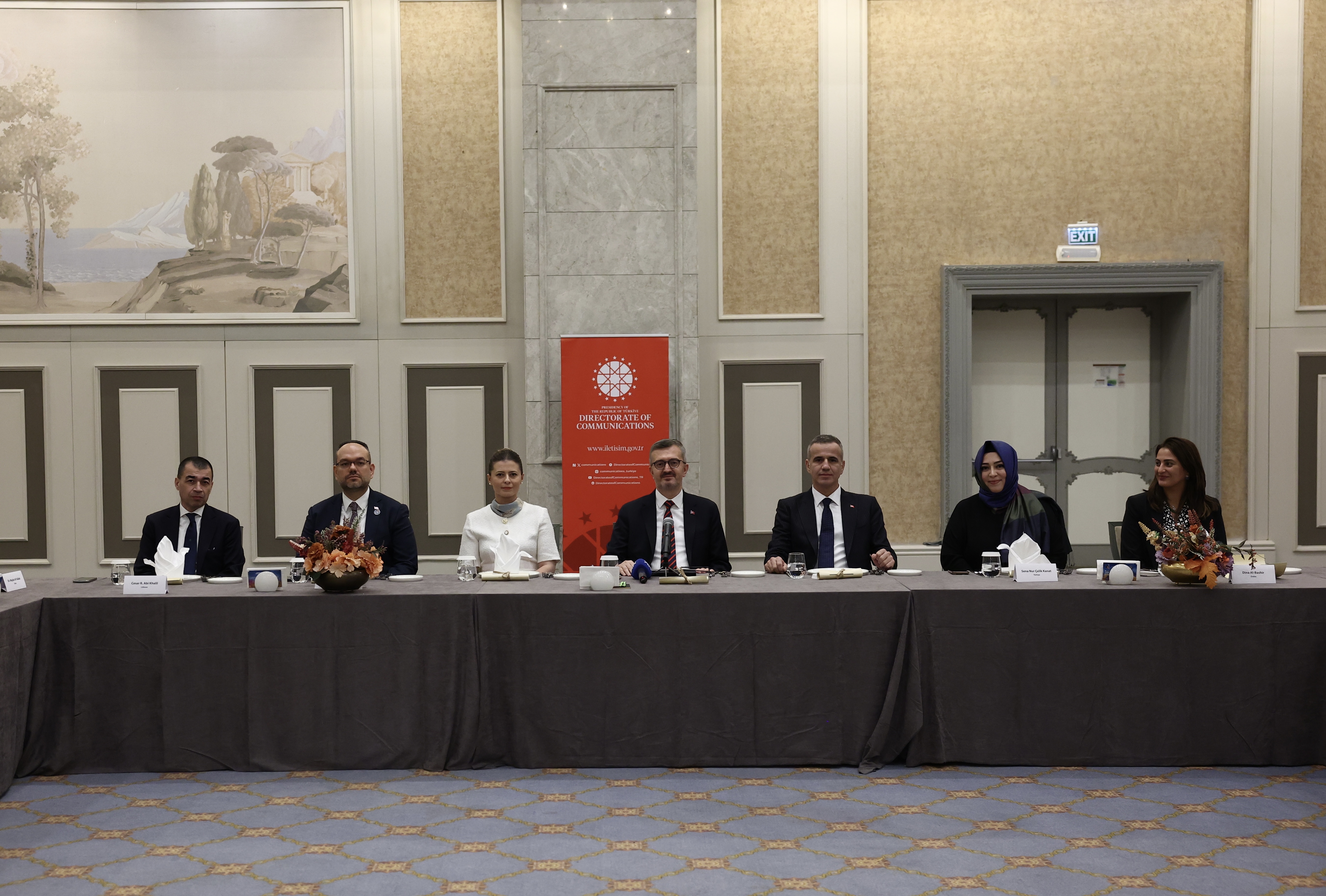
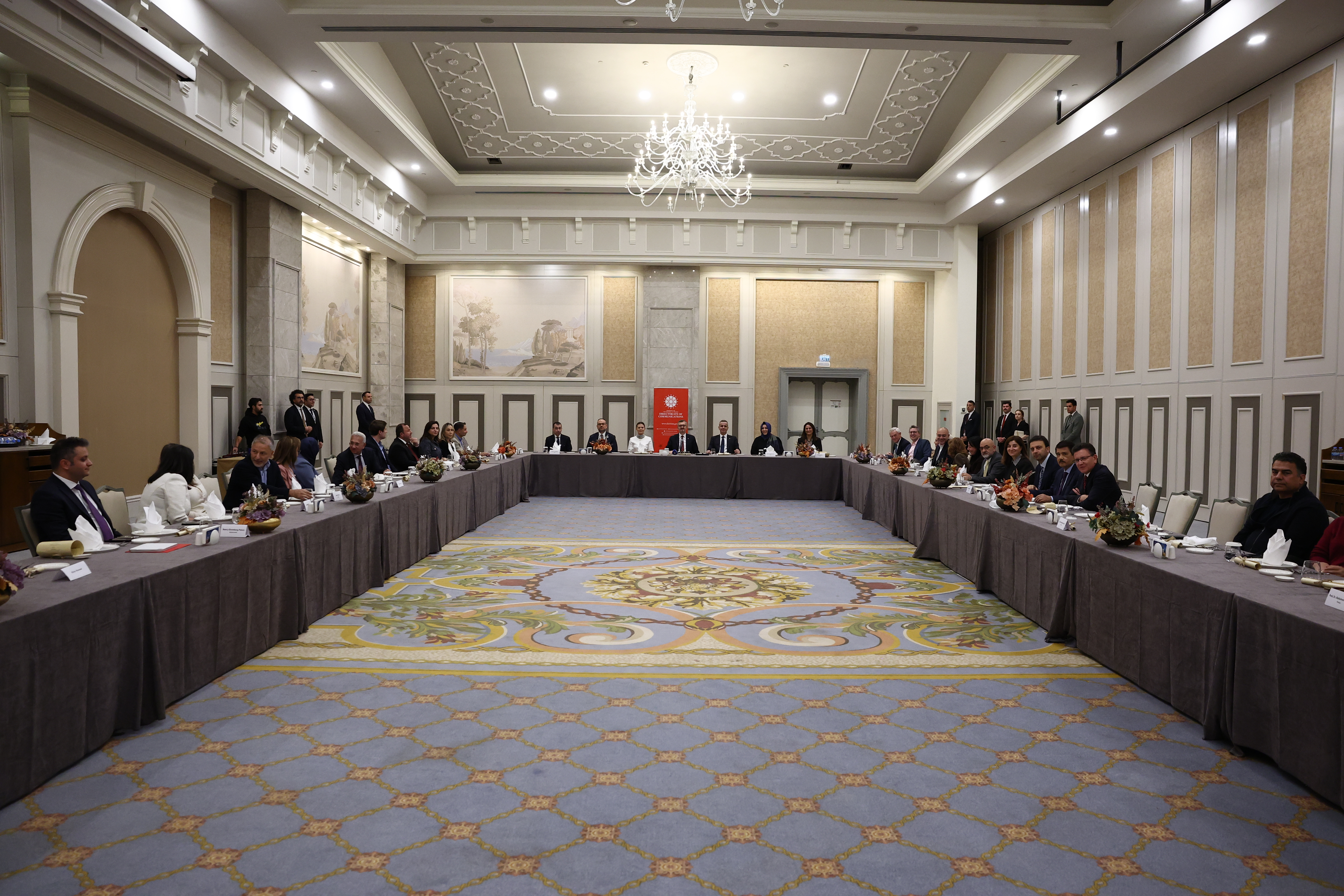
The Presidency's Head of Communications, Burhanettin Duran, met with parliamentarians, think tank representatives, academics, and researchers as part of the 31st Conference of the Parties (COP31) to the United Nations Framework Convention on Climate Change, held in Antalya.
In his address, Head of Communications Duran stated that they had gathered to assess climate change, one of the most important issues on the global agenda, along with its causes and consequences, as well as ways of addressing it, and said:
"As you are aware, the climate change phenomenon has today become a multidimensional issue that extends far beyond the boundaries of environmental policy. The climate crisis now affects a broad range of areas, from economic development to energy security, from food supply to migratory movements, and from international security to social justice. Given its causes, consequences, dimensions, and scope, this issue is not one that can be overcome through the measures taken by a single actor alone.
We must wage an all-out, long-term struggle that requires countries and international institutions and organisations to take responsibility, along with the support of scientists, civil society, the private sector, think tanks, and all segments of society. Türkiye's approach to this matter is clear. In the words of our President Recep Tayyip Erdoğan: We do not engage with any issue merely for appearances. When we tackle a problem, we develop concrete, sustainable solutions and set out our roadmap. As Türkiye, we approach the issue of climate change with this understanding, fulfilling our responsibilities and implementing the policies we have determined one by one."
"The Zero Waste initiative has expanded internationally"
Head of Communications Duran emphasised the importance of COP31 in terms of strengthening Türkiye's role in global climate diplomacy, stating, “Türkiye's approach to COP31 is based on dialogue, consensus and concrete action. Within this framework, we support the implementation of commitments made in the fight against climate change, and we see improving international cooperation and implementing joint solutions as priority objectives. In other words, we want COP31 to be a summit where its decisions are implemented, cooperation is developed, and a results-oriented approach takes centre stage. Türkiye’s climate policies are also shaped by this perspective."
Recalling that Türkiye ratified the Paris Agreement in 2021 and set forth its 2053 net-zero emissions target, Head of Communications Duran said:
"Some of the other important steps we have taken in this process are the Second Nationally Determined Contribution and the Climate Law that has entered into force. Alongside all this, I must state quite frankly that climate policies do not succeed merely by setting targets. The extent to which the decisions taken and the principles established find practical application in economic and social life is decisive for the success of these policies. In Türkiye, we tackle climate change in tandem with our development policies, and we are continuing our efforts in renewable energy, energy efficiency, sustainable cities, zero-waste initiatives, climate adaptation, and the green transition."
Head of Communications Duran highlighted that the Zero Waste initiative, launched under the leadership of First Lady Emine Erdoğan, has gained an international dimension and become one of Türkiye’s most concrete steps on the issue of climate change, adding that the declaration of 30 March as the International Day of Zero Waste, following the adoption by the UN General Assembly of the draft resolution submitted by Türkiye, was a welcome development.
"Fairer, more inclusive and feasible policies should be developed"
Underscoring global justice as another priority matter for Türkiye in combating the climate crisis, Head of Communications Duran said:
"We cannot say that all countries have contributed equally to climate change. The role of industrialised countries in this problem is far more pronounced. Accordingly, these countries must assume greater responsibility in resolving the issue. For although climate change is felt across the globe, countries differ in their capacity to combat its impact. Access to finance, technology, and capacity-building opportunities, particularly for developing countries, is critical to the success of global climate action. At this juncture, we believe that responsibilities should be determined based on the circumstances of countries and that fairer, more inclusive and feasible policies should be developed in line with the principle of respective capabilities."
Highlighting the importance of think tanks' contributions to decision-making processes, Head of Communications Duran added:
"Particularly on an issue such as climate change, which transcends borders and requires multi-actor cooperation, the research, recommendations and critiques of think tanks are of critical importance. We benefit from such work and regard it as an opportunity to test our policies. I hope that this gathering will contribute to a better understanding of Türkiye’s climate policies at the international level, the mutual exchange of experience and the emergence of new areas of cooperation. I hope that COP31 will produce lasting results for our countries, our nations and future generations, and that this gathering in Antalya will strengthen mutual understanding, trust and cooperation."
In a post on his Nsosyal account, Head of Communications Duran also extended his gratitude to all think tank representatives who contributed to the meeting with their opinions and assessments regarding the COP31 process.