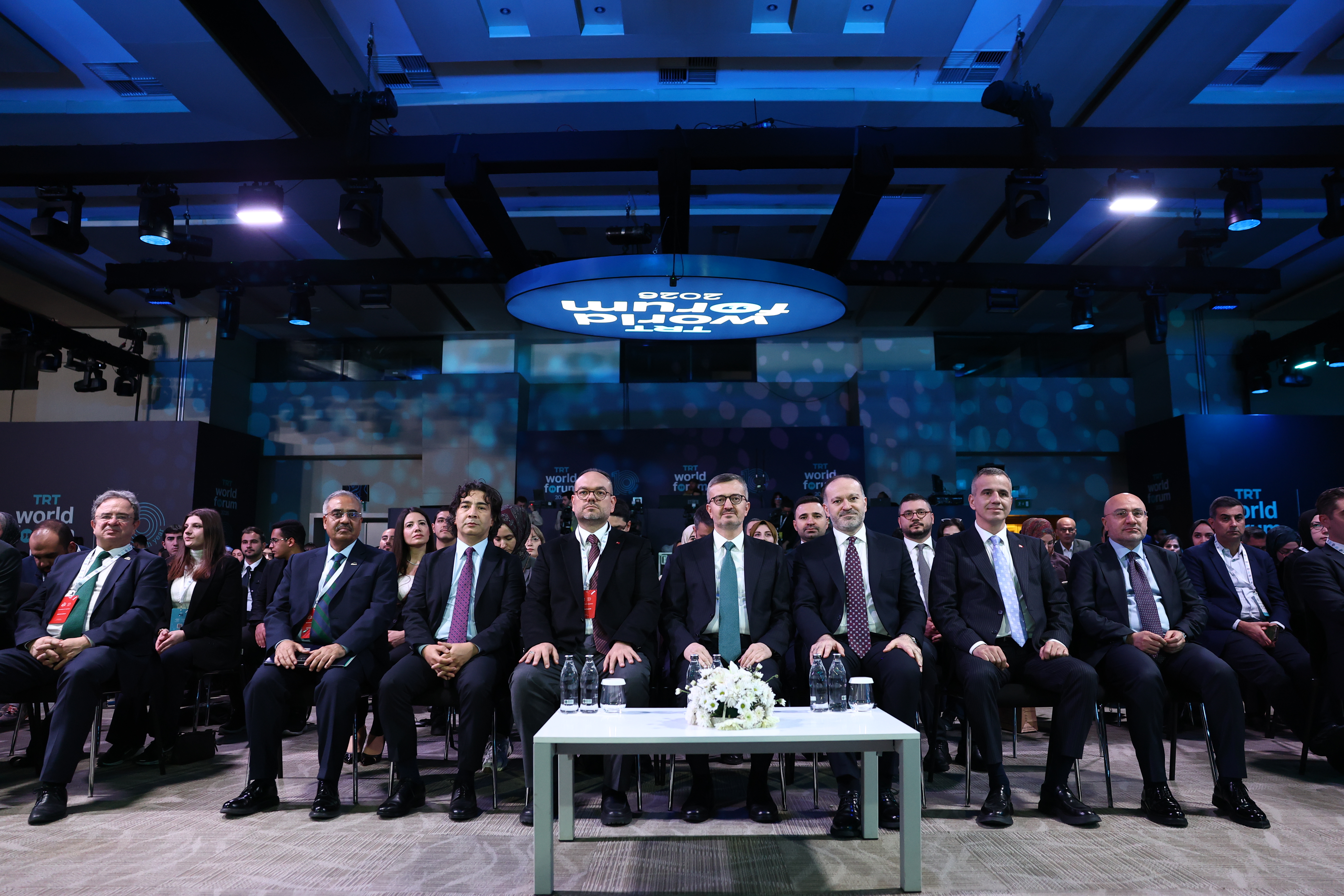
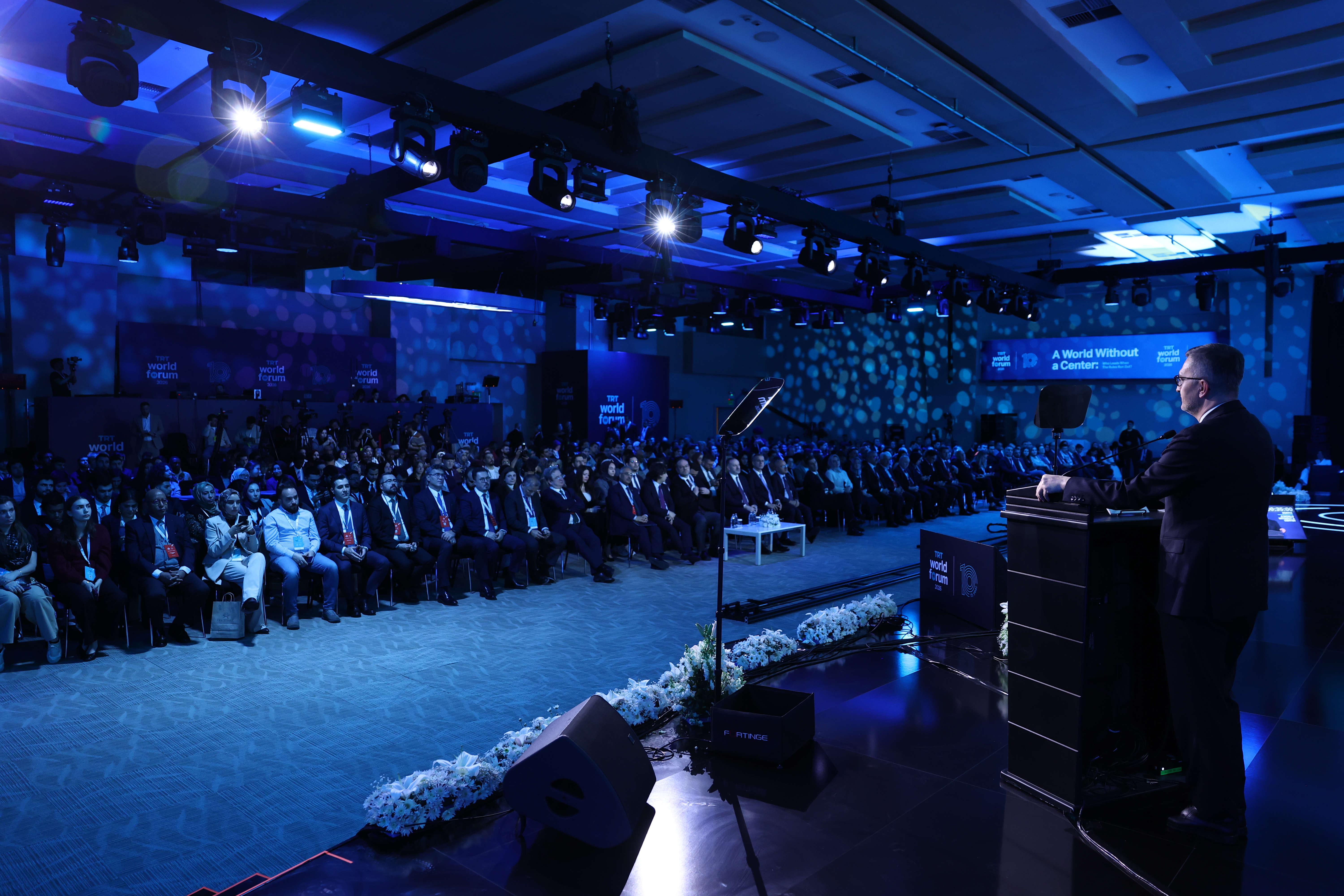
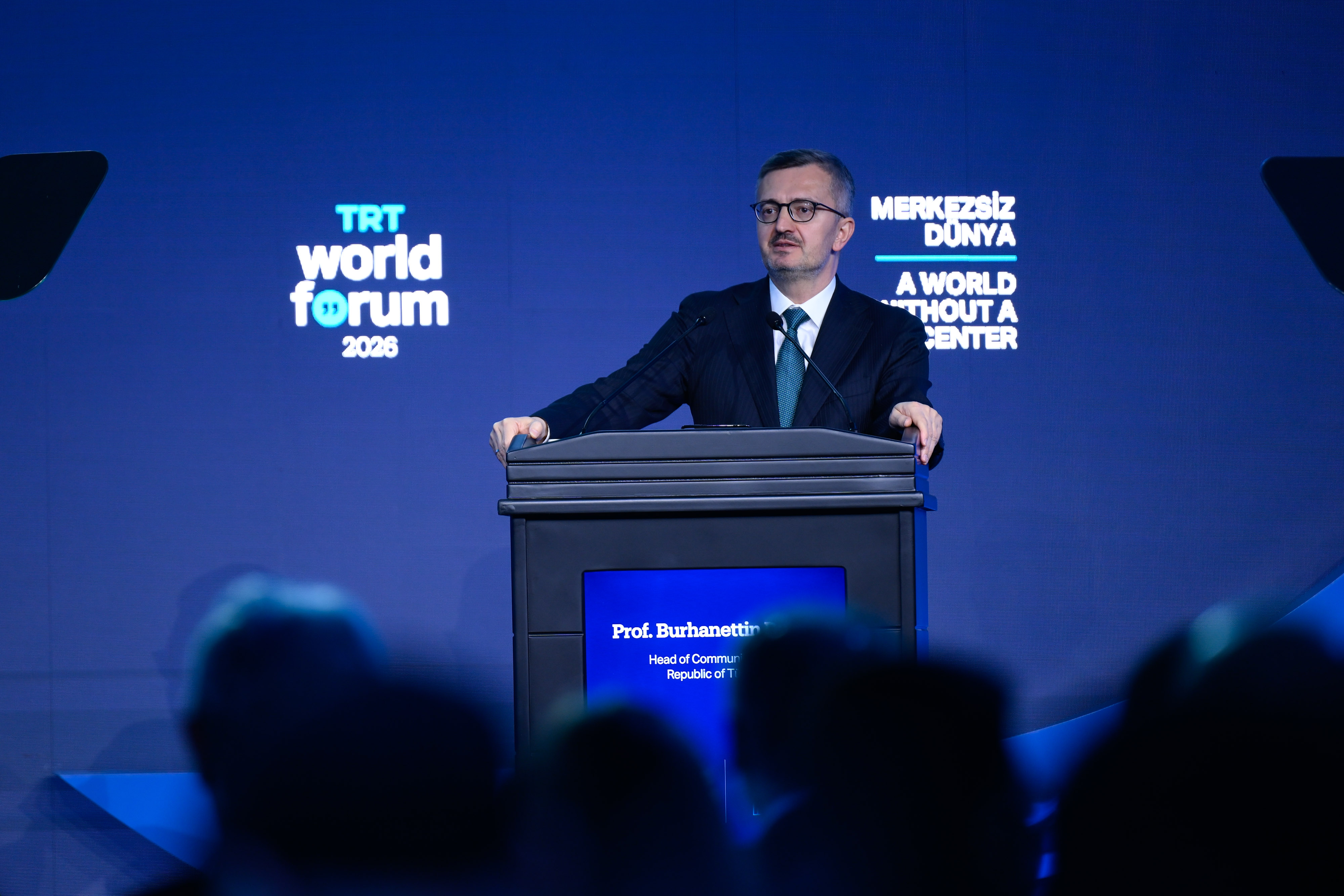
The Presidency's Head of Communications, Burhanettin Duran, attended the 10th TRT World Forum, organised by TRT this year at the İstanbul Congress Centre under the theme ‘A World Without a Centre: Who Leads When the Rules Run Out?’”
Speaking at the session titled "Who Is in Charge in the Algorithmic Age? Companies, Countries, Citizens," held as part of the Forum's second-day programme, Head of Communications Duran said that distinguished experts would address the question of who is in charge in the algorithmic age shaped by the digital revolution in information and communication technologies.
Head of Communications Duran emphasised that what humanity was confronting was fundamentally one of sovereignty and justice, and sometimes even one concerning humanity itself, saying, “For decades, journalism had its ‘gatekeepers’. Editors decided whether stories were verified, served the public interest, and could be published without causing unjustifiable harm. Here, I am not romanticising that 'manual' period. We all know that newspapers, after all, have owners, commercial interests, and political loyalties. However, behind each editorial decision stood a person with a name, a professional obligation, and a responsibility that could be questioned."
Pointing out how algorithms were increasingly assuming the role once held by these gatekeepers, Head of Communications Duran noted:
"It has no face to confront and no name attached to its decisions. A news report may be accurate, carefully verified, and of great public importance. Yet, because of an algorithm, it may never reach the people who need to hear it. By contrast, a misleading claim or provocative post may cross continents in minutes. This raises a fundamental question: who decides which stories reach millions of people and which ones disappear from public view? And more importantly, whose interests do these decisions serve? I think everybody knows the answer. Algorithms are not neutral. Human choices lie behind them, serving commercial and, at times, political interests. The danger here is this: when a handful of companies control what people see, they also shape what people think."
Head of Communications Duran went on to say:
"What does this danger mean for journalism? A journalist may spend weeks interviewing witnesses, checking documents, and verifying a story. A newsroom pays editors, translators, and legal experts. Once published online, its reach depends on an algorithm whose decisions the journalist cannot explain. The platform benefits from the attention. AI may summarise the investigation without crediting its source. Readers get the information, while the newsroom that produced it struggles financially. News is now available at the touch of a button. But then, who will pay for the correspondent reporting from a conflict zone? Who will pay for the editor working behind the scenes? Journalism cannot survive on visibility alone. Journalism needs independence, financial support, and strong professional ethics. Above all, journalism must ensure that the news it produces reaches those who need it."
Highlighting the transformative impact of algorithms on journalism, Head of Communications Duran noted, "But their influence extends far beyond it. There is another issue that deeply concerns me in the algorithmic age: the future of our collective memory. Every nation has its own history, culture, language, and values. Today, however, younger generations increasingly discover their history and cultural heritage through digital platforms. Imagine a young person searching online for the history of their country. As millions turn to these systems to understand the world, we must ask: Who will decide what future generations know about their own past? This is why I believe the algorithmic age raises profound questions about cultural identity, national memory, and the preservation of our civilisational heritage."
"For Türkiye, this is also a matter of digital sovereignty"
Head of Communications Duran argued that algorithms shape more than just information, saying, "Now consider what happens when the information we read and watch is selected according to commercial interests and predictions about our behaviour. Are we still forming our opinions freely? Or are our opinions being formed for us? Some thinkers describe this growing dependence on powerful technology companies as technofeudalism."
Acknowledging that the term may initially appear complicated, Head of Communications Duran went on to say:
"But the reality it describes is quite simple. A handful of companies control the digital spaces where billions communicate, find information, and express their views. They set the rules, change them at their discretion, and make decisions that affect entire societies. Yet the people affected often have little say and few opportunities to challenge those decisions. This returns us to our central question: Who is in charge in the algorithmic age? Technology companies say users are in charge: they choose what to watch, read, or share. But how free is that choice when algorithms have already decided what appears on our screens?"
Head of Communications Duran, meanwhile, noted that states have the authority to pass laws and set regulations, and added:
"Yet technology giants cross borders, control vast amounts of data, and command resources beyond many countries. Neither companies nor states can answer this question alone. I firmly believe that we must never leave the future of the digital world entirely in the hands of a few powerful actors. For Türkiye, this is also a matter of digital sovereignty. A nation must have the capacity to protect its data, preserve its cultural identity, and tell its own story to the world. We support technological progress. We recognise the extraordinary opportunities offered by artificial intelligence and digital innovation. But technological progress must serve people and societies. It must respect their rights, their values, and their freedom to make independent choices. How, then, can we ensure that technology remains in the service of humanity?
"We need greater transparency about how algorithms work"
Head of Communications Duran noted that he believed three fundamental principles served as a guide in this regard, adding:
"The first principle is accountability. Technology companies cannot exercise such enormous influence over public life without being held responsible for their decisions. We need greater transparency about how algorithms work. People must be able to understand why their content is restricted, why certain information receives more attention than others, and how they can challenge decisions they believe are unfair. The second principle is fairness in algorithmic distribution. We cannot accept a digital world where some voices reach millions of people while others are barely heard at all. Access to information, freedom of expression, and fair treatment must apply equally to everyone, regardless of nationality, language, or where they live."
Emphasising that the third principle is plurality, Head of Communications Duran said, "The digital world must reflect the diversity of the world itself. No single country, culture, or company should dominate it. Our President has repeatedly reminded the international community that 'the world is bigger than five.' I believe the same principle should guide our understanding of the digital world. The digital world, too, is bigger than a handful of technology companies. It belongs to people of different nations, cultures, and languages. Their voices, experiences, and perspectives must all have a place in the global information environment."
"This commitment is reflected in the work of our public broadcaster TRT and Anadolu Agency"
Emphasising that Türkiye is determined to contribute to a fairer and more inclusive digital order, Head of Communications Duran stated:
This commitment is reflected in the work of our public broadcaster TRT and Anadolu Agency. Through their reporting in different languages, TRT and Anadolu Agency continue to bring the truth to audiences around the world. They work tirelessly to fight disinformation and ensure that people have access to reliable information. Above all, they give a voice to those who might otherwise go unheard, making sure their stories reach the world. And they carry out this mission, at times, at a tremendous human cost. In Gaza, Anadolu Agency lost Montaser Al-Sawaf, a freelance cameraman who was killed in an Israeli airstrike. TRT Arabi cameraman Sami Shehadeh was seriously injured while reporting from Gaza and lost his right leg."
Noting that these journalists had risked their lives to show the world what is happening, Head of Communications Duran went on to say:
"Yet even when the truth is documented, there is no guarantee that the world will see it. On major digital platforms, reports and images from Gaza have been removed, restricted, or labelled as sensitive or graphic content. Even independent human rights organisations have documented how automated systems have restricted legitimate reporting and silenced Palestinian voices. This brings us to one of the most troubling aspects of disinformation in the algorithmic age. We usually think of disinformation as the spread of false stories. But what happens when the truth itself is pushed out of sight? What happens when journalists risk their lives to gather evidence, but algorithms prevent their work from reaching the public? When the truth is made invisible, disinformation becomes more powerful.
Head of Communications Duran stated that, in the algorithmic age, the question of who ought to control it is just as important as the question of who is in charge and added, "My answer is this: the future must remain in the hands of people who are capable of exercising judgement, defending the truth, and accepting responsibility for their choices. We must give algorithms a human and ethical direction, rather than surrendering our direction to algorithms. I believe this session will be an illuminating step on the path toward a more just order."
Moreover, Head of Communications Burhanettin Duran shared a post on his NSosyal account regarding the session titled "Who Is in Charge in the Algorithmic Age? Companies, Countries, Citizens," held as part of the TRT World Forum 2026.
"I was delighted to take part in the session entitled 'Who Is in Charge in the Algorithmic Age? Companies, Countries, Citizens,' organised as part of the TRT World Forum 2026.
During the programme, we emphasised that, in this era where algorithms shape our access to information, our thoughts and our preferences, the digital world cannot be left under the control of a handful of powerful technology companies. Highligting that, from Türkiye’s perspective, this issue is also a matter of digital sovereignty, we stated that accountability, fairness in algorithmic distribution and pluralism must be fundamental principles.
We reaffirmed the importance of TRT and Anadolu Agency's multilingual broadcasting and their efforts to convey the truth to the world in building a fairer and more inclusive digital order. Drawing on the experiences of Montaser Al-Sawaf, the Anadolu Agency cameraman who lost his life in Gaza, and Sami Shehadeh, the TRT Arabi cameraman who was seriously injured, we reiterated just how important it is not only to document the truth but also to convey it to the public.
We believe that technological progress should serve humanity; we advocate for algorithms to be developed with a respect for human rights, values and free choice. Because the future of the digital world should lie not in the hands of a few companies, but in the hands of people who can defend the truth and take responsibility for their choices.
Believing that these sessions will shed light on the way towards a fairer order, I would like to thank our panellists, who have contributed to this important discussion with their ideas, questions and experiences, as well as all our participants and everyone who has played a part."