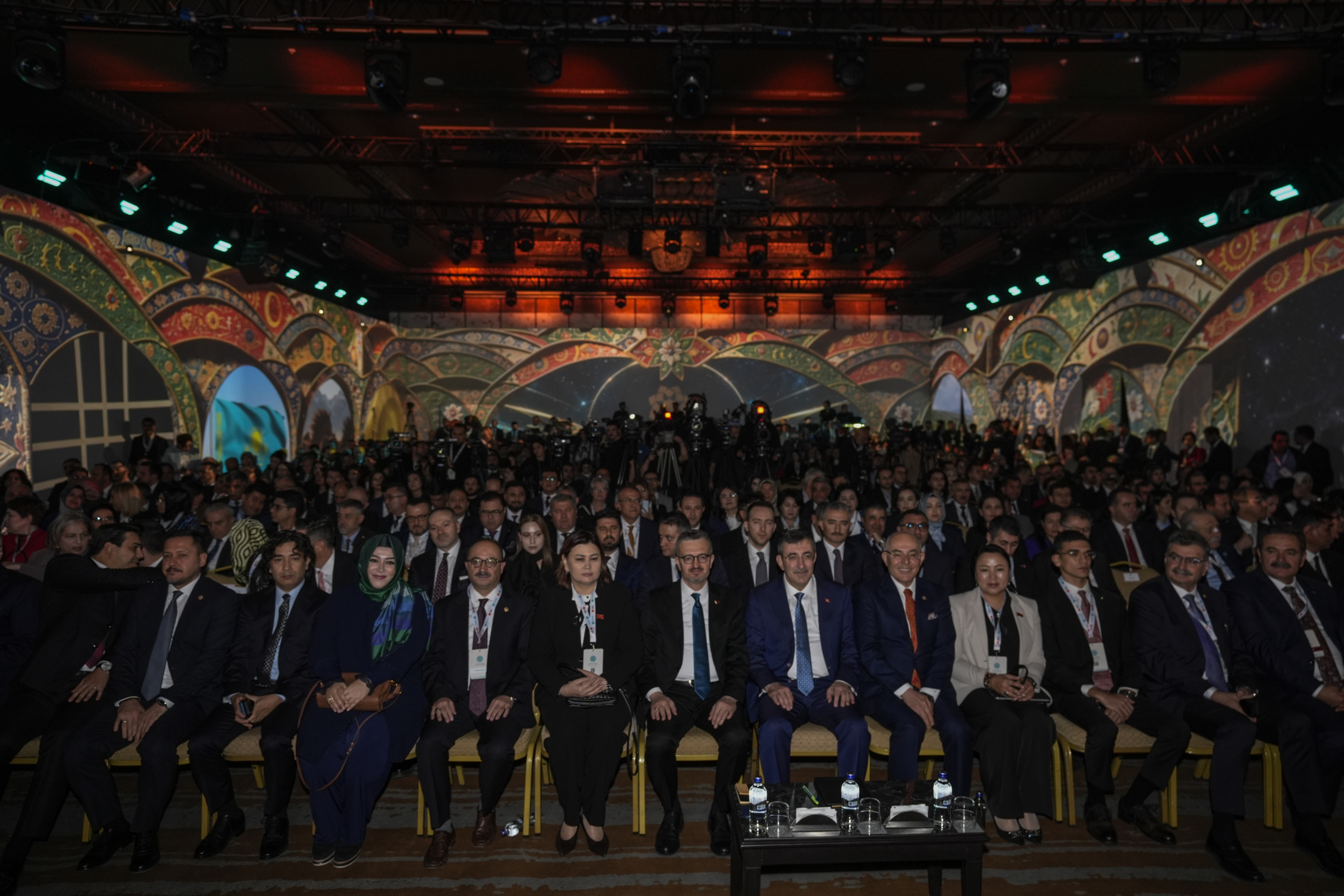
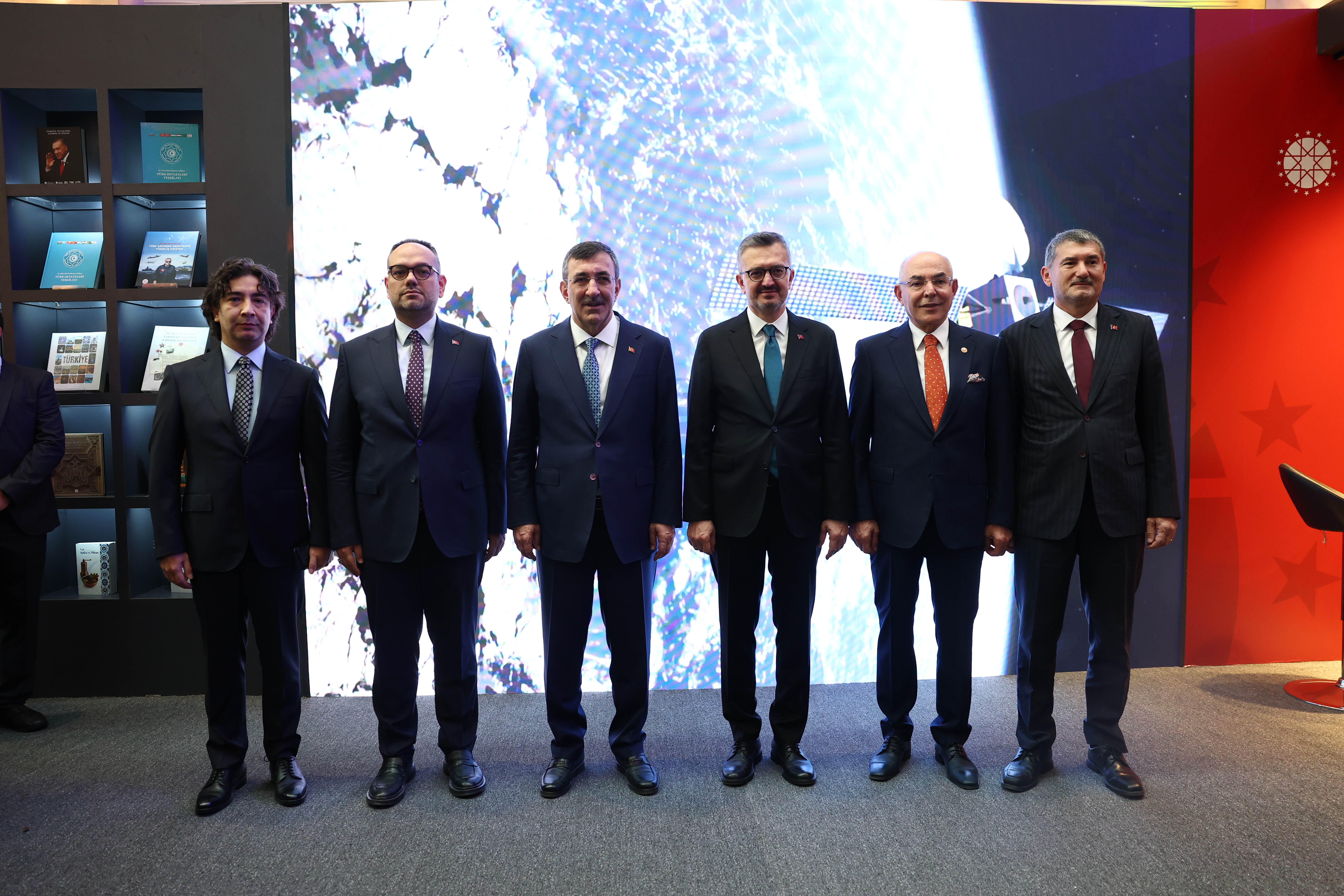
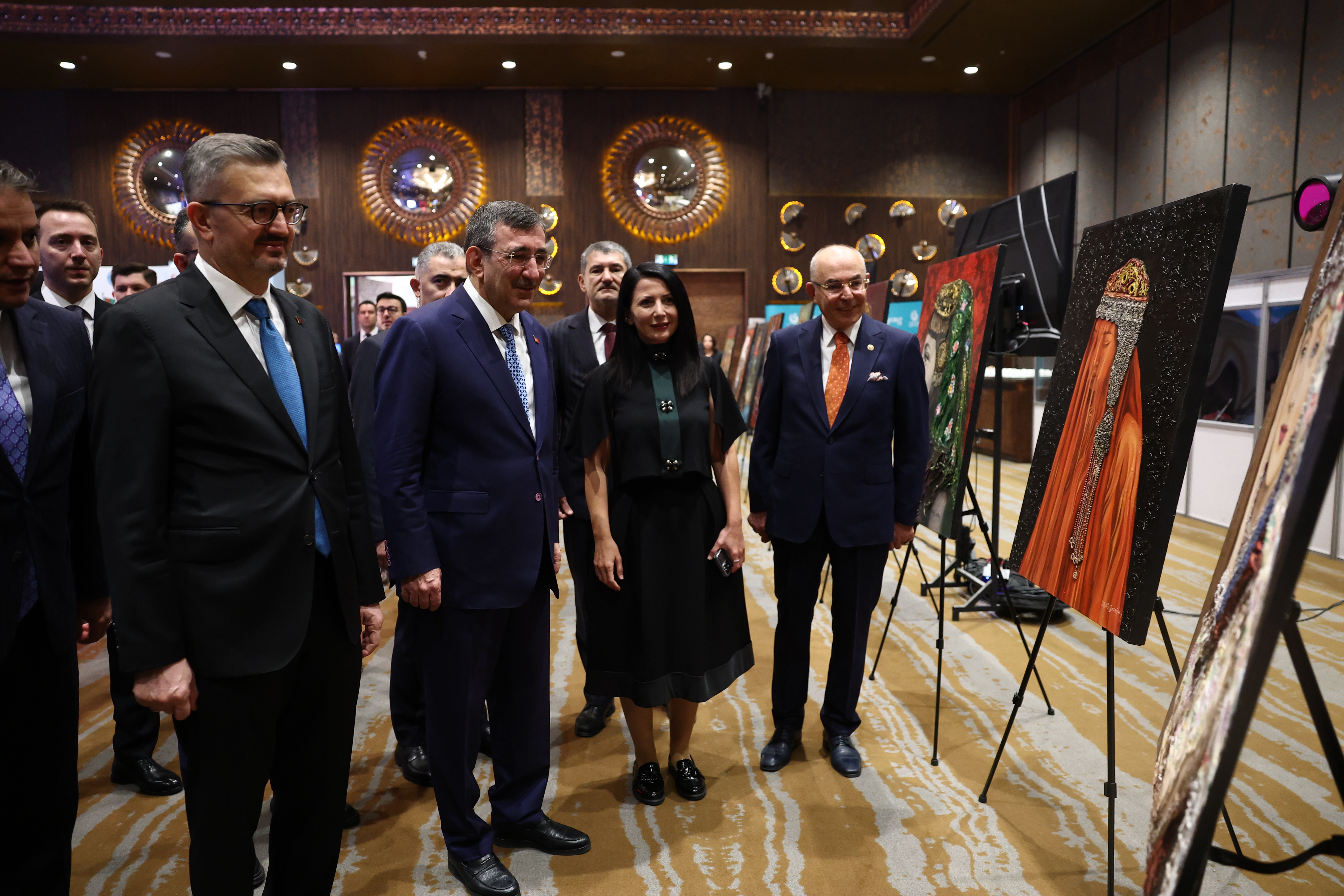
Presidency's Head of Communications, Burhanettin Duran, delivered a speech at the opening of the Turkic World Dialogue Forum, organised by the Presidency’s Directorate of Communications in Ankara.
Head of Communications Duran began his speech by saying: "It is a great honour to join you today for the opening of the Turkic World Dialogue Forum, which we have organised under the theme “From Ideas to Dialogue, Onwards. As we celebrate the 103rd anniversary of the proclamation of our Republic, it is a source of great pride for us to host you here in our capital, Ankara."
Emphasising that the Turks were one of the oldest and most powerful nations in human history, having built ancient civilisations, Head of Communications Duran said: “We have established 16 empires and hundreds of states across three continents, presenting the world with a vision of civilisation. Such an achievement is possible only with an exceptional capacity for organisation."
"We are establishing another important platform alongside the table of our leaders: a powerful platform for ideas and communication"
Pointing out that the ability to organise had been one of the distinguishing characteristics of the Turks for centuries, Head of Communications Duran said: “The Organisation of Turkic States is the latest and most extensive manifestation of our historical capacity for organisation. Today, we are strengthening our presence across continents with the bonds of solidarity that unite us."
Head of Communications Duran also noted:
"I would also like to begin by highlighting a remarkable coincidence. The first Summit of the Heads of State of Turkic-Speaking Countries was held here in Ankara on this very date, 30 October, in 1992. Over the following three decades, our sustained efforts matured and culminated in the establishment of the Organisation of Turkic States. And now, on this same date, we are establishing another important platform alongside our leaders' table: a powerful platform for ideas and communication. I hope that this platform will endure for many decades to come and serve the traditions and values of the Turkic world in the field of communication."
"The routes may have changed over the years, but our need for unity has never changed"
Recalling that Mahmud al-Kashgari wrote the Dīwān Lughāt al-Turk in Baghdad in the 11th century, Head of Communications Duran said: “He brought together the dialects of the Turkic peoples in a single dictionary and placed a map at the beginning of his work. On that map, the homelands of the Turkic peoples, stretching from the Far East to Anatolia, appeared side by side on a single page."
Head of Communications Duran noted that Mahmud al-Kashgari had shown centuries ago that what appeared to be a fragmented geographical region was, in fact, a unified whole, and added that it was Ismail Bey Gaspirali who had reopened this path in the modern era.
Noting that, through the newspaper Tercüman, which Gaspirali published a century ago, he brought together the region stretching from Crimea to Turkestan on the same pages, Head of Communications Duran said Gaspirali effectively implemented his ideal of "Unity in language, thought and action" as an early communications project.
Saying, "The routes may have changed over the years, but our need for unity has never changed," Head of Communications Duran stated, "Today, this Forum, which brings us together under the theme ‘From Ideas to Dialogue, Onwards’, reflects the same determination to bring our peoples together on a common page, as envisioned by both Mahmud al-Kashgari and Gaspirali. This Forum is an initiative to reaffirm our historical bonds in the global communications landscape of the 21st century."
"Türkiye has been part of this journey from the very beginning and will continue to be so"
Stating that the foundation laid in Nakhchivan in 2009 evolved into the Organization of Turkic States in Istanbul in 2021 and that the Turkic World Vision 2040, announced at the same summit, has set the direction of cooperation, Head of Communications Duran said, "Our institutions, ranging from TURKSOY to TURKPA, from the Turkic Investment Fund to the International Turkic Academy, are the driving forces of this journey.
Under the leadership of President Recep Tayyip Erdoğan, Türkiye has been part of this journey from the very beginning and will continue to be so."
Drawing attention to the fact that the Turkic world is located in the heart of Eurasia, in a region of immense strategic importance where many connections intersect, Head of Communications Duran said that energy routes stretching from the Caspian Sea to the Mediterranean and Europe are of considerable importance to the world's energy supply today.
Noting that the railways, ports and logistics centres of the Middle Corridor constitute one of the most critical hubs of movement between East and West, and North and South, Head of Communications Duran said, "As energy balances, supply chains and trade routes are being reshaped today, the geopolitical weight of the Turkic world is clearly increasing. And as our influence grows, so too do our responsibilities. One of our shared objectives must be to translate this responsibility into a future that we build together."
"President Recep Tayyip Erdoğan's call for a Turkic language model is likewise a strategic priority"
Explaining that when Gaspirali called for "Unity in language, thought and action" in the 19th century, he identified language as the first pillar of unity, Head of Communications Duran said, "Undoubtedly, language is the first element to build a foundation for collective memory. In today's world, our collective memory is also being shaped by data and narratives in the digital sphere. And we know that artificial intelligence models process this data, learn from it and generate new information. In doing so, they play a decisive role in shaping the dominant narratives in the digital sphere."
Head of Communications Duran continued his remarks:
"This raises an important question: ‘To what extent are artificial intelligence models fed by reliable and accurate information?’ In my view, we must reflect on the answer to this question and assume responsibility. We must produce high-quality content in our languages, drawing on our own sources, and ensure that artificial intelligence models are also trained on our data. Only then can we help shape digital narratives in a way that aligns with the truth. Otherwise, our story will be written by others. A version of the Turkic world will emerge, framed and defined by others. In this respect, I attach particular importance to the emphasis that our Heads of State and Government placed on a 'Digital Turkic World' in Turkestan this May. President Recep Tayyip Erdoğan's call for a Turkic language model is likewise a strategic priority for precisely this reason. The agreement reached under the auspices of the Organisation of Turkic States on the proposed 34-letter Common Turkic Alphabet is also of great importance for making our collective memory accessible and readable. Today, we have the means to tell our own story in our own voices, in our own languages and through our own values. The way forward is to strengthen our collective capacity to shape and communicate our narratives."
"Now is the time to tell our shared stories together, through jointly produced films, television series and documentaries, supported by a common media ecosystem."
Noting that Turkish television series reach millions of viewers across the Turkic world and around the globe, Head of Communications Duran said that the film industries of Azerbaijan, Kazakhstan, Kyrgyzstan and Uzbekistan are becoming increasingly visible at international festivals.
Stating that "Now is the time to tell our shared stories together, through jointly produced films, television series and documentaries, supported by a common media ecosystem," Head of Communications Duran expressed his hope that tomorrow's panel on "Media and Communication in the Turkic World" would be a significant step in this direction.
Referring to Yusuf Has Hajib's work titled "Kutadgu Bilig", Head of Communications Duran said, "That is, 'knowledge that brings happiness'... The connection Yusuf Has Hajib established between knowledge and happiness remains as relevant today as it was a thousand years ago. Yet in an age when information is so abundant, it has become equally difficult to distinguish the knowledge that leads us to wisdom and, ultimately, to happiness."
Underlining that lies can be produced at low cost in the present age, whereas verification requires effort, Head of Communications Duran said that disinformation, manipulation and perception management operations also feed on this gap.
"History has never handed any generation a page already written; every generation has written its story."
Recalling that the Directorate of Communications established the Centre for Combating Disinformation in 2022 to provide an institutional response to this issue, Head of Communications Duran stated that they held the Turkic States Forum on Combating Disinformation in Ankara in December last year.
Noting that disinformation campaigns targeting the Turkic world are sometimes conducted simultaneously against shared objectives and sometimes directed separately at the particular sensitivities of individual countries, Head of Communications Duran said, "At this forum, we once again established that disinformation is not merely a communication issue but a matter of collective security for the Turkic world. Our most effective response is to make fact-checking not simply the responsibility of a single institution but a shared reflex. A disinformation campaign emerging in Bishkek should prompt a swift response from Baku, Tashkent, Astana, and Ankara that very same evening."
Stating that they would address a wide range of important issues across numerous panels today and tomorrow, Head of Communication Duran particularly highlighted two sessions.
Stating that today's "Media and Communication" panel is a strong indication that institutions can establish a common language of communication, Head of Communications Duran said, "I believe that tomorrow's Gaspiralı session will offer a new perspective on the place of language and memory in the digital age."
Expressing his hope that the relationships established here will extend far beyond these two days and mark the beginning of regular mechanisms for consultation, Head of Communications Duran said, "History has never handed any generation a page already written. Every generation has written its own story. Our generation is writing its chapter at a time when the bonds that unite us are beginning to fray. If we write that chapter together, the shared century of the Turkic world will speak in its voice."
Head of Communications Duran expressed his hope that the Turkic World Dialogue Forum would yield positive outcomes.