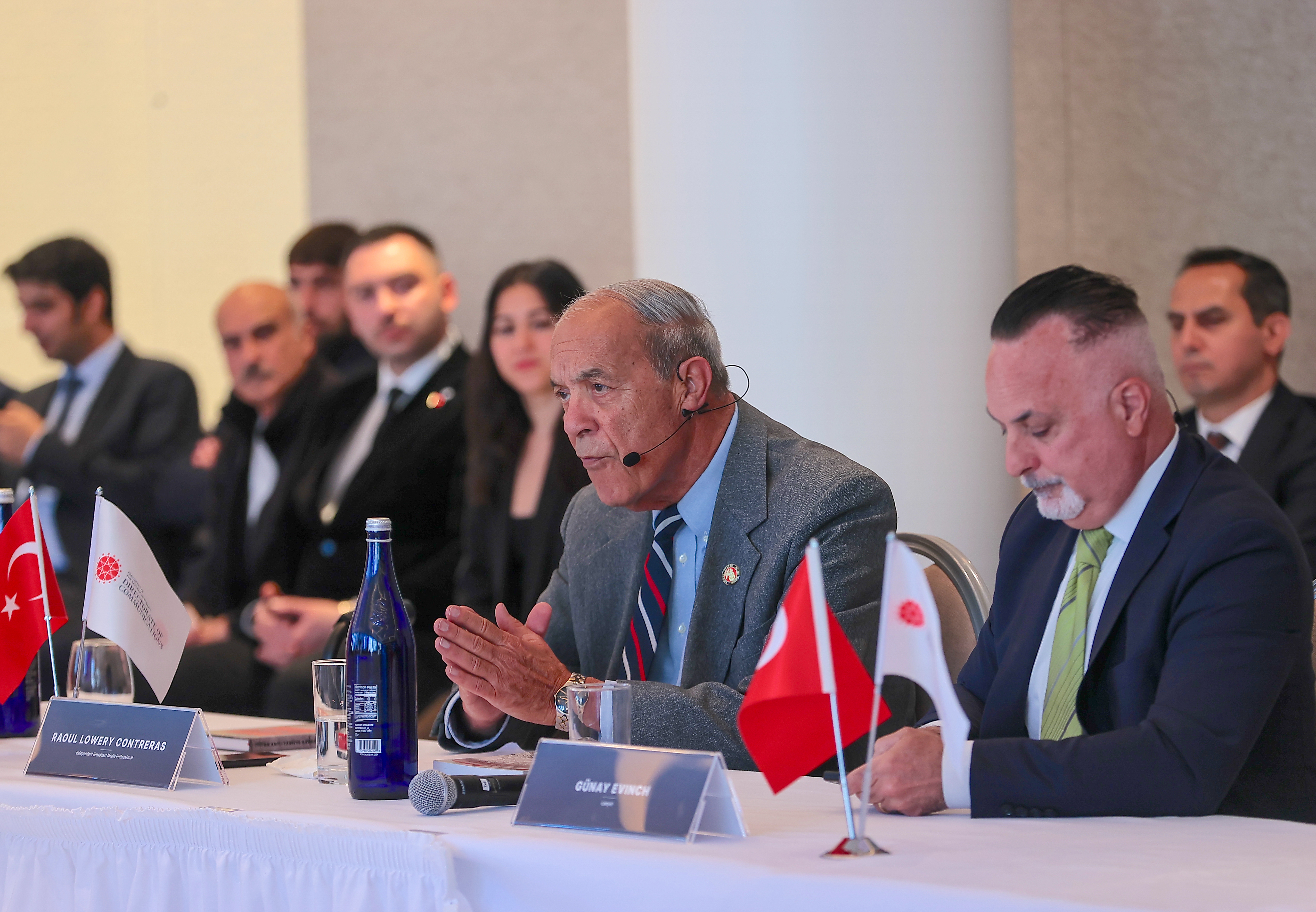
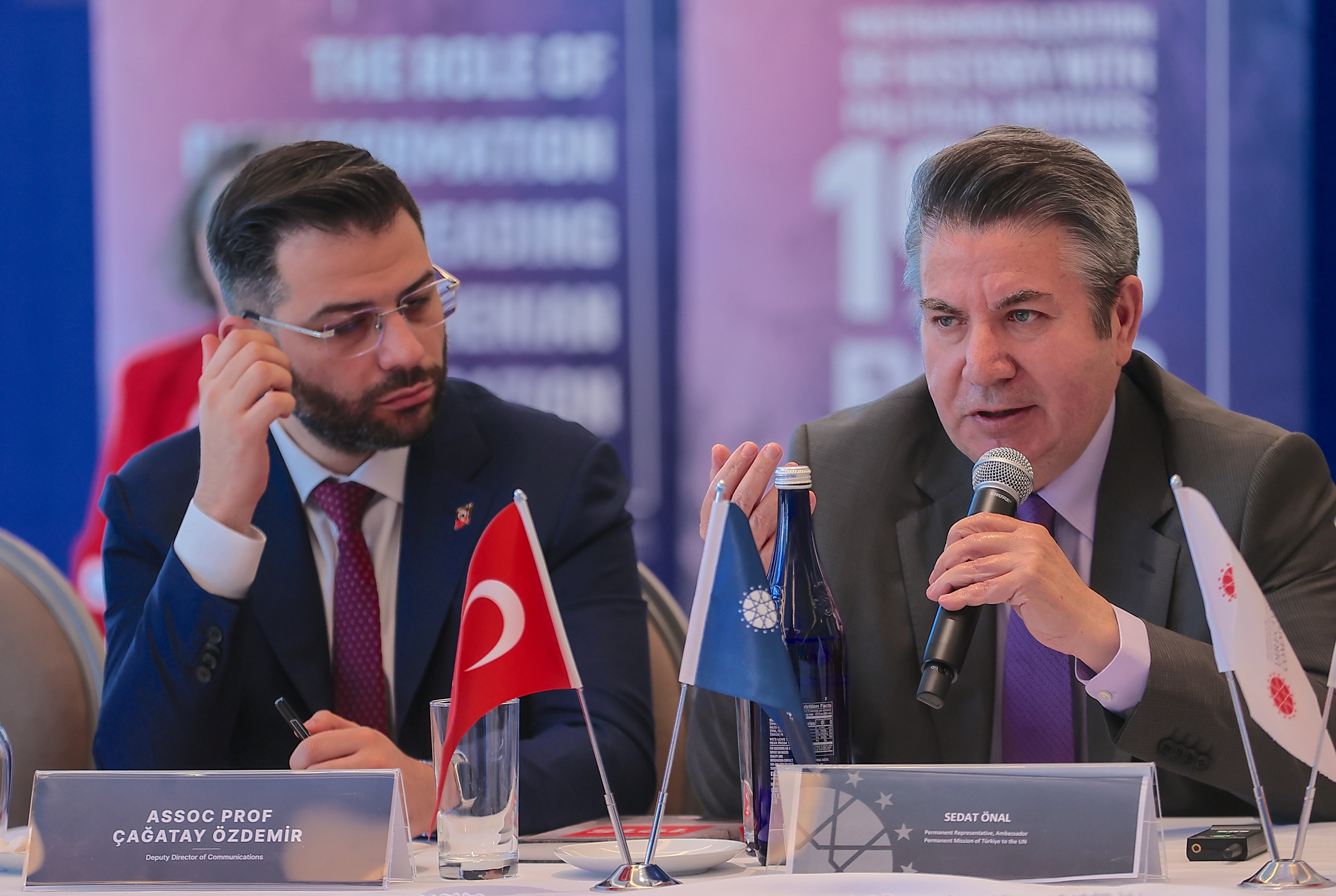
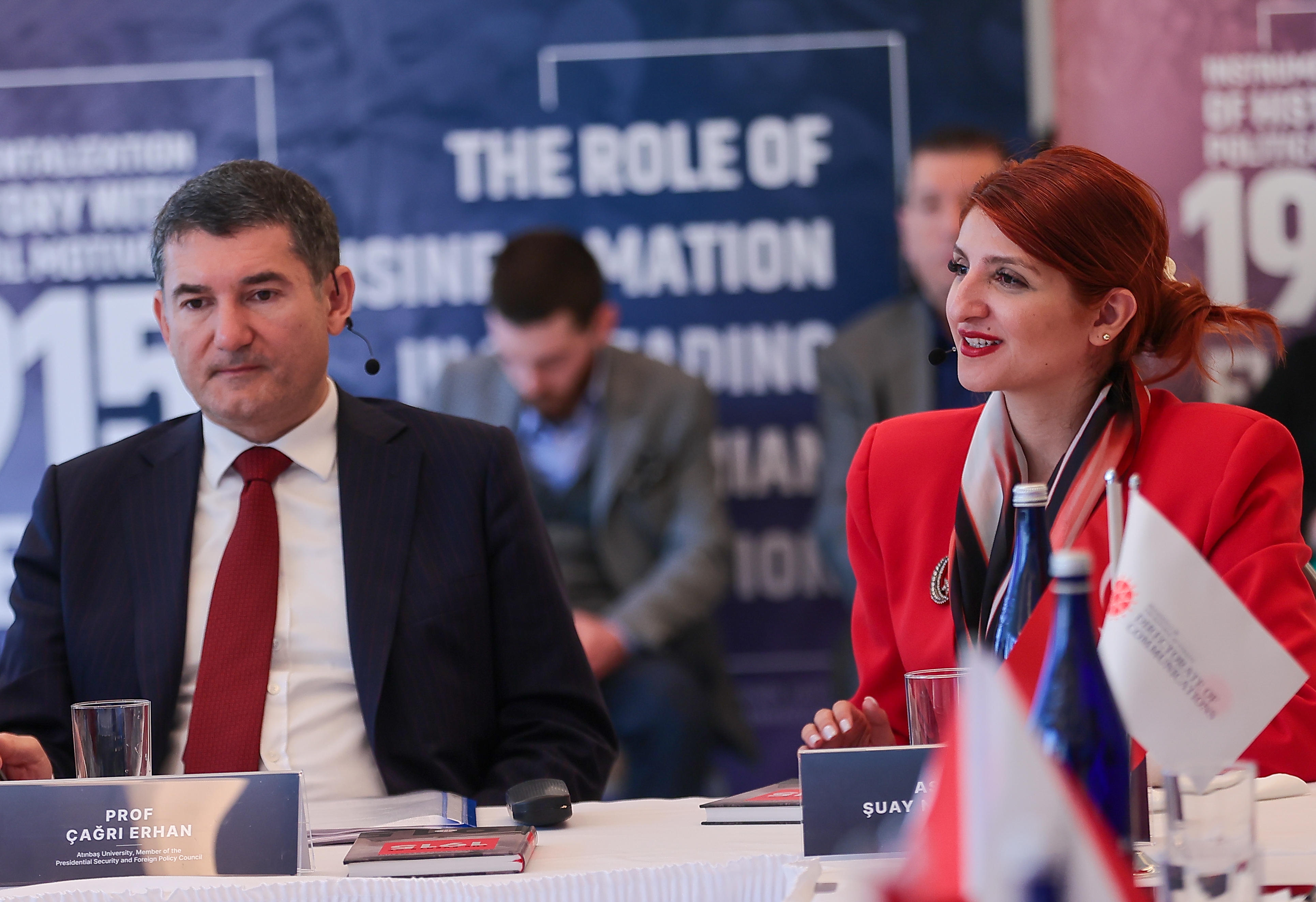
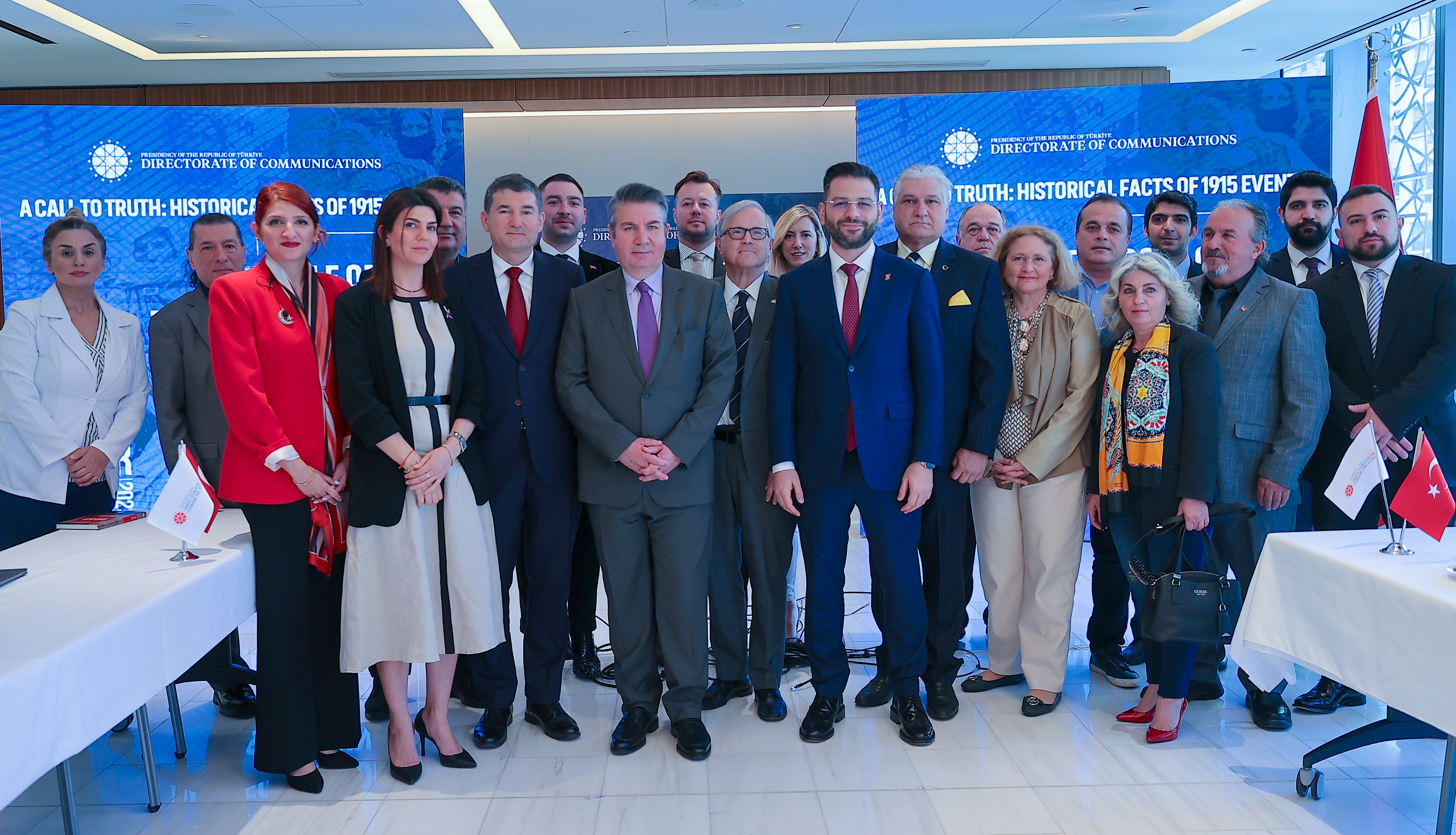
The historical facts of the events of 1915 and Türkiye's historical theses in light of international law were discussed at a panel titled "A Call to Truth: Historical Facts of the Events of 1915" held by the Directorate of Communications at the Türkevi Centre in New York.
With the participation of the Permanent Representative of Türkiye to the United Nations (UN) Sedat Önal, Deputy Director of Communications Assoc. Prof. Çağatay Özdemir, AFAD General Director of Earthquake and Risk Reduction Prof. Orhan Tatar, the panel began with a video depicting the position of the Armenian community, which lived in peace for centuries within the Ottoman Empire, as well as separatist movements and the events of 1915.
Presidency's Director of Communications Fahrettin Altun also sent a video message to the panel.
"The narrative needs to change"
One of the speakers, military history professor Edward J. Erickson stated that it was critical to be cautious about who creates the content.
Stating that the Armenian lobby imposed a certain narrative through disinformation, Erickson said, "The events of 1915 are very different from these narratives. Türkiye needs to change the narrative with a new approach. It needs to bring the untold truths to light."
According to Erickson, the Armenian lobby portrayed the labour camps built during this time period as "death camps," despite the fact that these camps provided employment opportunities and that people entered and left the camps with no walls or guards as they wished.
Pointing out that Türkiye is facing an "information warfare," Erickson stated, "Türkiye needs a campaign, and military historians can help in this regard. Long-term goals must be established. However, future research should also contribute new information to the existing literature."
"Stories of both sides need to be heard"
Member of the Presidential Security and Foreign Policy Council Prof. Nurşin Ateşoğlu Güney stated that if a fair truth about this tragedy is to be established, the stories of both sides need to be heard.
Emphasising that the Armenian side's story should not be the only one considered, Güney said that Türkiye opened the Ottoman archives and proposed the formation of a joint historical commission, but the Armenian side rejected these proposals.
Güney remarked, "Distorted facts from one side prevent the Turkish and Armenian people from coming together in a better environment."
Recalling that Armenia offered assistance to Türkiye following the February 6 earthquakes and that the border was opened 30 years later, Güney said, "There is a small but significant window of opportunity to restore and normalise relations. This window should not be closed."
"Political agendas obstruct fact-based reconciliation efforts"
Lawyer Günay Evinch indicated that he received a scholarship that enabled him to receive an education on the historical perspective of the events of 1915.
Evinch said that the Armenian lobby was carrying out a multilateral initiative in the USA and that one of them was congress resolutions, and that they carried out their propaganda on the basis of "recognition, compensation and land."
Evinch recalled that until US President Joe Biden's administration, the US presidents used the term "great disaster", while Biden used the term "genocide" and held the Ottoman authorities responsible.
Pointing out that the US courts of justice are another area used by the Armenian lobby, Evinch said, "Political agendas obstruct fact-based reconciliation efforts."
"Only a single book on the Khojaly Massacre was published in the USA"
Journalist and writer Raoul Lowery Contreras said he was attacked when he wrote an article on Azerbaijan, Baku and the Karabakh War.
Stating that not only Armenians but also the Russian army took part in the Khojaly Massacre, Contreras said, "Research gave me the opportunity to see much more. It makes me very angry that little babies were killed just because they were Azerbaijani."
Contreras noted that only a single book on the Khojaly Massacre had been published in the USA and that he was the author of it. He went on to say that while this was regrettable, sensitivity would be increased in this way, albeit with small steps.
"We must never stop searching for the truth"
Presidential Security and Foreign Policy Council member Prof. Çağrı Erhan emphasised that he participated in the panel as a historian and that both sides should continue their research by using archive documents.
Erhan said, "As historians, we should never give up searching for the truth," and added that when history is used as a political tool, distorted and false documents come to the fore.
Recalling that the Armenian lobby was inclined to draw parallels between the Holocaust and the 1915 events, Erhan said that fake and false documents and stories were used in this context.
Erhan said, "Trying to rewrite and reshape history with false documents leads to international intolerance and animosity."
Stating that this issue should be left to historians, yet it has been seriously "politicised", Erhan pointed out that politicians should keep working in their own fields.
"History is on our side"
Ambassador Önal, who gave the closing speech, also thanked the participants who discussed the issue from many aspects.
Noting that he was also working on this issue, Önal said, "We must keep working to counter the Armenian claims in every context. We must go further in our research and in explaining ourselves. This needs to be done in collaboration with every element of the national power. History is on our side; we have nothing to be ashamed of."
Pointing out that the 1915 events have become "a part of their identity" for the Armenian diaspora, Önal said, "In order for Armenia to live in prosperity, it needs to build peace with the countries in its region."
Pointing out that it is vital to deal with the facts of the common past within the framework of logic by focusing on the future, Önal said, "Türkiye has made proposals such as a joint historical commission. I would like to state that we should approach the issue from a historical perspective and that nothing can be imposed on Türkiye."