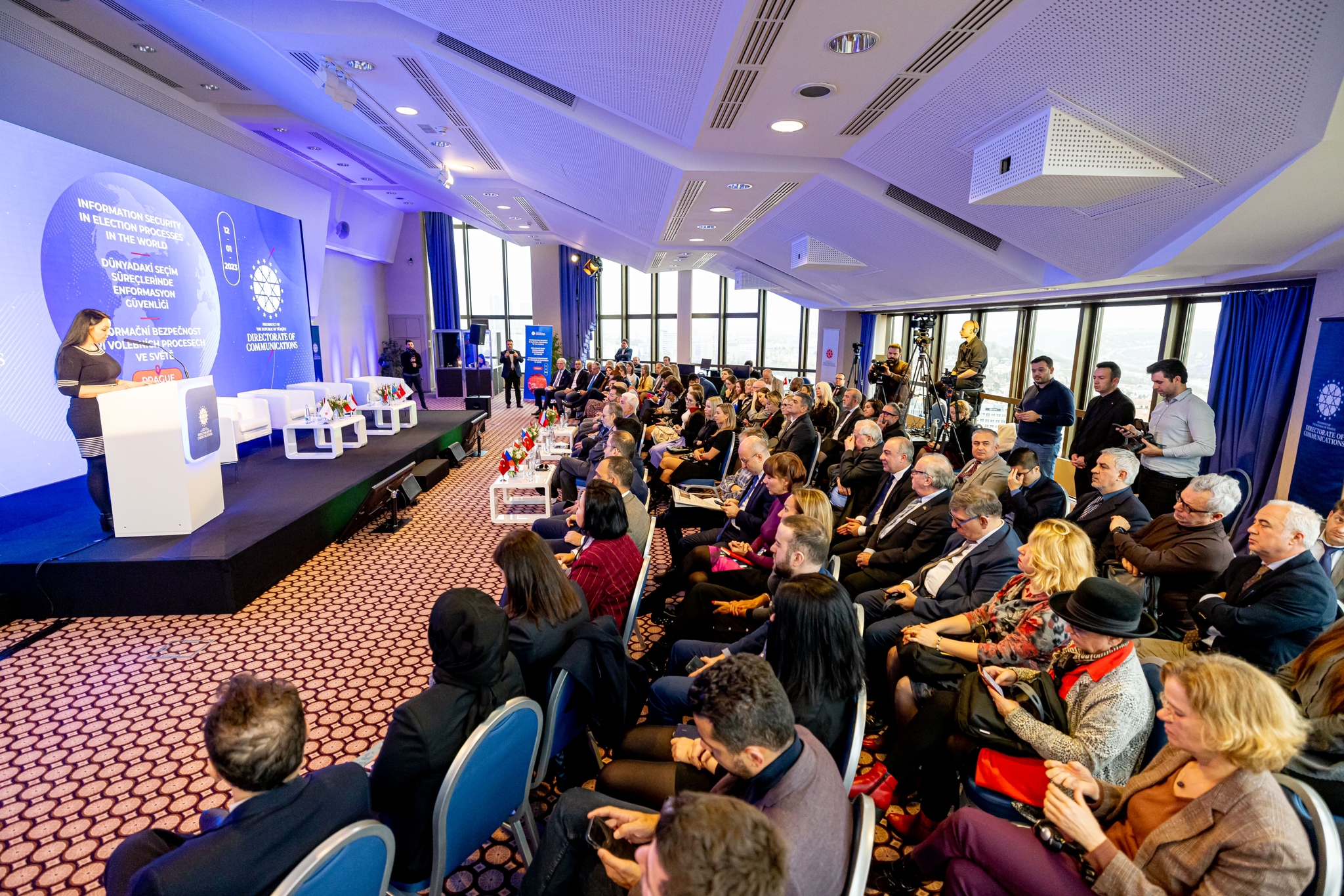
The Presidency's Directorate of Communications held the "Information Security in Election Processes in the World" panel in Prague, the capital of the Czech Republic.
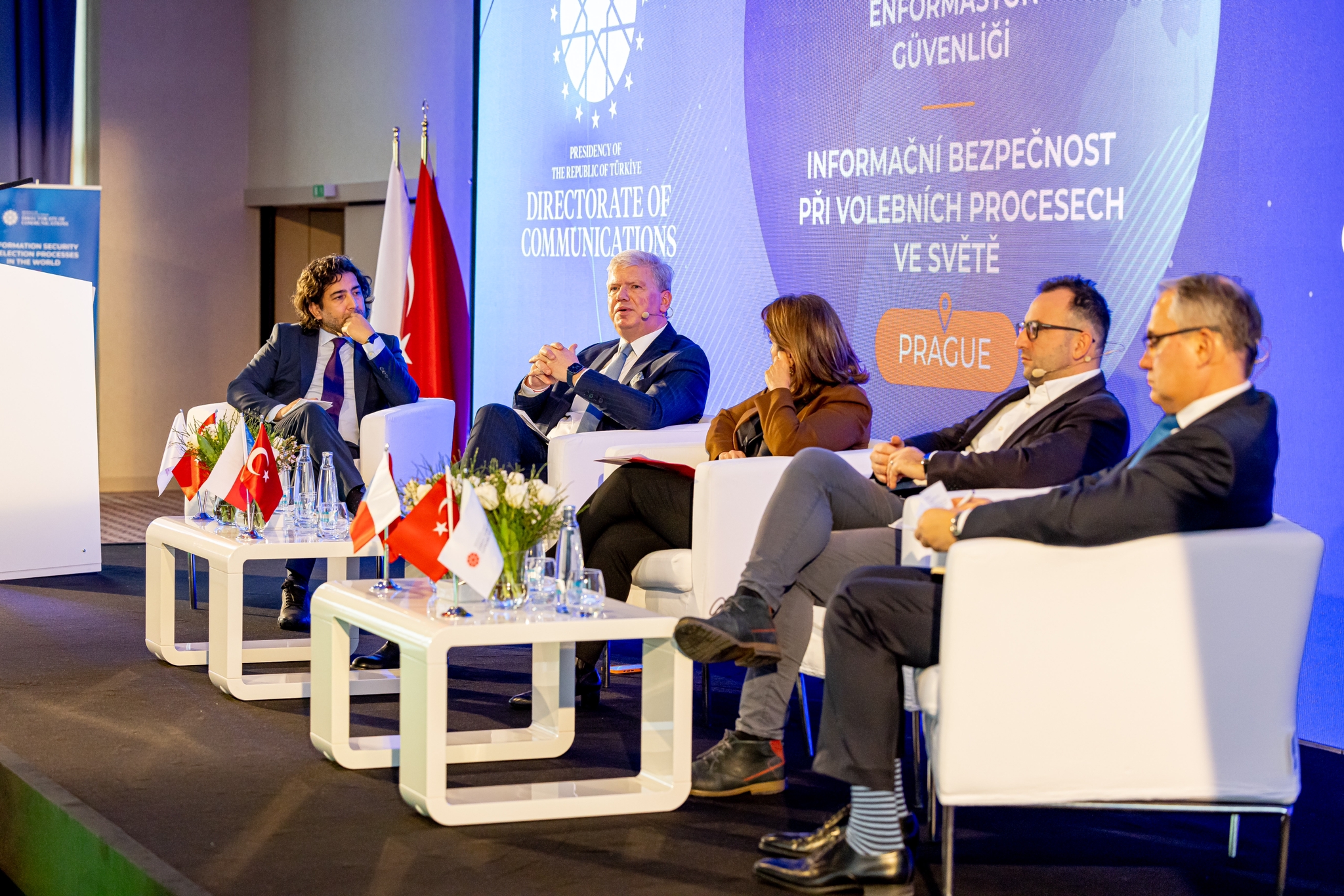
The panel organised by the Presidency's Directorate of Communications was held in Prague, the capital of the Czech Republic, with the contributions of the Embassy of the Republic of Türkiye in Prague. During the panel that started with the opening remarks of Prague Ambassador Egemen Bağış, Former Czech EU Minister and EU Enlargement Commissioner Ambassador Stefan Fule, Prof Özden Zeynep Oktav from İstanbul Medeniyet University, Pravo Daily's Balkans and Eastern Mediterranean Correspondent and Political Commentator Thomas Kulidakis and Director Veselin Vackov (PhD) of Lidove Noviny Daily shared their opinion under the moderation of Assoc Prof Kılıç Buğra Kanat from Erie, Penn State University.
Egemen Bağış, Ambassador of the Republic of Türkiye to Prague, started his speech by stating that Türkiye is a unique country where the culture of democracy and Islam coexist. Emphasising that the experiences related to coups and coup attempts have made Türkiye a source of inspiration for other countries on the path to democracy, Bağış stated that free and fair elections are highly crucial for democracy. Bağış noted that through these panel series organised by the Directorate of Communications, ways to combat black propaganda and disinformation phenomenon would be addressed. Ambassador Egemen Bağış closed his remarks with the words of one of the US Presidents, Abraham Lincoln, "The ballot is stronger than the bullet".
The moderator of the panel, Kılıç Buğra Kanat, stated that in the "Information Security in the Election Processes in the World" panel series project, which will be held in many countries, an important exchange of views is expected on the potential challenges and threats to democratic elections, and emphasised that they will prepare a report at the end of the project.
The Former EU Minister and Commissioner for EU Enlargement from the Czech Republic, Ambassador Stefan Fule, who took the floor first on the panel, started his speech by stating that while the developing technological opportunities could make it possible to achieve democratic goals, they started to undermine such ideals. Fule stated that the European Union took precautions against manipulation and disinformation attempts by launching various strategies and programs. Underlining that there is no magic wand in the fight against disinformation, Fule said that there are four stages that need to be handled in coordination on this issue. Fule stated that legal regulations, strong institutions, free media and strong public broadcasting, and the protection of the rule-based international order are very important in terms of ensuring election security and combating disinformation.
As the second speaker of the panel, Prof Özden Zeynep Oktav started her speech by stating that disinformation is a negative phenomenon that affects voting behaviour. Noting that certain social media opportunities enable states and non-state actors to wage low-cost wars, Oktav underlined that disinformation reached its peak during the 2016 U.S Presidential election and the Brexit process in the United Kingdom. Oktav concluded her speech by providing instances of certain election processes and social developments in Türkiye.
Pravo Daily's Balkans and Eastern Mediterranean Correspondent and Political Commentator Thomas Kulidakis noted that in the media environment of the past, the news processes of radio, television, and newspapers covered a longer period of time in terms of preparation, broadcasting, and reader access, which aided in the better comprehension of the news. Emphasising that the information flow is accelerating in an unhealthy way today, Kulidakis stated that this lack of time had made room for grey propaganda and black propaganda initiatives. Kulidakis also added that algorithm implementations reinforce people's views and diminish their tolerance for alternative viewpoints.
Taking the floor as the last speaker on the panel, Veselin Vackov (PhD), Director of Lidove Noviny Daily, started his speech by stating that the concept of information security consists of two components: cyber security and psychological operation. Stating that psychological operation processes that target people's emotions, reasoning processes and behaviours use manipulated or completely synthetically produced content such as "Deep Fake", Vackov underlined that these initiatives also tend to fill the "information gaps" caused by the neglect of governments. Vackov emphasised the need for a comprehensive approach to combat disinformation, including legislation and the establishment of task forces.