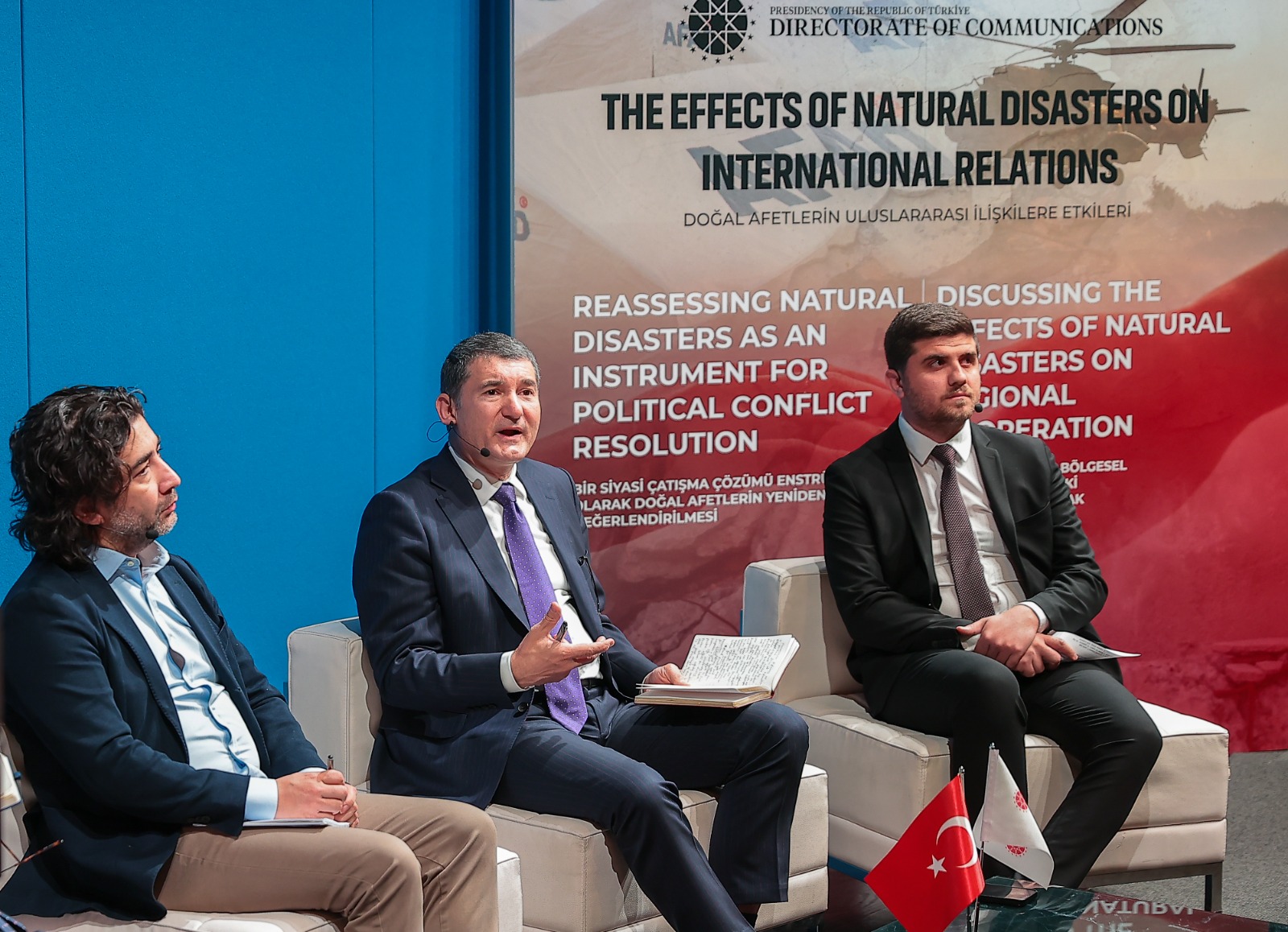
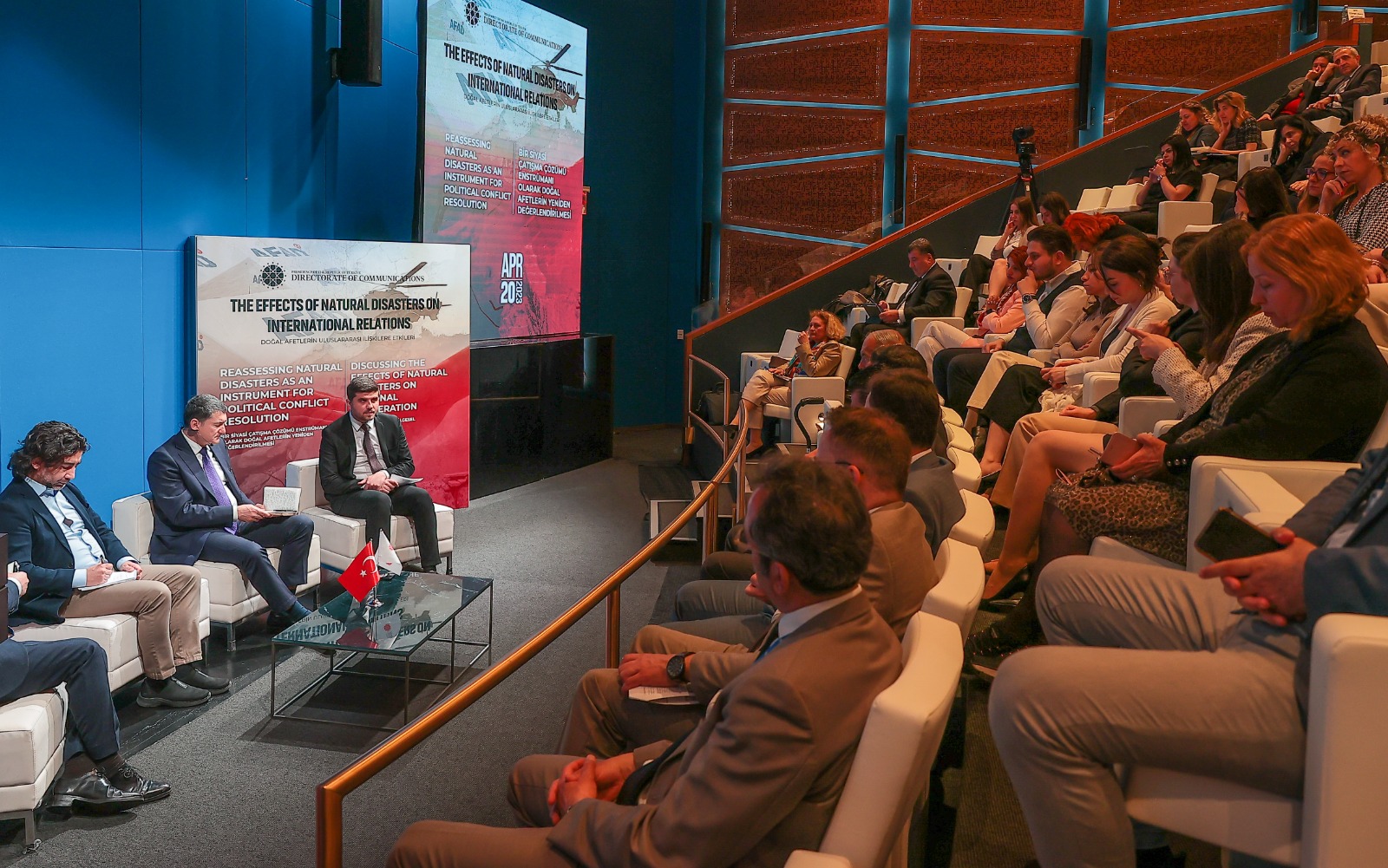
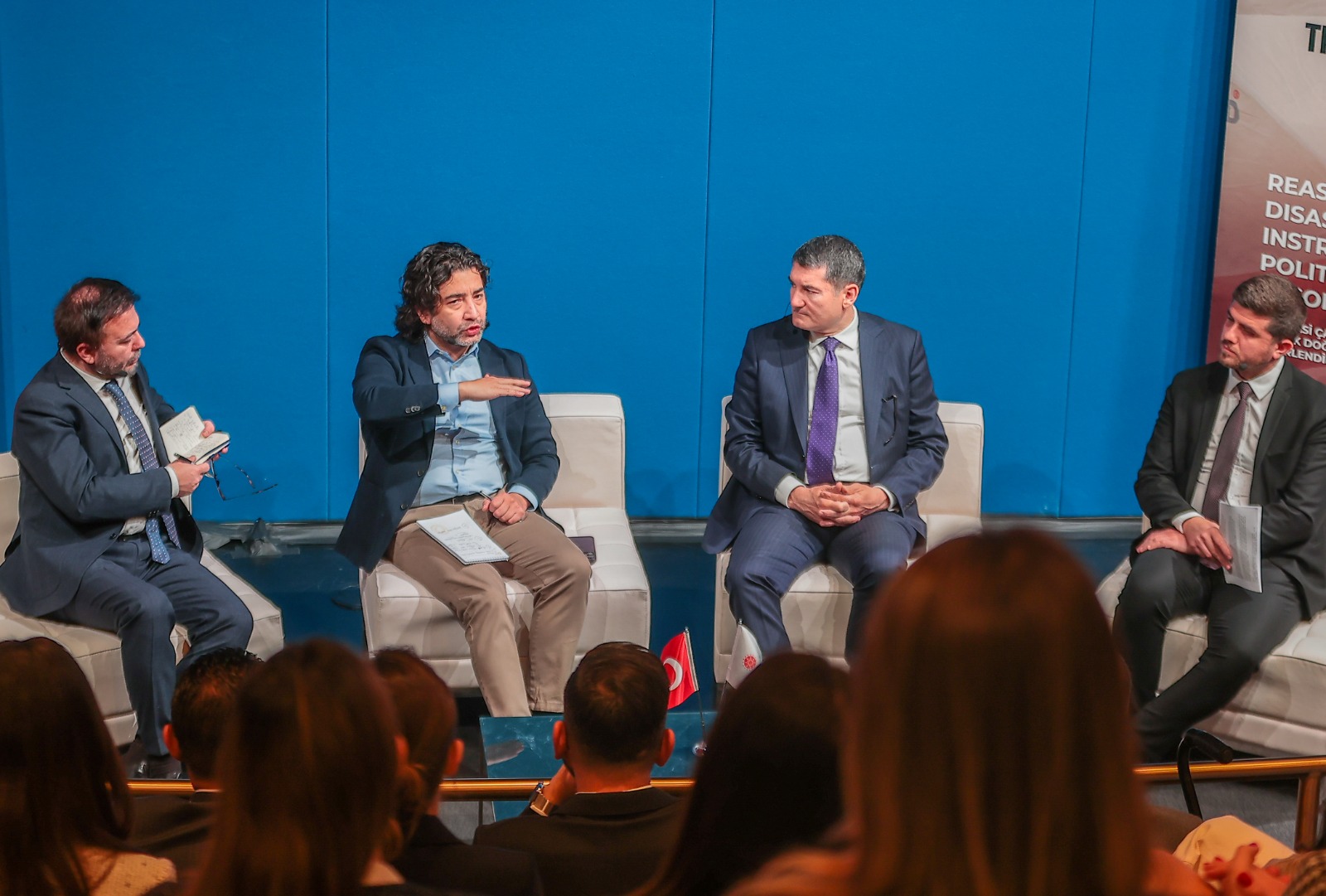
The delegation of the Presidency's Directorate of Communications discussed the effects of natural disasters on international relations in New York.
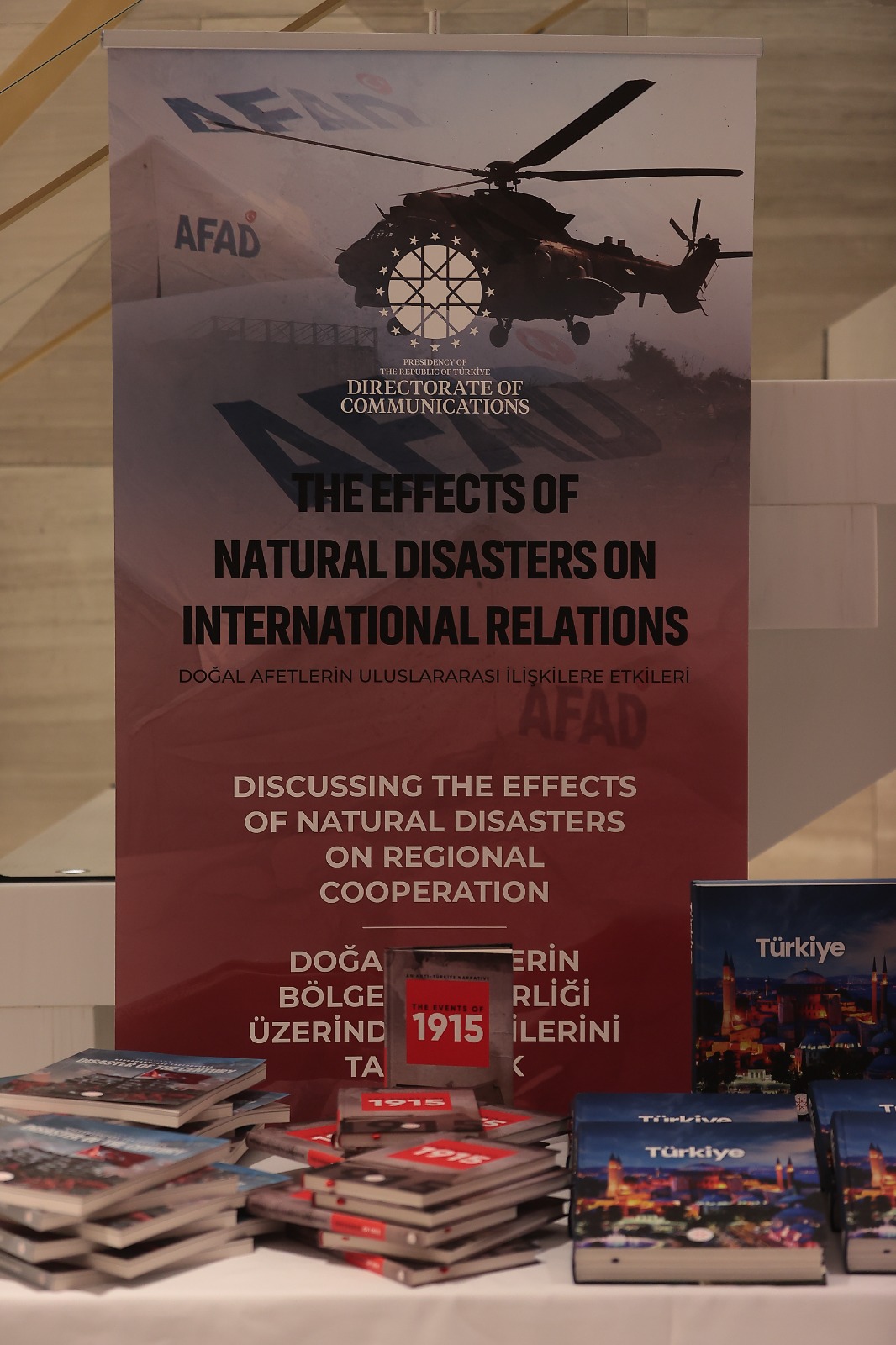
A panel titled "The Effects of Natural Disasters on International Relations: Reassessing Natural Disasters as an Instrument for Political Conflict Resolution" was held in two sessions at Türkevi.
The panel began with a video display about the earthquakes that struck Kahramanmaraş, described as the "disaster of the century," and the subsequent humanitarian assistance efforts, and continued with a video message sent to the panel by the Presidency's Director of Communications Fahrettin Altun.
The first session was moderated by the Communications Counsellor in Washington, Muhammed Bilal Kenasari, during which the Research Director at the SETA Foundation Assoc. Prof. Kılıç Buğra Kanat, Member of Presidential Security and Foreign Policy Council Assoc. Prof. Çağrı Erhan and Turkish-American National Steering Committee (TASC) Vice Chairman Gökhan Doğan took the floor.
Erhan stated that the earthquakes that occurred on February 6 demonstrated the significance of international cooperation during natural disasters in general.
Erhan noted that the concept of "human security" has gained prominence as part of the newly emerging security concept in response to the current challenges, and drew attention to the fact that Türkiye has swiftly implemented "humanitarian diplomacy" practices within this context.
Erhan said that the assistance provided by Türkiye and Greece to one another following earthquakes that occurred at different times has resulted in a new era and rapprochement in relations between the two countries.
Referring to the fact that Israel and Russia sent the largest number of search-and-rescue teams after Azerbaijan, Erhan stated that these teams were welcomed by Turkish society and ultimately had positive impacts on foreign policy.
The Vice Chairman of TASC Doğan highlighted that the Turkish-American diaspora acted collaboratively in response to the earthquake, with associations from multiple countries contacting TASC to offer assistance.
Research Director at the SETA Foundation in Washington DC, Kılıç, also stated that the magnitude of the disaster necessitated international coordination and assistance.
Klç emphasized the importance of international assistance being linked to a specific mechanism in a controlled manner, as well as its sustainability.
Kılıç stated that natural disasters can also play a part in conflict resolution, and that the spirit of solidarity that emerges after disasters should be made permanent.
Second session
In the second session, moderated by Communication Counsellor in Chicago Burak Akçeşme, AFAD General Director of Earthquake and Risk Reduction Prof. Orhan Tatar, Member of the Presidential Security and Foreign Policy Council Prof. Nurşin Ateşoğlu Güney and Ankara Hacı Bayram Veli University Faculty Member Assoc. Prof. Şuay Nilhan Açıkalın spoke.
Tatar drew attention to the fact that the most recent disaster is the largest natural disaster to strike Anatolia in the past 2000 years while sharing information about the magnitude of the earthquakes.
Tatar stated that the earthquake zone is three times the area of Switzerland, the Netherlands, and Denmark combined, and Türkiye is trying to respond to a disaster of unprecedented magnitude.
Tatar said that AFAD has extended a helping hand to 75 countries since its establishment in 2009 and that the country's generous attitude and compassion for those in need have played a key role in this context.
Member of the Presidential Security and Foreign Policy Council Güney noted that, in addition to search and rescue efforts in the aftermath of the earthquakes, high-level visits to Türkiye took place, and the European Union (EU), the United Nations, and NATO launched assistance initiatives.
Güney stated that disasters present a "window of opportunity" in the context of conflict resolution, making it easier to strengthen political ties during such times.
Assoc. Prof. Açıkalın stated that she had personally experienced the Gölcük earthquake in 1999 and would never forget the countries that came to help.
Açkalın expressed her belief that earthquakes will foster new opportunities for cooperation in disaster management and health security and indicatd that mechanisms to boost regional cooperation should be developed.