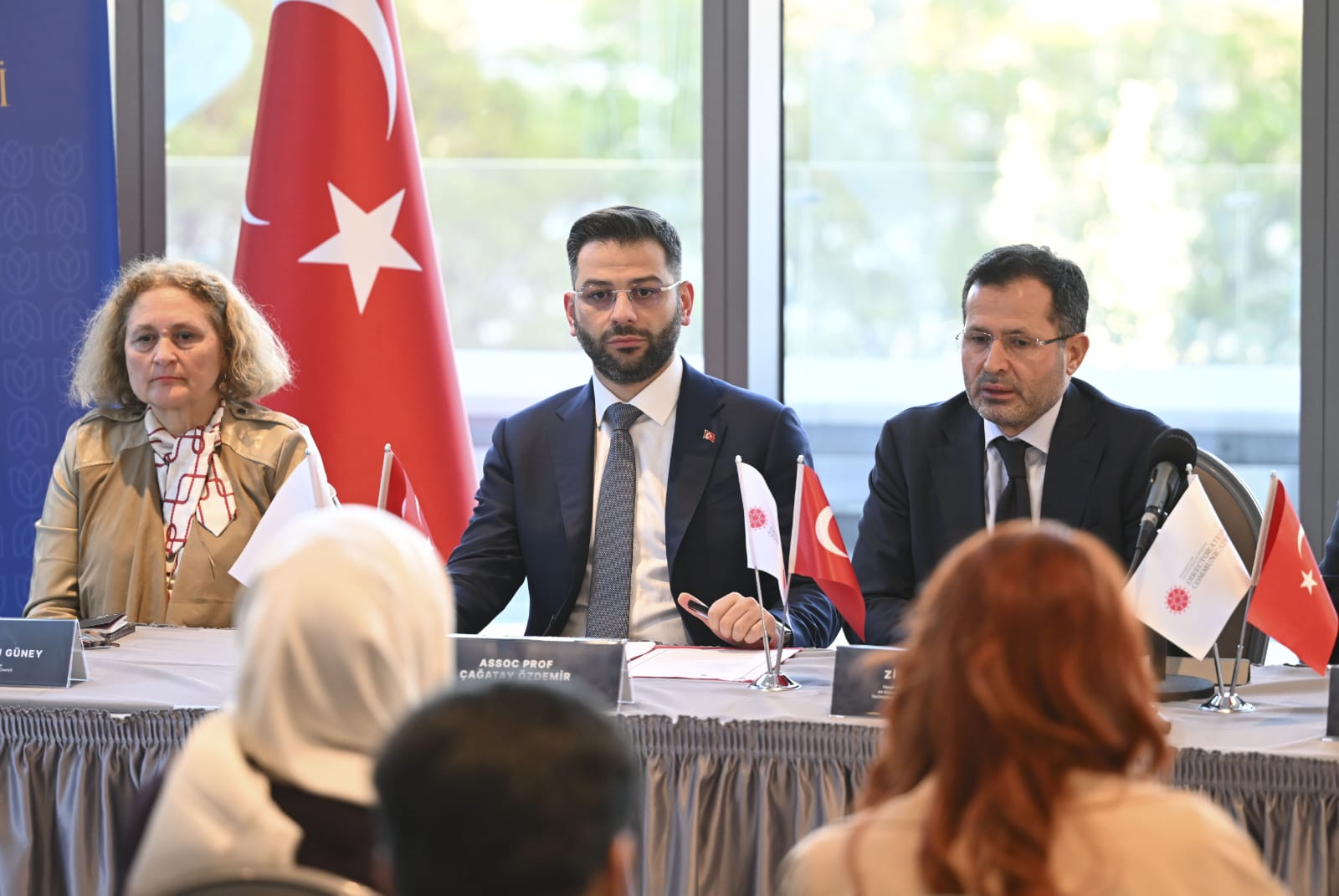
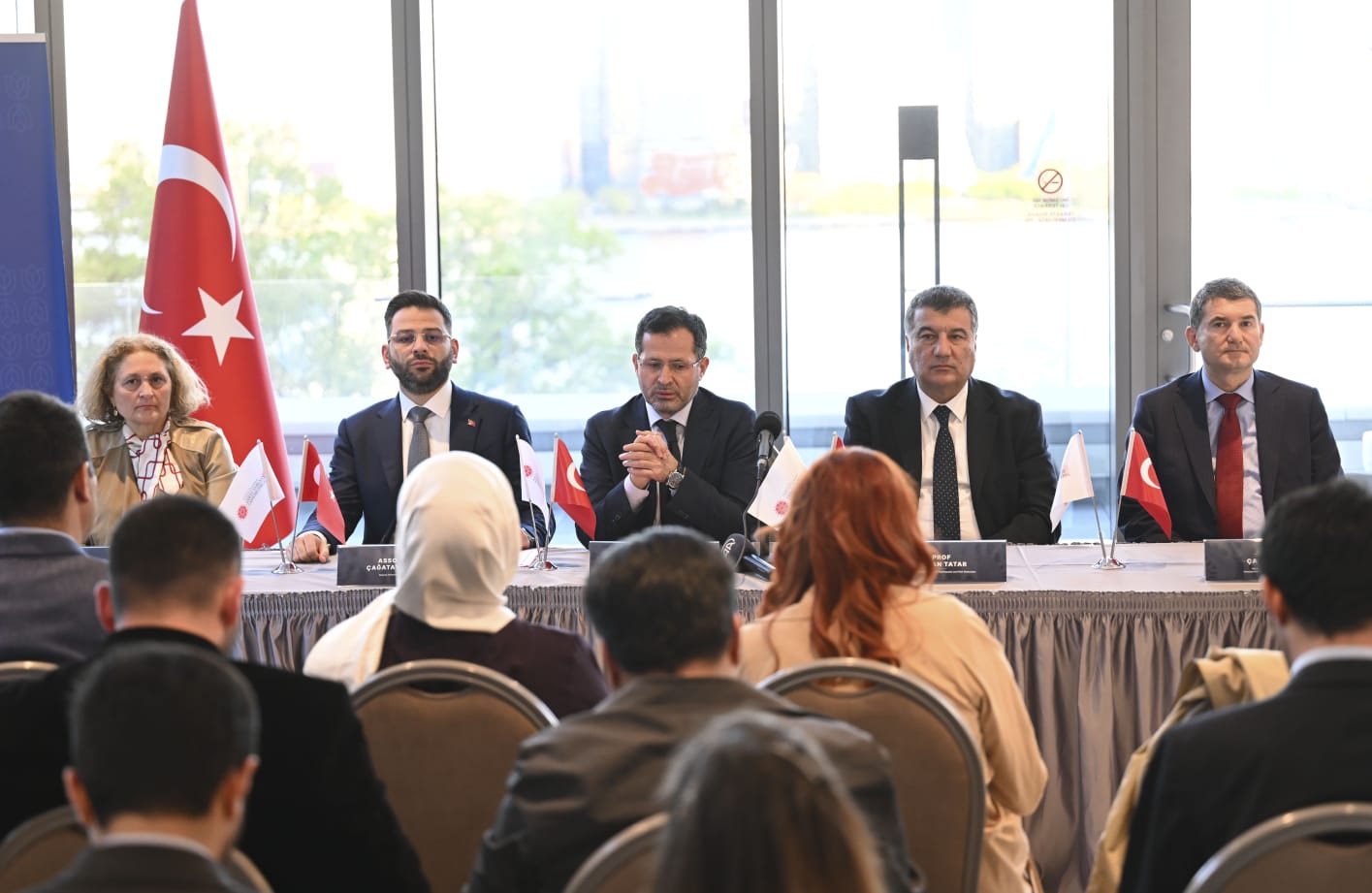
The team of the Presidency's Directorate of Communications, which held a series of meetings in the US capital, Washington and New York, evaluated the earthquakes, which are described as the disaster of the century in Türkiye, as well as their contacts within the framework of humanitarian diplomacy, for the Turkish press members based in New York.
Speaking at the press conference in New York Türkevi, Deputy Director of Communications Assoc. Prof. Çağatay Özdemir stated that they shared their experiences from the earthquake disasters that occurred in Türkiye on February 6 and what happened in the aftermath of the earthquakes with some think tanks in Washington and officials from institutions within the United Nations (UN) in New York.
Özdemir informed the press that they held meetings with important organizations such as the US Chamber of Commerce, the Federal Emergency Management Agency (FEMA), the US Agency for International Development, the US Department of State's Türkiye Desk, the World Bank and the Atlantic Council.
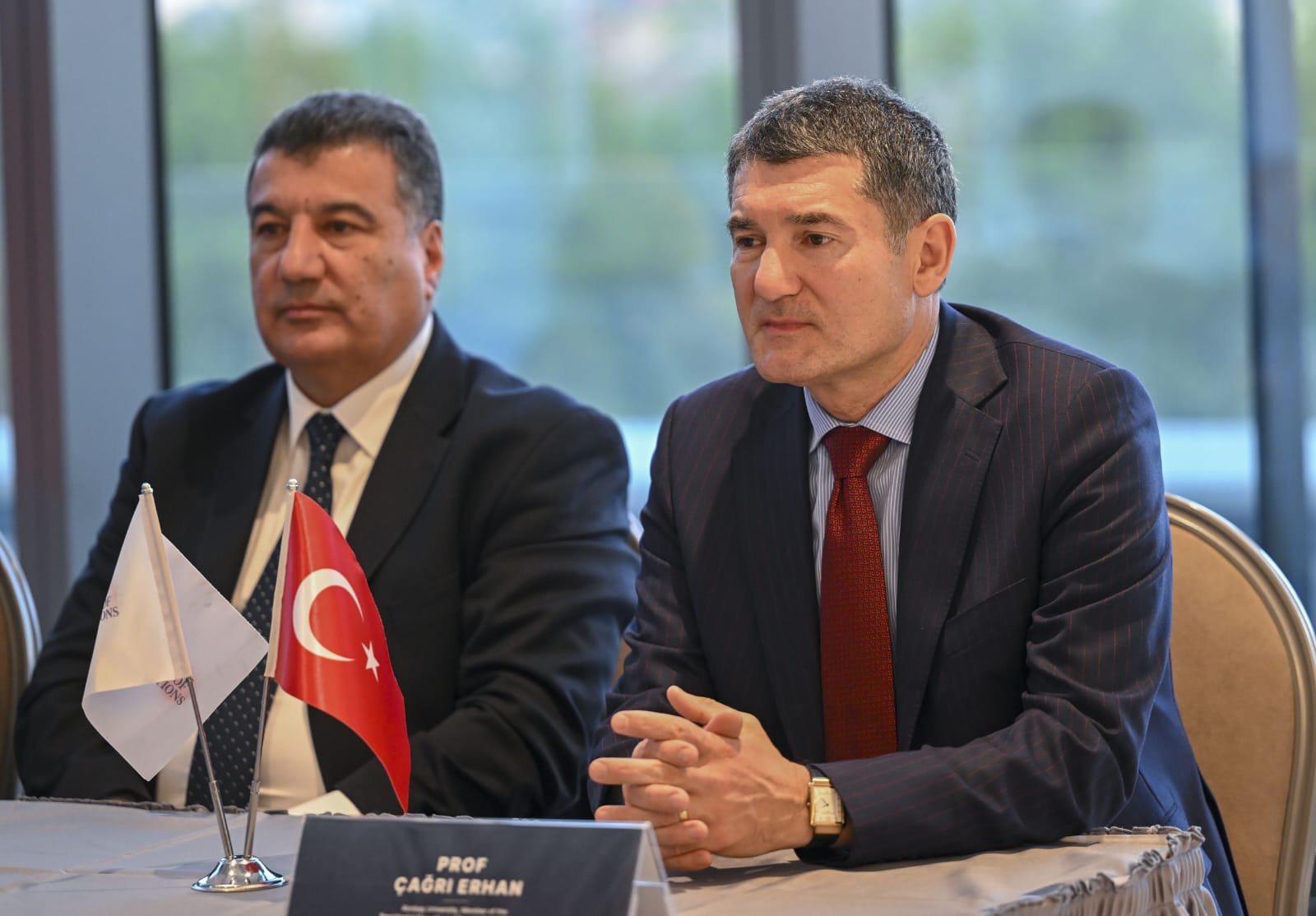
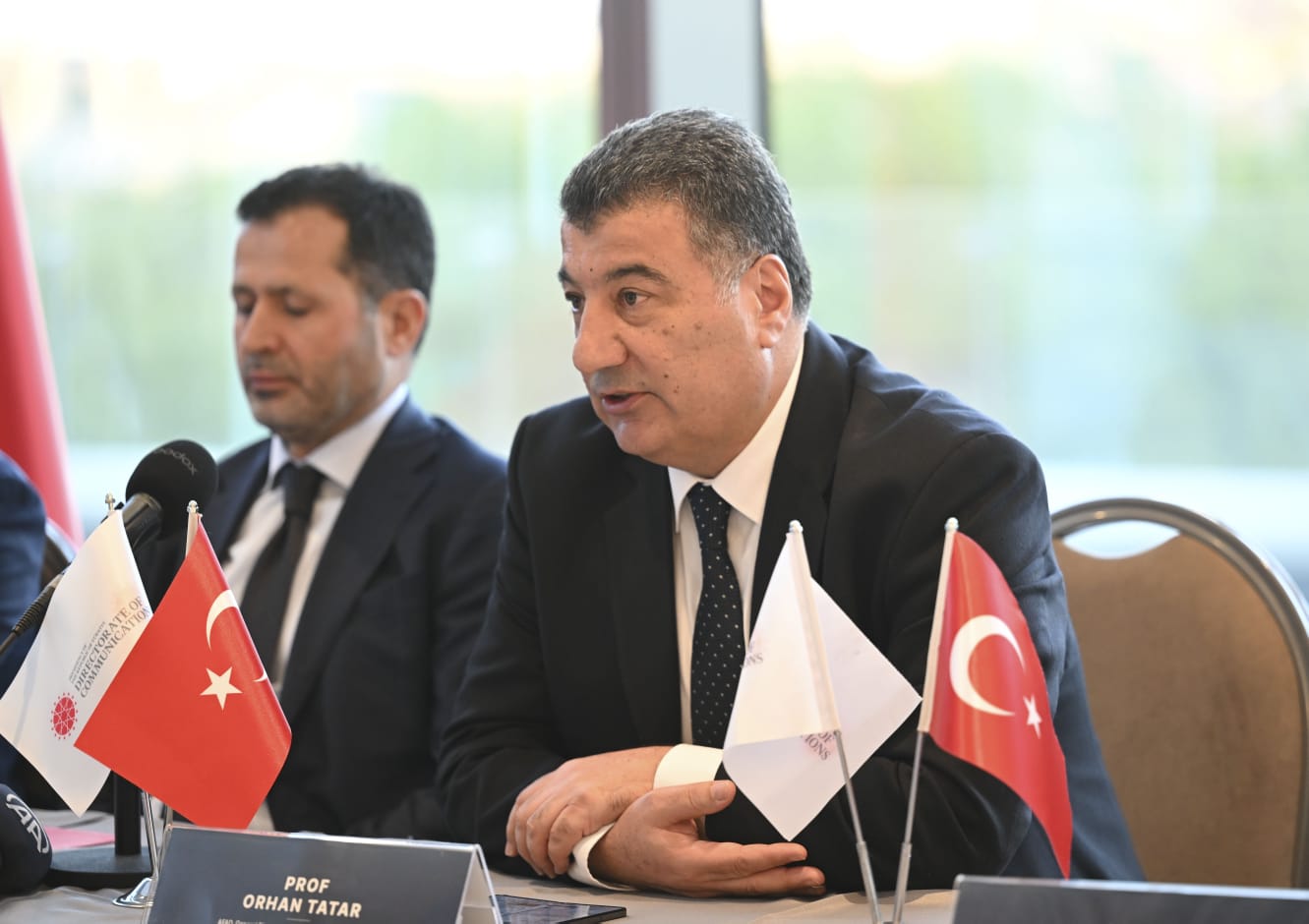
Chairman of the Parliamentary Committee on Industry, Trade, Energy, Natural Resources, Information, and Technology and AK Party Konya Deputy Ziya Altunyaldız, AFAD General Director of Earthquake and Risk Reduction Prof. Orhan Tatar, Members of the Presidential Security and Foreign Policy Council Prof. Çağrı Erhan and Prof. Nurşin Ateşoğlu Güney were among the members of the delegation. During their speeches, all delegation members focused on the unimaginable destruction caused by earthquakes and the importance of international diplomacy in responding to this disaster.
The significance of global solidarity in earthquake relief
"I have personally witnessed devastation and losses that are even hard to imagine. The effects of the earthquake do not end with the removal of the debris," said Deputy Altunyaldız, and he added that many people who participated in the post-disaster relief efforts or followed them stated that the earthquakes that occurred on February 6 were "very different from what has been seen so far in terms of their destruction and intensity".
While praising Turkish citizens’ and the international community's solidarity and cooperation in the aftermath of the earthquake, Altunyaldız also mentioned the contributions of the UN and the World Bank, emphasizing the significance of global solidarity in earthquake relief.
Deputy Altunyaldız also expressed his belief that the institutions they met in the United States were aware of Türkiye's approach to relief efforts for disasters that occurred all over the world and that the world's response to the February 6 earthquakes was "a reflection of the Türkiye's stance adopted in similar situations."
The security flaw exposed by the earthquake
Member of the Presidential Security and Foreign Policy Council, Prof. Çağrı Erhan, on the other hand, stated that the recent earthquakes in Türkiye also exposed a serious threat to the country’s security.
Stating that the earthquakes, described as the disaster of the century, drew attention to security and communication concerns, Erhan said, "We lost more than 50 thousand people. It is more than the number of people killed by terrorism since the 1950s. It is twice as much as we lost during the National War of Independence. Therefore, this is a matter of national security."
Prof. Erhan also stated that the spirit of solidarity that emerged after the earthquake on February 6 was instrumental in fostering brand-new opportunities between nations, just as it was after the earthquake in 1999.
Erhan stated that international search and rescue teams face significant communication and coordination challenges during natural disasters and that Türkiye will become a global leader in disaster response due to its experience.
On the other hand, AFAD General Director of Earthquake and Risk Reduction Prof. Orhan Tatar provided detailed information about the extent and cost of the state's relief efforts in the region following the February 6 earthquakes.
Tatar informed the press that while the earthquake caused widespread destruction in 11 provinces, 21 provinces were affected in total, 320 thousand buildings collapsed or needed to be demolished due to damage, and 3.5 million survivors were housed in 750 thousand tents and 75,000 containers.