Director of Communications Fahrettin Altun said, "The 1970s was when politics failed to solve social and economic problems, and as a result, both the politics and politicians lost credibility. Today, democratic politics in Türkiye is a very prestigious institution, and this became possible after 2002 when our President re-established politics as a centre of the solution."
Presidency's Director of Communications Fahrettin Altun spoke at the "Hard Years Exhibition" opening at the Ankara Art Gallery and Auction House, which was organised by the Ankara Culture, Arts and Civilization Association and supported by the Presidency's Directorate of Communications.
Director of Communications Altun stated that the Directorate of Communications is pleased to support the exhibition and thanked the Ankara Culture, Art and Civilization Association for their efforts.
Director of Communications Altun emphasised the importance of understanding Turkish politics and the sociopolitical reality of Türkiye to understand the present and design the future, and he said that the history of daily life, free from ideological interventions and political engineering efforts, is just as valuable.
Director of Communications Altun stated that the exhibition addressed an important period in Türkiye's daily life history, a period that needs to be referred to understand the present and design the future, namely the 1970s, the hard years.
Director of Communications Altun described the 1970s as a period of "political instability" under five main topics, saying that there were 12 governments in Türkiye's political history during this period, which began with a memorandum and ended with a coup.
Pointing out that the field of democracy was restricted in the 1970s and politics was under strict tutelage, Director of Communications Fahrettin Altun said:
" The 1970s was a period when politics failed to solve social and economic problems, and as a result, both the politics and politicians lost credibility. Today, democratic politics in Türkiye is a very prestigious institution, and this became possible after 2002 when our President re-established politics as a centre of the solution. Second, the 1970s were a period of radicalism that dominated social space. The 1970s were years when social peace and harmony were disturbed, and looking back, it was a time when political polarisation gave way to social polarisation, and ideological divisions, unfortunately, led to political violence and armed conflicts. According to official figures, between 1974 and 1980, 5 thousand 388 people lost their lives in acts of ideological violence, which the public described as a right-left conflict.
"The 1970s was a period of severe energy crisis in the world"
Citing anecdotes from the painter Mehmet Güleryüz's 1979 painting "Fear", which depicts the political life of the 1970s, Director of Communications Altun said, "The painting depicts a terrified horse with a rider clinging to it. The exhibition by Mehmet Güleryüz depicts the political life of the 1970s. This horse represents democracy and is in great dread. In essence, social life in the 1970s was exactly as depicted in this image."
Director of Communications Altun continued his words as follows:
"Another feature of the 1970s is that it was the era of uncontrollable migration and urbanisation movements. It was a time when the migration movements that began in the 1950s were at their peak. Unfortunately, the 1970s and this fact prevented the development of a successful urbanisation policy, and the unplanned urbanisation of that period has actually formed a problematic ground that we have been struggling with for many years and still need to struggle more with if we are going to build a city that is, in a sense, integrated with the environment in the urban history of Türkiye. This aspect of that era should be highlighted in this sense, and of course, the 1970s were the years of economic crisis, poverty and deprivation. This is the fourth characteristic of that period. Not only Türkiye but the entire world experienced a very severe energy crisis and oil crisis in the 1970s, and Türkiye was severely affected by those crises.
It might be necessary to make a comparison to the present. Today, the world faces a significant energy crisis. However, today's Türkiye is managing this energy crisis and even taking critical steps to transform the country into an energy hub as it has never been in its history. In his address to the nation, our President also shared important good news regarding energy."
Director of Communications Fahrettin Altun noted that due to the policies that sidelined exports and encouraged imports in the 1970s, the country became a market for the West for oil and energy, economic crises worsened, basic services and needs could not be met, supply chain problems arose, resulting in serious problems for the society.
Highlighting that the economy at the time was dependent on foreign trade and that this created problems for society and that the 5th problem substantially contributes to the problems in these four areas, Director of Communications Altun noted that the reason for these developments in the 1970s was Türkiye's inability to act on its own behalf and account in the international arena.
Presidency's Director of Communications Altun continued:
"We are left with the image of a weak Türkiye in the 1970s, which was polarised throughout the Cold War era and entangled in global politics. When we look back on that period, we can see that there were many problems in the international arena. In the 1970s, there were numerous global, regional, and international political issues. On the other hand, Türkiye did not have strong political leadership or a stable political environment to deal with these problems and implement these steps. Due to these shortcomings, although the Cyprus Peace Operation was a necessary step, successive administrations were unfortunately intimidated by the American embargo and similar sanctions and were unable to maintain the autonomous policy on the island. Again, as you are aware, during those times, there were terrorist attacks by Armenian organisations, atrocities in Cyprus, and other problems. We can see that a different problematic method was used to address all of these problems. When the military coup on September 12 occurred, the situation deteriorated dramatically."
Director of Communications Altun emphasised that the images displayed and depicted in the exhibition illuminated the 1970s and revealed the root cause of the problems of the 1980s and 1990s.
"Türkiye is an island of stability despite regional crises"
Stating that the 1980s and 1990s witnessed economic crises and the institutionalisation of foreign dependence, Director of Communications Altun said that there were other problems, including anti-democratic practices and political instability, as well as the domination of the political sphere by the pro-tutelage circles.
Director of Communications Altun added:
"With the year 2002, Türkiye underwent a very significant transition that allowed us to refer to these problems as "problems in the old Türkiye." The Western-style dependency order, the Westernist dependency order, and the Western colonial system were all ruled out of the international stage after 2002, thanks to our President's leadership and successful practices. This allowed Türkiye to gradually gain ground by developing an independent foreign and economic policy, enabling it to rise from a regional power to a major player on the world stage. This Türkiye is the current guarantor of both regional and global peace. Türkiye used to be an introverted and sadly unstable country, but today, despite global and regional crises, it is an island of stability. I insist on this. There exists a stabilising power in this age of global chaos and uncertainty. Today, Türkiye is a stabilising power that serves regional and global peace."
Director of Communications Altun stated that the exhibition would provide a more in-depth look at Turkish politics from a different angle and a better grasp of the present, thanking Eyüp Gökhan Özekin, the President of the Ankara Culture, Arts, and Civilisation Association, who supported the exhibition's organisation and other contributors.
At the end of the ceremony, Özekin also delivered a speech of gratitude and greeting.
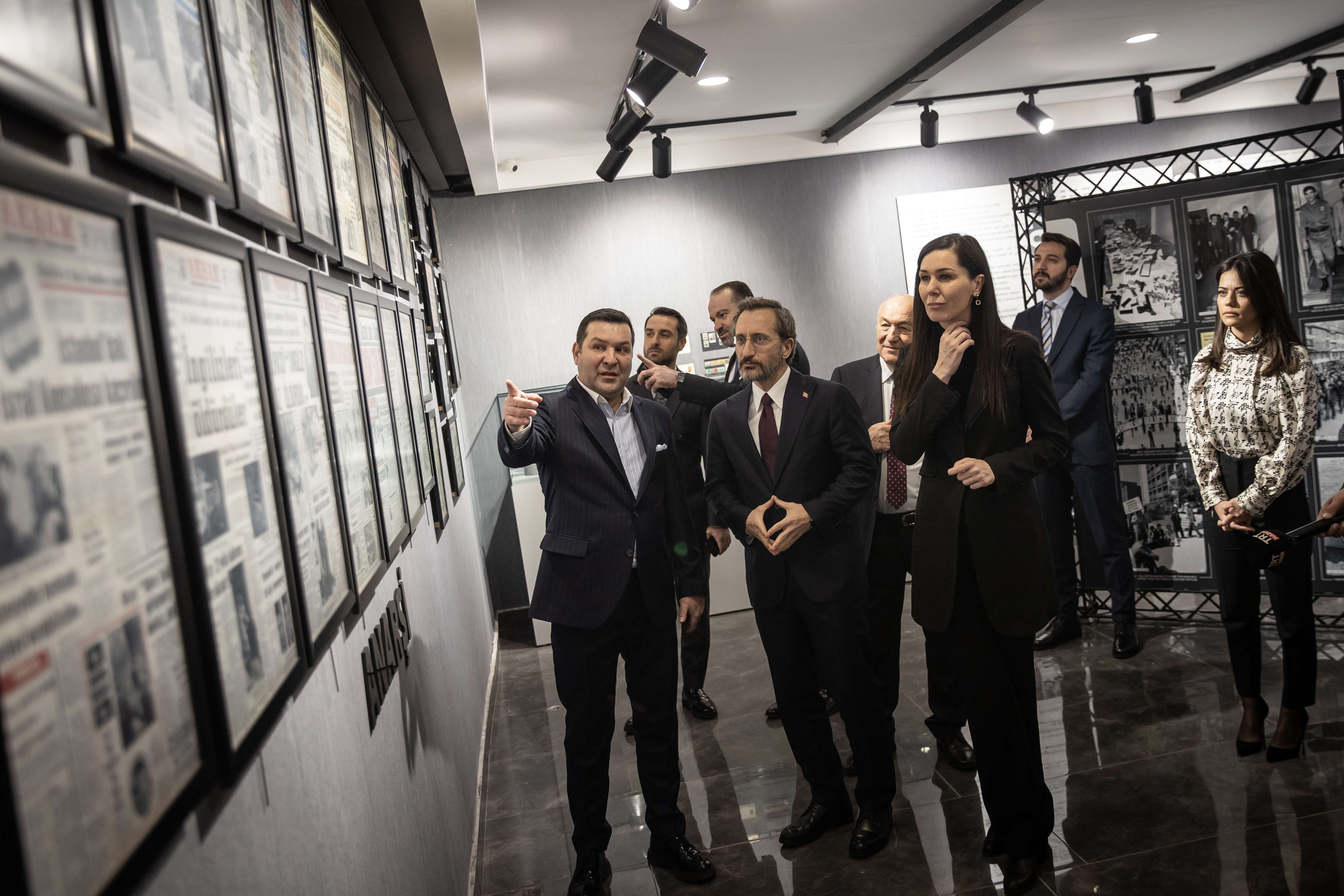
Director of Communications Fahrettin Altun later cut the exhibition's ribbon and viewed the displays.
The opening ceremony of the exhibition was attended by AK Party Deputy Chairs Çiğdem Karaaslan and Hamza Dağ, Director General of TRT Mehmet Zahid Sobacı, AK Party Kayseri Deputy Taner Yıldız, AK Party Konya Deputy Orhan Erdem, AA Project Management Coordinator Oğuz Karakaş and AA News Coordinator Yahya Bostan, as well as other guests.
The exhibition will be open to visitors until January 20
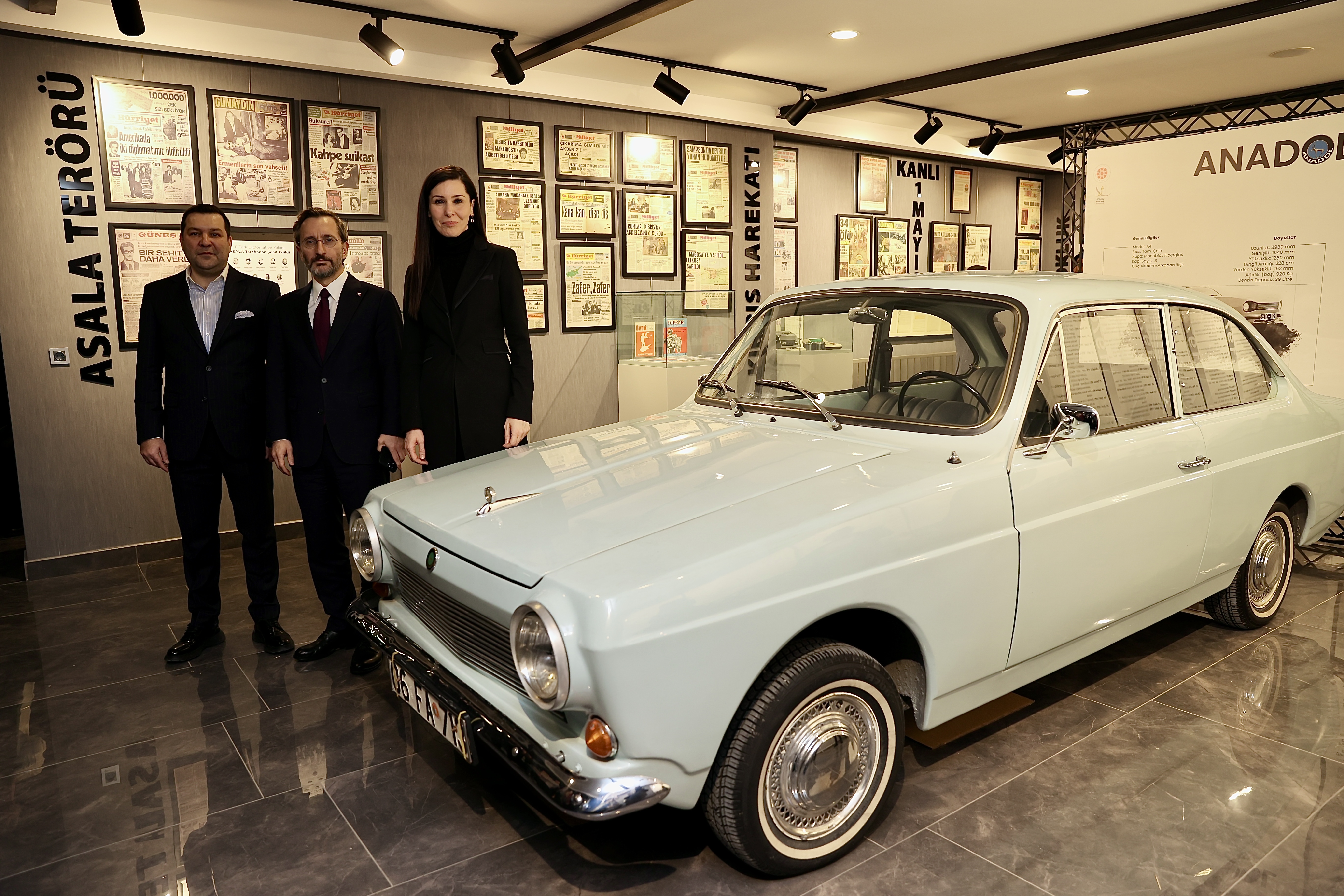
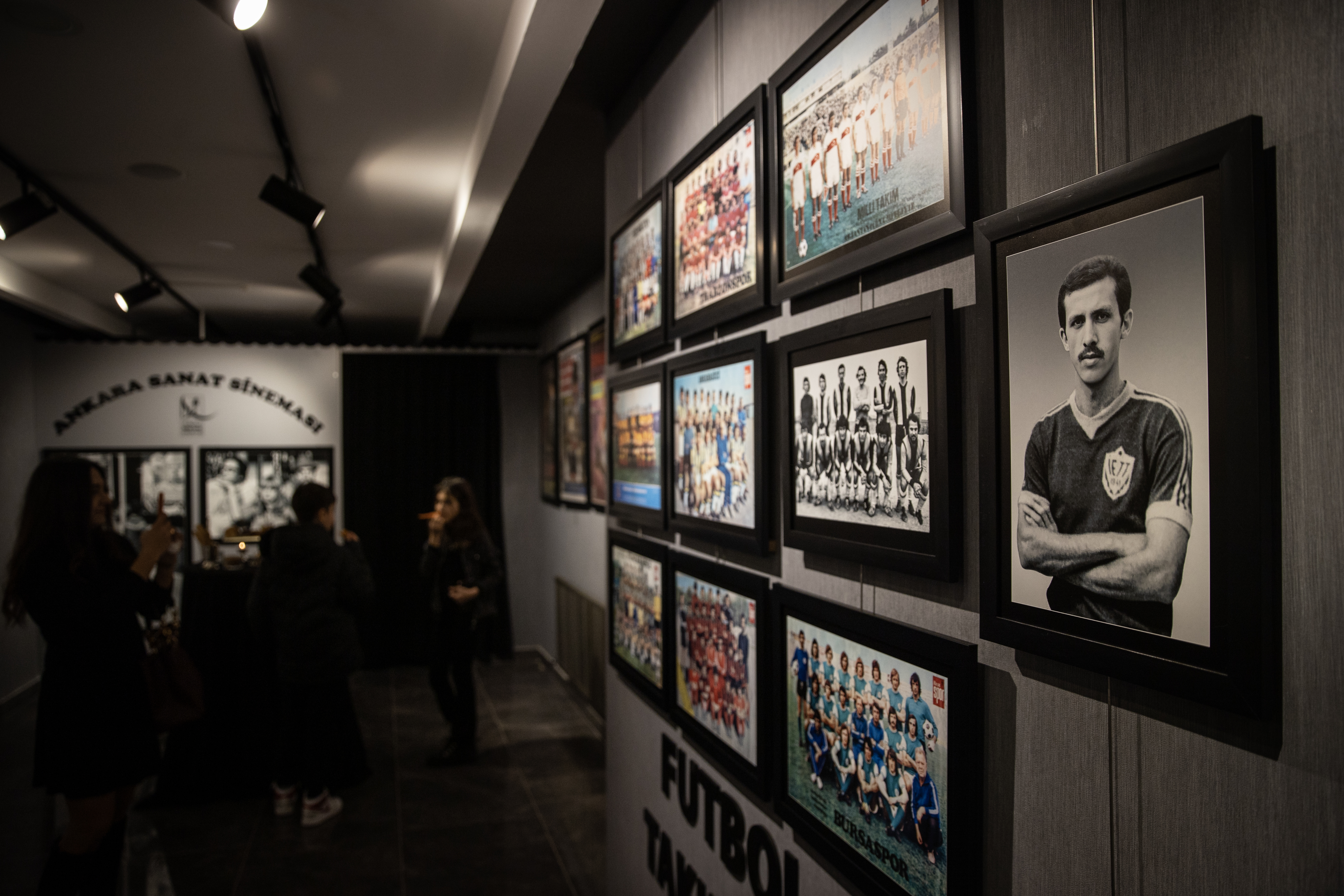
The "Hard Years" exhibition project, which concentrates on examples that address and explore the political, social, and cultural events and phenomena of the 1970s, features newspapers and stamps from the era, as well as books, movie posters, and photos of football clubs that shed light on the decade.
Along with the images of political figures, the exhibition showcases examples of political instability, governments and coalitions, political assassinations, economic crisis, deprivation and poverty, as well as right-left conflicts in Türkiye in the 1970s, the Military Memorandum of 1971, the "Bloody May" day of 1977, the Cyprus Peace Operation of 1974, terrorist and anarchist incidents, martial law, authentic documents, photographs, original printed sources, and materials relating to sports competitions of the era.
The visitors are also offered the opportunity to see the Murat 124, a famous automobile model from the 1970s, and the Anadol, the first mass-produced vehicle in Türkiye at the time.
The exhibition, which was opened with the support of the Presidency's Directorate of Communications and included photographs from Anadolu Agency and video materials from TRT, will be open to visitors until January 20, 2023.