Director of Communications Altun: We emphasised that while new communication technologies offer great enrichment potential, they also have a negative impact on modern democracies as a source of systematic disinformation.
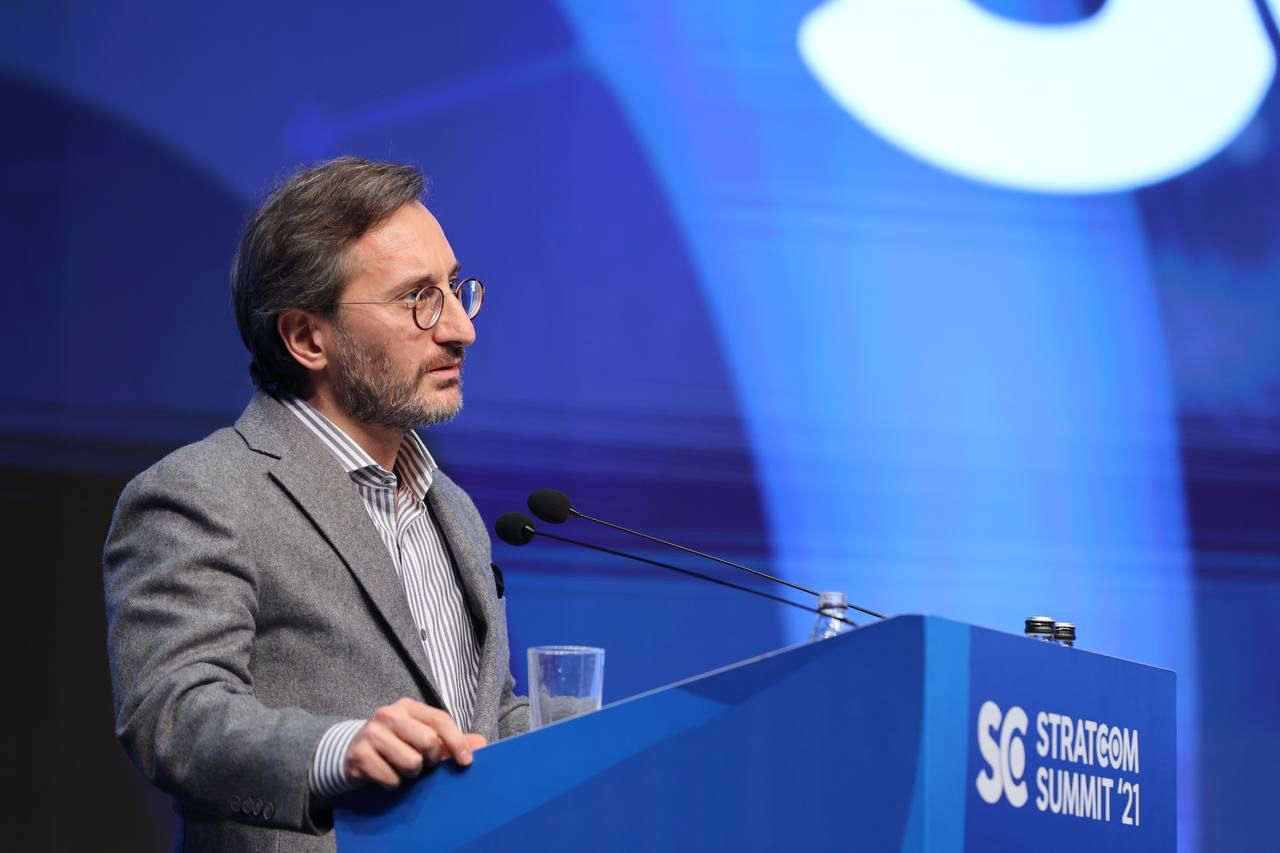
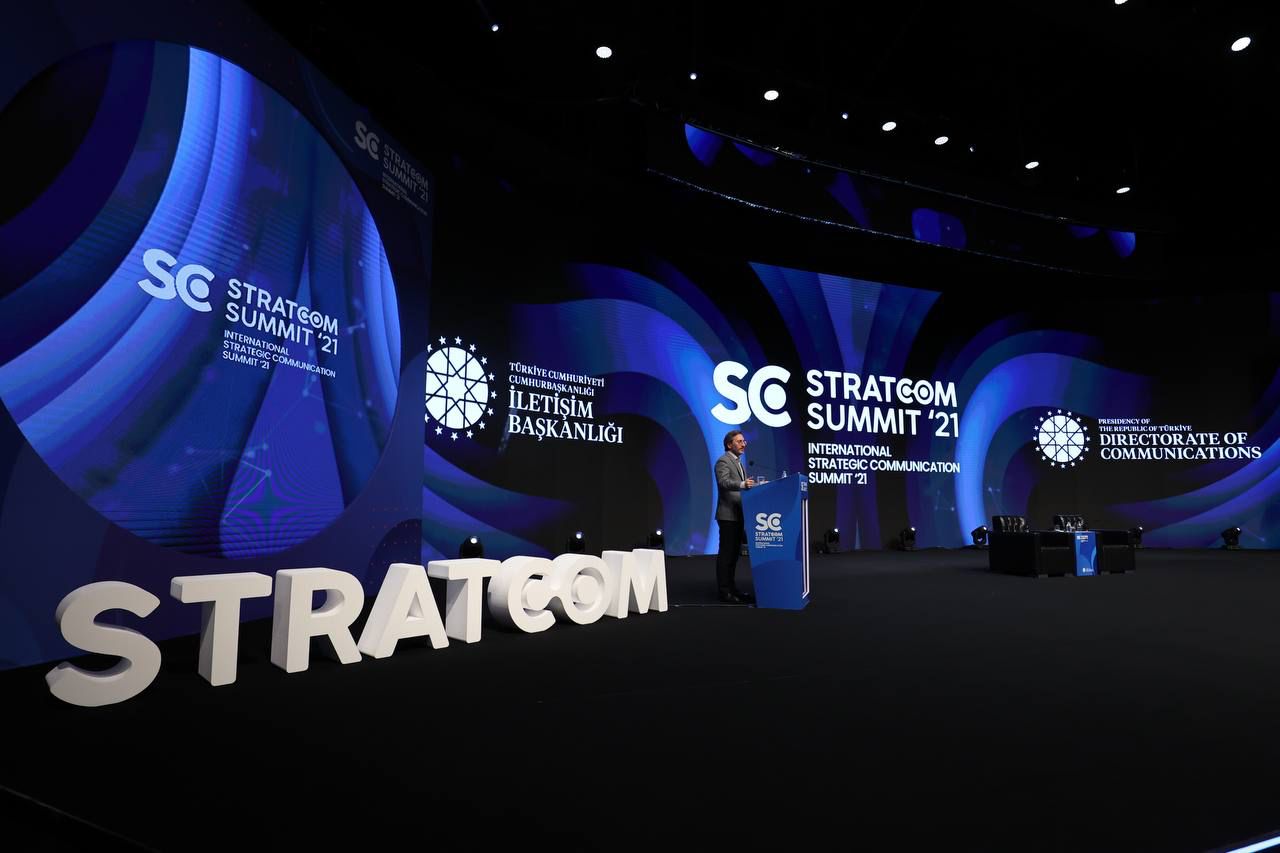
Presidency’s Director of Communications Fahrettin Altun stated in his closing speech at the International Strategic Communications Summit (Stratcom Summit '21), organised by the Directorate of Communications at the Haliç Congress Centre, that it was critical to fully utilise strategic communication capabilities and to combat systematic disinformation campaigns.
Director of Communications Altun said that the two-day summit resulted in very productive content and enabled discussions on different ideas and perspectives on common ground, and that concrete cooperation proposals were made during the summit, which would be an important start.
“I noticed that we had found common ground. This may have been our most significant accomplishment. We have addressed both the challenges we face and our capabilities in all of these areas. We concentrated on how we could diversify these capabilities," said Director of Communications Altun.
Director of Communications Altun stated that the rights and opportunities of individuals and societies were discussed, as well as how to benefit from strategic communication opportunities to develop them. He also said that the security of societies and states was discussed and deliberated upon.
"It is vital to combat systematic disinformation campaigns"
Director of Communications Altun stated that new communication technologies were discussed, along with examples from various countries, and made the following remarks:
"We emphasised that while new communication technologies have a significant enriching aspect, they also have a negative impact on modern democracies as a source of systematic disinformation. Hate speech spreads, and hate crimes occur as a result of new communications technologies and the communication media that they enable. Racism fuels the rise of harmful trends like Islamophobia. We have realised that we are all affected. When confronted with new media, new communications technologies, and the new cultural realities that accompany them, we recognised the need for a set of regulations that can be applied to legal mechanisms within the democratic framework. Of course, one of our top priorities is to safeguard democracy, negotiation culture, and public space. In this context, it is critical to fully utilise strategic communication capabilities and combat the aforementioned systematic disinformation campaigns. In this regard, we've seen that a clear framework has been proposed.”
Director of Communications Altun cited President Recep Tayyip Erdoğan, who said in yesterday's opening address that "at this point in time, disinformation has become a global security problem, not just a national security problem," and added that they had seen every concrete example of this during today's summit, and expressed his hope that the summit will act as a source of solutions to such problems on a global scale.
Director of Communications Altun concluded his remarks as follows:
“When the internet first appeared on the global agenda of societies in the 1990s, the aspect of the internet that primarily served democracy rose to the fore due to its enriching, pluralising, and centrifugal structure, and began to be talked about and discussed in terms of these aspects. On the other hand, we are now beginning to feel and discuss the long-term destructive effects of these features. This is more apparent in the context of a global pandemic. I hope that as soon as possible, we will be able to use new media tools and opportunities in a liberating and pluralistic manner.”