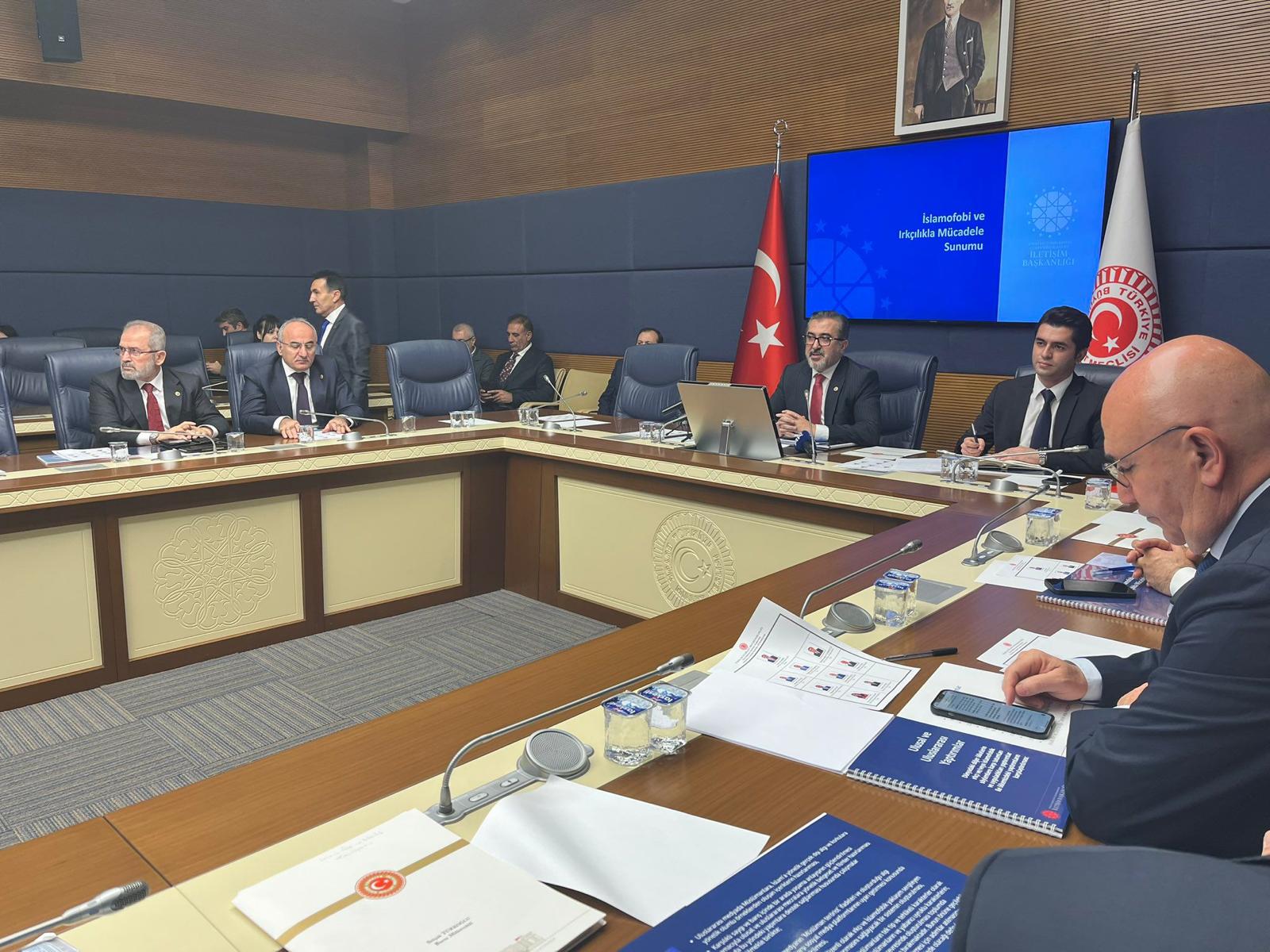
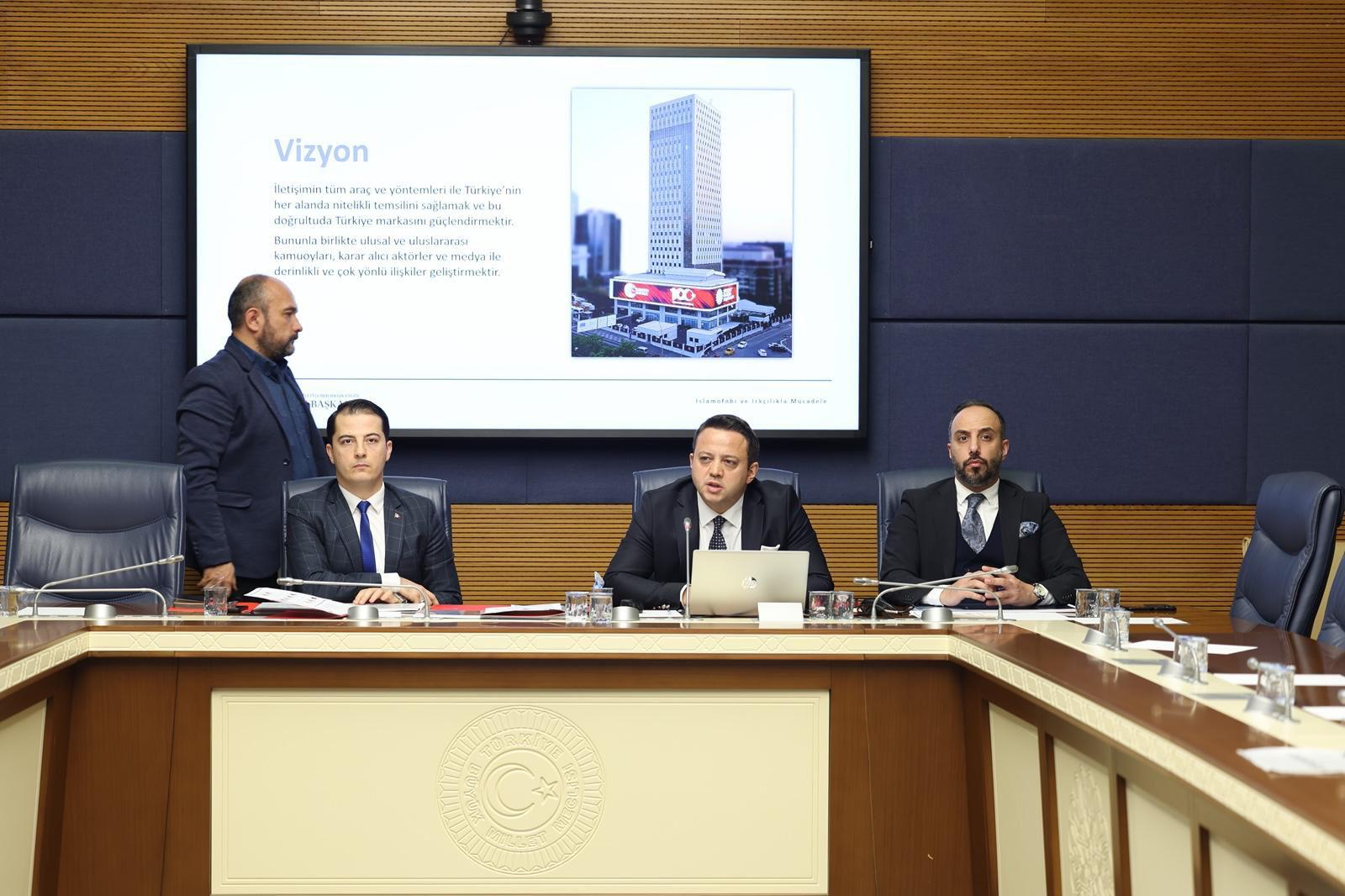
Presidency's Deputy Head of Communications Evren Başar delivered a presentation on "Combating Islamophobia and Racism" before the Sub-Committee on Islamophobia and Racism of the Committee on Human Rights Inquiry.
The Sub-Committee on Islamophobia and Racism of the Committee on Human Rights Inquiry of the Grand National Assembly of Türkiye convened under the chairmanship of AK Party İstanbul Deputy Adem Yıldırım.
Presidency's Deputy Head of Communications Başar made a presentation on "Combating Islamophobia and Racism" at the meeting.
Başar noted that phenomena such as Islamophobia and racism are expanding to a broader audience via digital platforms, with a profound impact on societies. He further stated that digitalisation promotes access to information while also paving the way for the quick dissemination of hate speech and fake news.
Negative repercussions of Islamophobia and racism
Başar observed that anonymity, perception management, and globalisation have led to an upsurge in Islamophobia and racism worldwide, saying, "Islamophobia and racism engender negative repercussions such as social polarisation, acts of violence, insecurity, and threats to democratic values."
Başar placed emphasis on the significant roles that accurate information dissemination by the press, media training, civil society awareness efforts, international collaboration, cultural diplomacy, and public diplomacy play in the fight against Islamophobia and racism.
Başar highlighted that the 2022 report by the Collective for Countering Islamophobia in Europe revealed an increase in Islamophobic incidents due to the rise of the far right, noting that in 2023, there was a 57 per cent increase in Islamophobic attacks, with women making up the majority of the victims.
Başar asserted that the fight against racist and Islamophobic rhetoric is characterised by the implementation of solutions such as media literacy, legal regulations, education, accountability of social media companies, and collaboration with platforms.
Efforts to counter Islamophobia
Başar provided an overview of the initiatives undertaken by the Presidency's Directorate of Communications in this area, explaining that in instances of increasing Islamophobic content in digital media, counterarguments and relevant content were concurrently created alongside public information campaigns.
Başar stated that five international conferences and symposiums were organised, alongside the release of eleven publications and disinformation bulletins. He also noted the identification of foreign and domestic accounts engaging in hate speech, racism, and chaos-oriented posts, as well as the execution of network analyses to elucidate their connections, which were subsequently reported to the relevant institutions.
Başar mentioned the launch of the "No to Racism" campaign on digital platforms, asserting that the initiative undermined the target of both internal and external agents engaged in psychological operations.
Influence of disinformation on the dissemination of Islamophobia and racism
Başar further informed on the influence of disinformation on the dissemination of Islamophobia and racism, as well as the efforts of the Directorate of Communications to counter disinformation, stating, "Disinformation engenders distrust and fear towards minorities and Muslims residing in the West, fostering negative perceptions."
Başar underscored that misleading content in conventional media and social media incites hatred and hostility, leading to the escalation of Islamophobia and racism, ultimately undermining social structure and causing polarisation. He stated that misinformation associating Islam with terrorism propagates negative stereotypes about Muslims in the West, while media and social media-based disinformation exacerbates the bias that minorities are "sources of crime."
Başar pointed out that the perception that radical media and social media figures represent the broader populace leads to increased Islamophobia and racism against minorities, saying, "Political figures exploit disinformation as a means to marginalise minorities; such disinformation that fuels Islamophobic and racist sentiments peaks during election campaigns."
Deputy Head of Communications Başar stated that disinformation produced to spread Islamophobia and racism in conventional and social media leads to human rights violations and discrimination based on ethnicity or belief. Başar commented, "Echo chambers formed around Islamophobia and racism are used, especially during times of crisis, to push individuals who adopt these ideas toward more extreme positions. Users feeding from the same sources begin to adopt even more radical ideas due to the disinformation they are exposed to."
Combating Islamophobia and racism through the Centre for Combating Disinformation
Başar emphasised that the Directorate of Communications' Centre for Combating Disinformation (DMM) organises comprehensive training programs to combat Islamophobia and racism while also informing the public about disinformation. He said, "The Centre for Combating Disinformation supports societal awareness against racism and Islamophobia through digital media literacy training and has exposed 49 Islamophobic and racist disinformation campaigns detected in Türkiye, sharing them with the public."
Evren Başar further stated, "Manipulations by Israel using Muslim-appearing social media accounts were identified, and these accounts were debunked, exposing the structure of the propaganda network."
Measures and solutions against Islamophobic narratives and posts
Evren Başar outlined the measures and solutions proposed by the Directorate of Communications to counter racist or Islamophobic narratives and posts on digital platforms.
"The Directorate of Communications is engaged in a truth struggle against racist and Islamophobic narratives spread through the media and digital platforms," said Başar, adding that training programs are provided to raise awareness among citizens about such malicious activities.
Highlighting the contributions of institutions like the Anadolu Agency and TRT under the coordination of the Directorate of Communications, which play a significant role in combating Islamophobia through their content and broadcasts, Başar noted that the Directorate of Communications also supports projects carried out by NGOs, universities, and other public institutions aimed at combating Islamophobia.
Başar stated that they prepare content featuring positive examples to counter false perceptions and fears about Muslims and Islam in international media, underlining initiatives to produce or support documentaries and films aimed at promoting mutual respect and peaceful coexistence, both nationally and internationally.
He also underlined the need for measures such as encouraging social media platforms to issue warnings against perception management operations conducted by international media using the expression "Muslim terrorists" and a system to regularly impose sanctions on accounts that exhibit racist or Islamophobic behaviour on digital platforms.
Başar pointed out that the portrayal of Muslims and foreign characters as dark, evil, or immoral in TV series and films leaves a negative impression of Muslims in society and added, "Steps must be taken to change the media's portrayal of Muslims and sanction mechanisms should be introduced to address this issue."
Hate crimes face harsher penalties compared to "ordinary crimes"
Başar compared the approaches and sanctions employed by other countries against racist or Islamophobic narratives with those imposed in Türkiye.
He noted that hate crimes are typically punishable by harsher penalties than "ordinary crimes," saying, "For instance, an act such as assault or arson incurs a more severe penalty when classified as a hate crime."
Highlighting content in the Directorate of Communications' publications addressing racist and Islamophobic narratives, Başar said, "Publications have been prepared under various themes, including humanitarian aid provided by Türkiye regardless of religion, language, or race; President Recep Tayyip Erdoğan's statements regarding Islamophobia during his UN General Assembly addresses; accuracy in journalism and ethical guidelines for media professionals focusing on racism and discrimination; reforms aimed at various religious and belief groups in Türkiye; and the Palestinian cause."