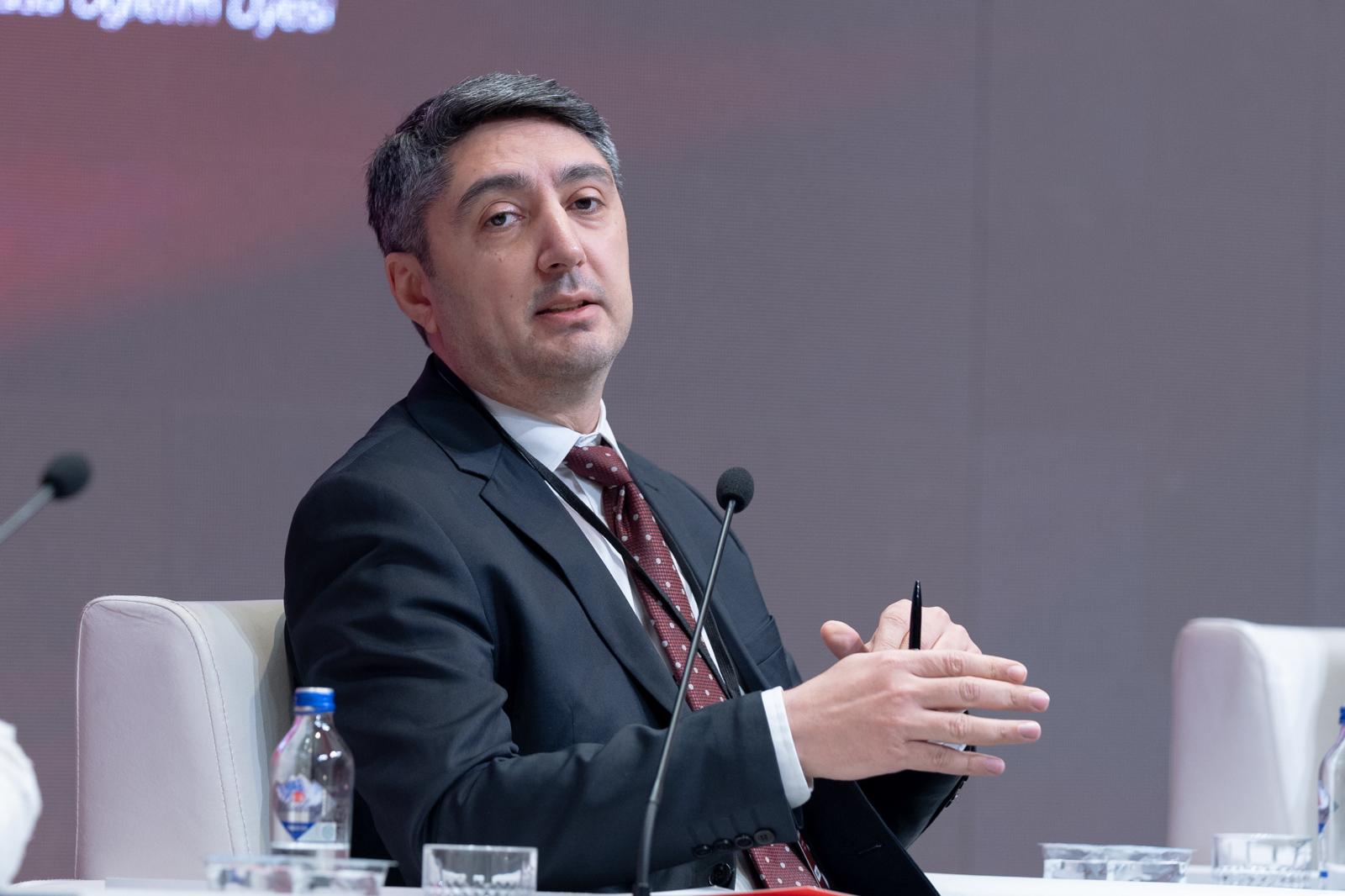
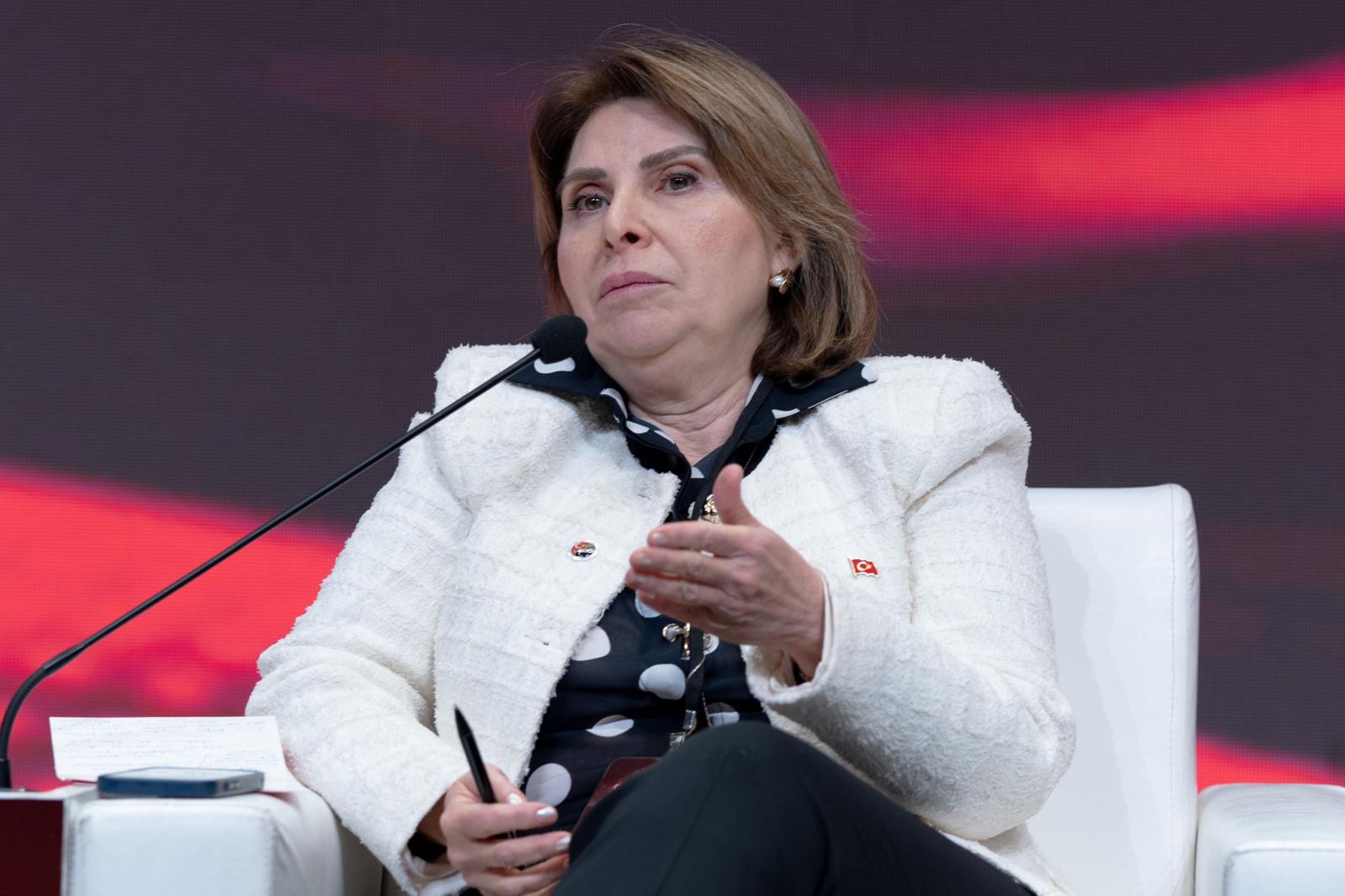
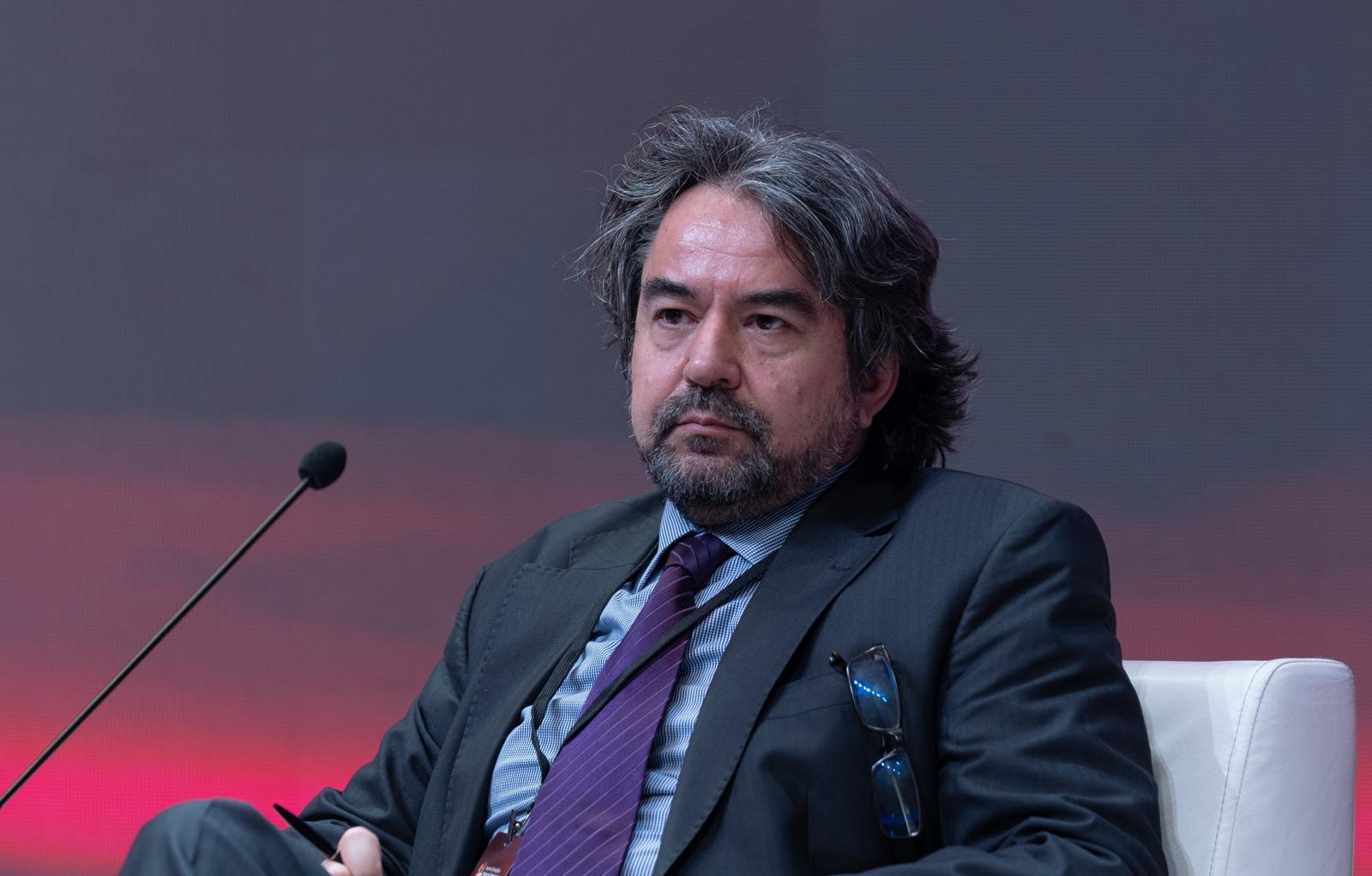
The panel titled “Türkiye’s Stabilizing Power on Syria’s Security”, organised by the Presidency’s Directorate of Communications, has begun, focusing on Ankara's role in ensuring Syria’s stability.
“Our Struggle Is for Human Dignity”
Chief Advisor to the President on Foreign Policy and Security Akif Çağatay Kılıç, delivered the opening speech at the panel held in the Directorate of Communications Conference Hall.
Kılıç emphasised that efforts in Syria have been ongoing since March 2011 in line with the directives of President Recep Tayyip Erdoğan, stating: "Our struggle has always been for justice, freedom, and democracy—but above all, for human dignity."
He noted that various ideas had been put forward to ensure Syria’s stable path toward the future and went on to say:
"There is an issue that Türkiye has consistently emphasised, yet is often overlooked. That is, history did not begin in March 2011—at least not for Syria. Prior to that, we were actively engaged in communication with the former Syrian regime, making efforts to positively influence developments. However, it became evident that the status quo was no longer sustainable."
Bashar al-Assad, the leader of the Baath regime, who later fled Damascus and oppressed his own people, had received clear warnings years ago from a wise figure. A highly regarded statesman once told Assad, in a calm yet resolute manner, that the path he was following was wrong, that he needed to change course, and that a leader who remains detached from his people and fails to communicate with them cannot succeed. This advice came from someone who had shown him great friendship. At that time, President Erdoğan, who was then serving as Prime Minister, repeatedly emphasised to him the need to correct the course of events in Syria.”
Kılıç stated that within the social landscape emerging today, Türkiye has the potential to offer support at various points to move towards its goals. He remarked, "The majority of those striving for the current situation in Syria do not have objectives as simple and clear as ours, Türkiye’s, and our President's."
Kılıç also expressed his gratitude to the Presidency’s Head of Communications Fahrettin Altun, for organising the panel.
First Panel Session
Following the opening remarks, the first session of the panel, titled "Türkiye’s Stabilizing Power on Syria’s Security," was moderated by Assoc. Prof Muhammad Hüseyin Mercan, faculty member at Ankara Yıldırım Beyazıt University’s Faculty of Political Science.
During his speech, Mercan described Bashar al-Assad's rule as one of the most repressive regimes in the Middle East and described the new challenge after the overthrow of the Ba'ath regime as "the stable reconstruction of Syria and the establishment of a climate of security."
Ambassador Mustafa Yurdakul, Director General for Syria at the Ministry of Foreign Affairs, underlined the importance of “peace diplomacy”, stating: "Following the HTS actions that began on November 24-25 in Syria, we launched intensive diplomatic efforts."
Yurdakul emphasised that Türkiye has made significant efforts to manage developments and stay informed, both with the United States, Russia, and Iran (at that time), as well as with regional countries.
Recalling that the Doha Forum was held on December 8, Yurdakul highlighted that Foreign Minister Hakan Fidan, along with other regional leaders, participated in critical peace diplomacy efforts during the event.
Yurdakul described the initial concerns of regional leaders at the Doha Forum, stating: "Initially, there was confusion—many questioned whether an extreme ideology was coming to power in Syria and whether this would pose a threat to the security, stability, and well-being of neighbouring countries."
Regarding Türkiye’s role in Doha, he added: "We worked extensively to guide discussions on preventing instability from spreading throughout the region and shaping a collective stance among regional actors."
He further stressed that the Syria issue did not begin on December 8, pointing out that one of the fundamental principles of Türkiye’s foreign policy is “regional ownership."
Yurdakul stated, "The emphasis on regional ownership refers to the perspective that the issues and developments emerging in this region, which impact all of us, should be tackled through the collective interests, consultation, and collaborative efforts of the regional countries. It is a view that advocates for these issues to be resolved or steered in specific directions through collective dialogue and coordinated action.
Regional Ownership and Engagement with the New Administration
Yurdakul noted that the Doha meeting was followed by several other international forums, emphasising that while the 60-year rule of the Baath regime had come to an end, the transition posed both opportunities and challenges for the Syrian people.
"At this point, the most effective course of action for regional countries is to engage with Syria’s new administration unconditionally—without preconditions, hesitation, or reservations," Yurdakul stated, calling this "the most rational approach."
He added: "Regional ownership and engagement with the new administration have been the key elements shaping our peace-oriented foreign policy since the developments that began on November 24."
While acknowledging the challenges ahead, Yurdakul also pointed to significant opportunities, explaining:
"A unique window exists for regional countries and leading international actors genuinely committed to Syria’s well-being to unite on a common platform. Our goal is to ensure that this opportunity is not wasted. As I have said before, when we look across our border, we want to see a self-sufficient, stable country that respects its people and its region. We have no hesitation in providing support where needed to help achieve this."
Assoc. Prof Hüseyin Alptekin from the National Defence University discussed how various actors with conflicting interests in Syria have created a coordination problem from the outset. He noted that despite efforts, the risk of conflict among armed groups within Syria remains unresolved.
Providing insights into Syria’s conflict dynamics, Alptekin emphasised the importance of achieving security and transitioning to a centralised governance structure.
"A Process That Requires Balancing Interests"
Prof. Özden Zeynep Oktav, Head of the International Relations Department at Istanbul Medeniyet University’s Faculty of Political Science, examined the emergence of the Baath regime and its governance model in Syria.
"Syria is going through a phase where balancing interests is crucial. Strengthening ties with Saudi Arabia is particularly significant at this point. Syria is in dire need of financial resources, and without funding, it will be difficult for different groups to coexist and sustain stability," Oktav stated.
Highlighting the importance of Syria’s reconstruction for Türkiye, she added: "We have built homes where people can live with dignity and have allocated resources to Syria. Moving forward, Türkiye will need a strong partner for Syria’s reconstruction—countries like Qatar, the United Arab Emirates, and Saudi Arabia will be key allies in this process."
During the panel, Assoc. Prof. Serhan Afacan from the Institute of Middle East and Islamic Countries provided an analysis of the current situation in the Middle East and Iran’s regional policies.
Among the distinguished attendees were TRT Director General Mehmet Zahid Sobacı and Anadolu Agency (AA) Deputy Director General and Editor-in-Chief Yusuf Özhan.