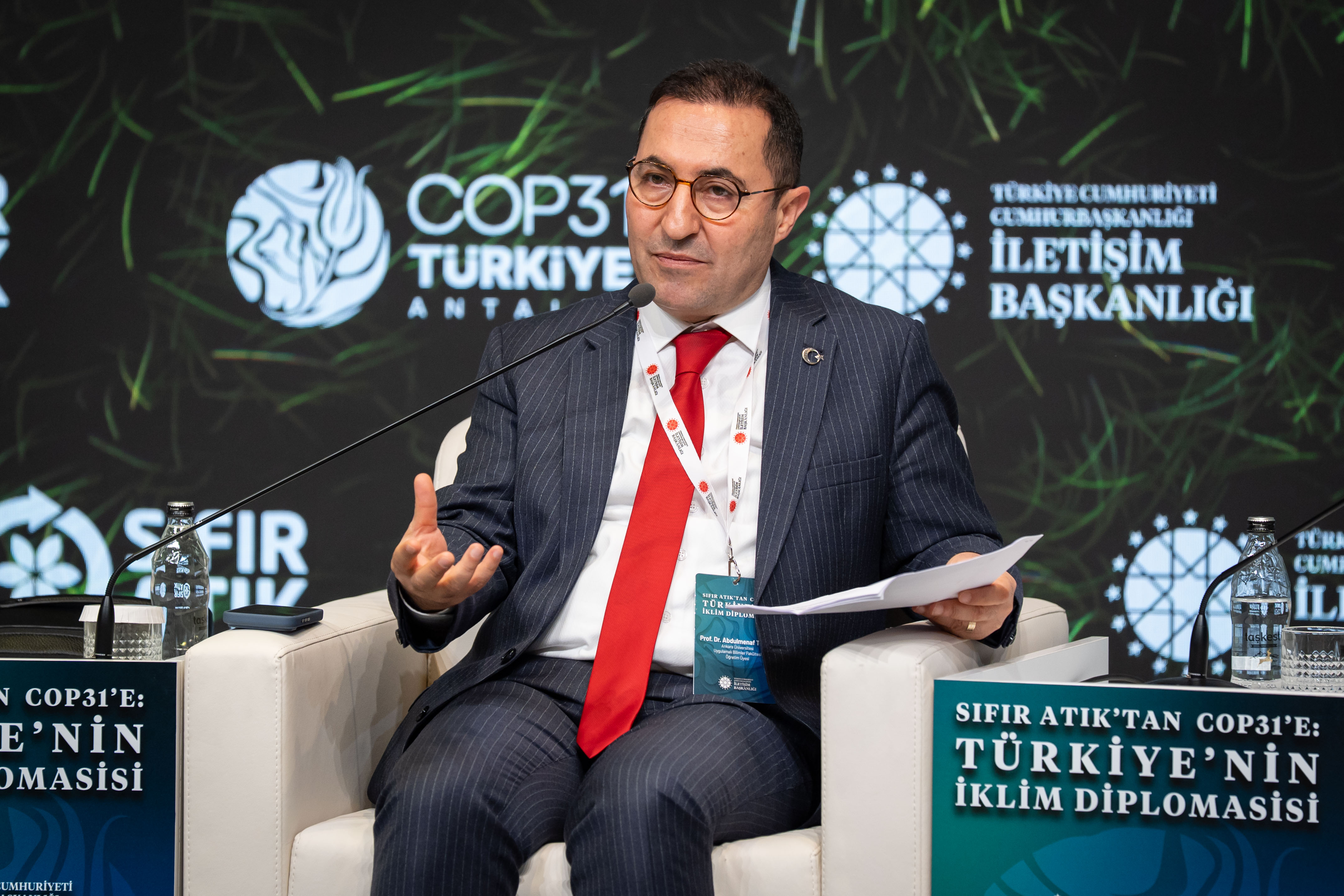
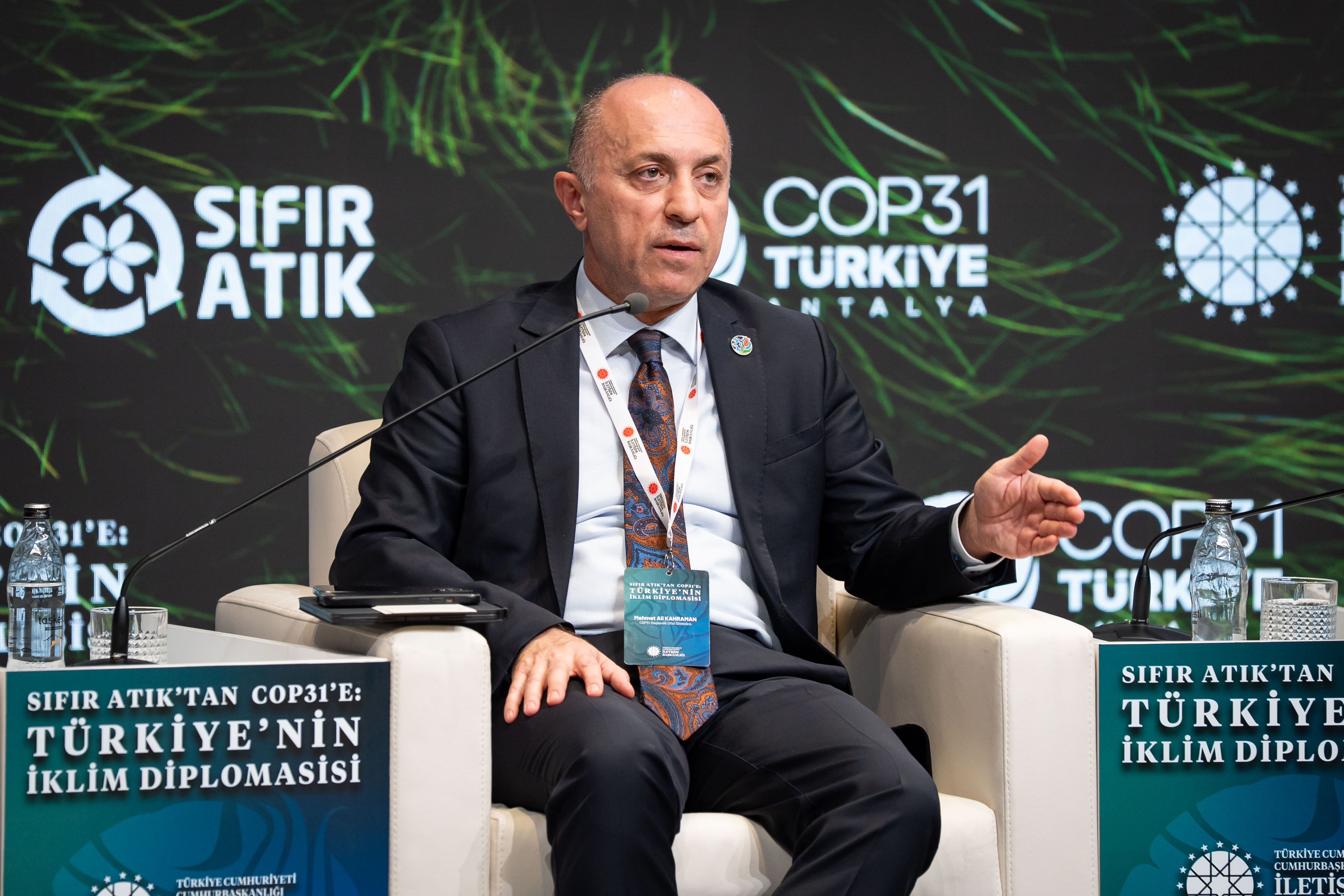
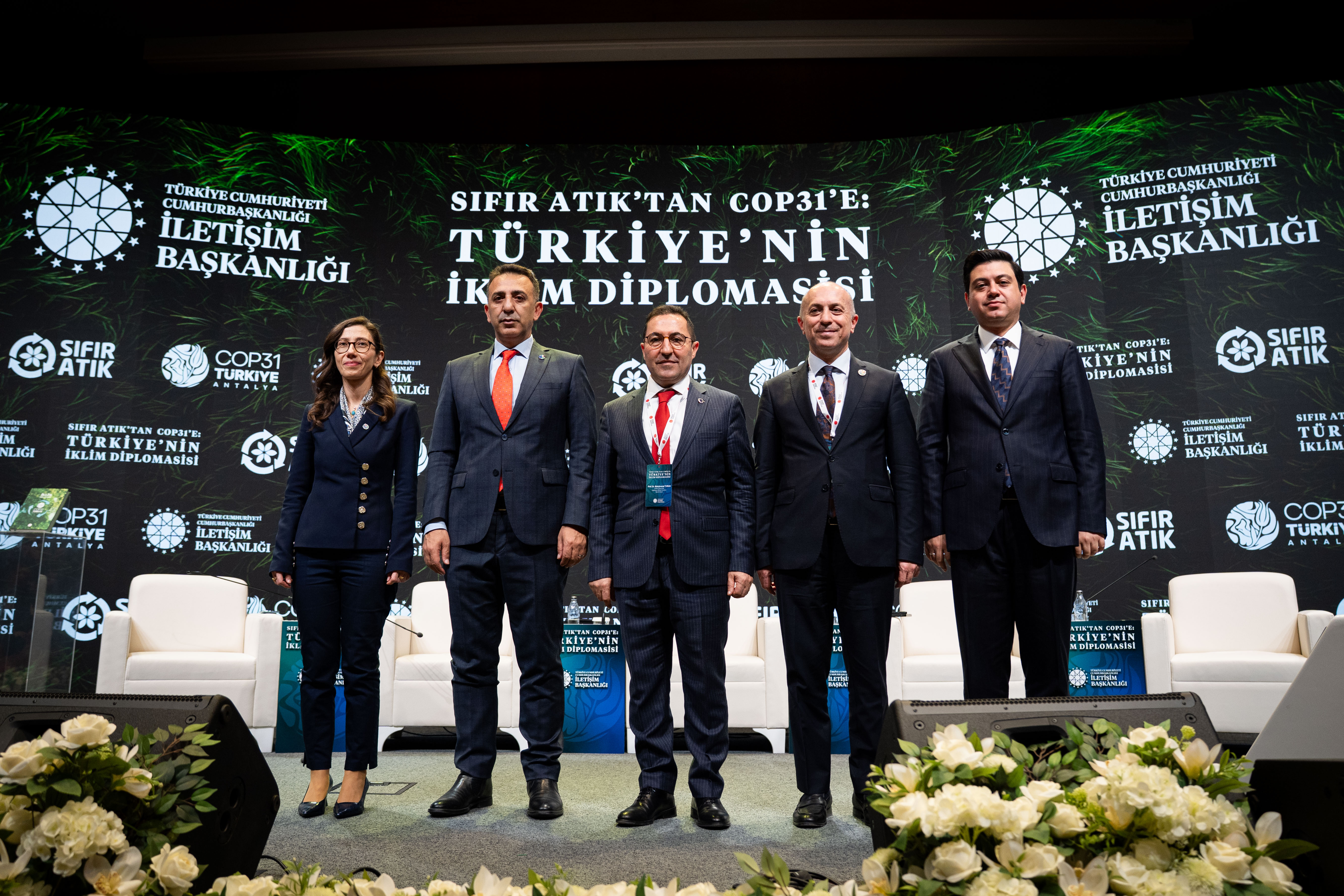
The Directorate of Communications organised a panel titled "From Zero Waste to COP31: Türkiye’s Climate Diplomacy."
The panel at the Directorate of Communications began with opening remarks by Murat Kurum, COP31 President and Minister of Environment, Urbanisation, and Climate Change, and Burhanettin Duran, the Presidency's Head of Communications.
The panel was moderated by Assoc. Prof. Merve Özdemir, a faculty member at Yozgat University's Faculty of Communication, and included Halil Hasar, Director of the Department of Climate Change at the Ministry of Environment, Urbanisation, and Climate Change; Prof. Abdulmenaf Turan, a faculty member at Ankara University’s Faculty of Applied Sciences; Mehmet Ali Kahraman, Director of the COP31 Presidency Office; and Mustafa Erdağı, Director General of the Zero Waste Foundation, as speakers.
The panel discussed the relationship between the Zero Waste approach and climate policies, Türkiye's role in climate diplomacy, and potential obligations in the lead-up to COP31.
Speaking at the panel, Halil Hasar recalled that negotiations on hosting COP31 had begun three and a half years ago.
Emphasising the importance of establishing an action agenda capable of delivering tangible results, Hasar stated that, alongside decisions, discourse and targets were also necessary to ensure the sustainability of these actions.
Noting that COP should not be regarded merely as an event or an organisation, Hasar said that the platform constitutes a process through which countries' development plans and the decisions related to these plans are discussed.
"Resources allocated to combating climate change are not substantial"
Prof. Abdulmenaf Turan, a Faculty Member at Ankara University’s Faculty of Applied Sciences, stated that the world was undergoing three major transformations: digital, green, and spatial.
Emphasising the growing importance of how the world will manage these three major transformation processes, Turan said that climate diplomacy should be leveraged in this regard.
Turan noted that Türkiye’s 2053 net-zero emissions target and the Climate Law adopted in 2025 should also be assessed from this perspective. He said achieving long-term goals could pose short-term challenges and might require some compromises.
Mehmet Ali Kahraman, Director of the COP31 Presidency Office, said that the action agenda announced at COP preparatory meetings demonstrated an implementation-oriented approach.
Noting that the action agenda’s distinctive structure stemmed from its approach to building bridges between countries, Kahraman said:
"All 10 items on our action agenda are issues that both the developed and developing countries can readily incorporate into their own action agendas. Food security and agriculture, clean energy, and green industrialisation, for example, are among our agenda items. All these items can form part of the action agendas of both developed and developing countries."
Drawing attention to the serious financial crisis facing the world, Kahraman said, "Against the backdrop of this financial crisis, the resources allocated to combating climate change are no longer as substantial as they once were."
"A significant opportunity to expand its reach internationally"
Mustafa Erdağı, Director General of the Zero Waste Foundation, stated that the COP31 process should be regarded as an important milestone in the long-term efforts that Türkiye will lead.
Emphasising that COP processes are not limited to a two-week event or one or two years of diplomatic effort, Erdağı said these efforts must be sustained over many years in terms of preparation, implementation and follow-up on outcomes.
Noting that the Foundation aimed to reach a wider audience with its work, Erdağı said, "As the Zero Waste Foundation, we see COP31 as an important opportunity to further expand the Zero Waste initiative globally and promote the adoption of best practices both in Türkiye and internationally."
Erdağı added that the Foundation planned to develop a range of programmes and publications.