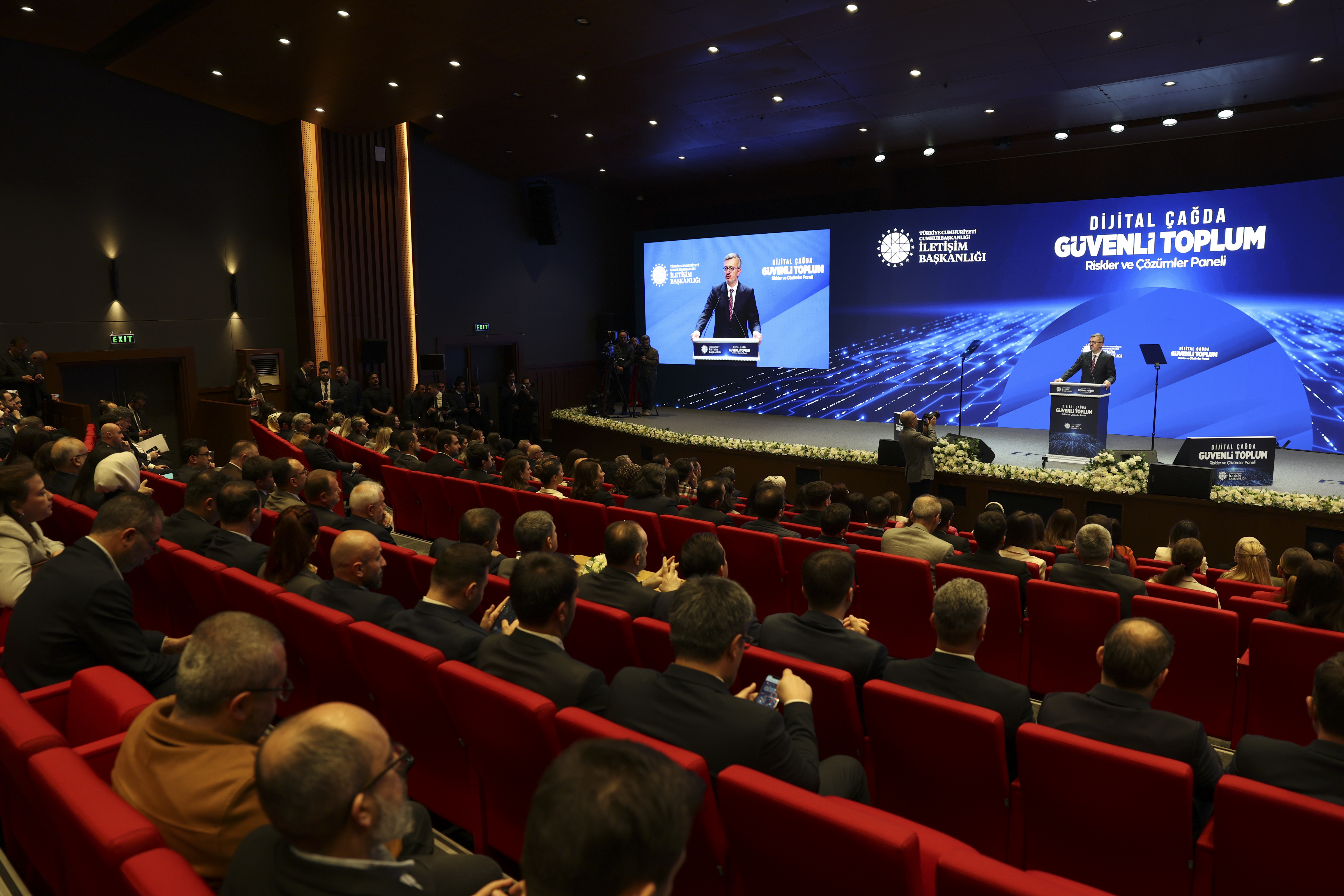
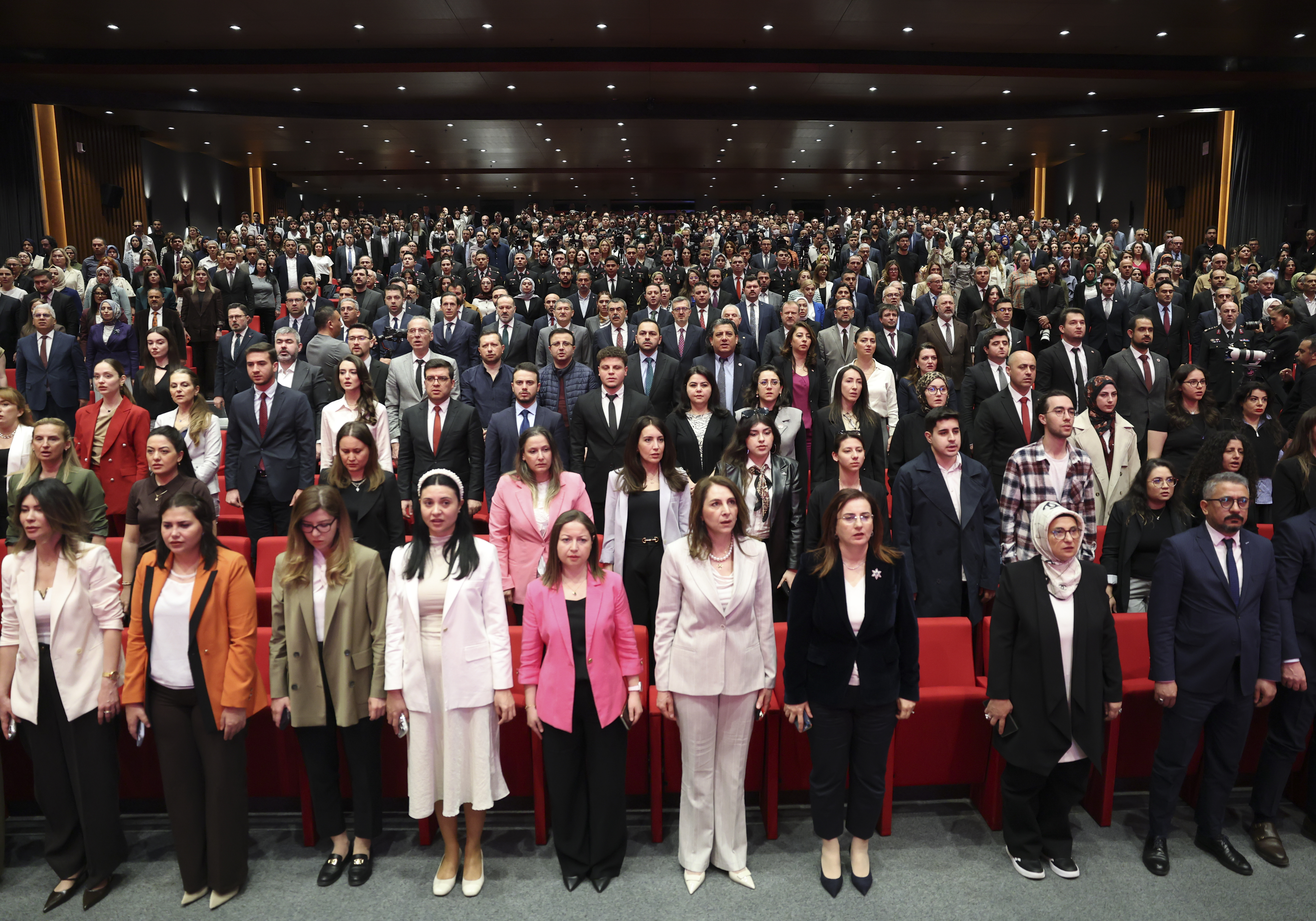
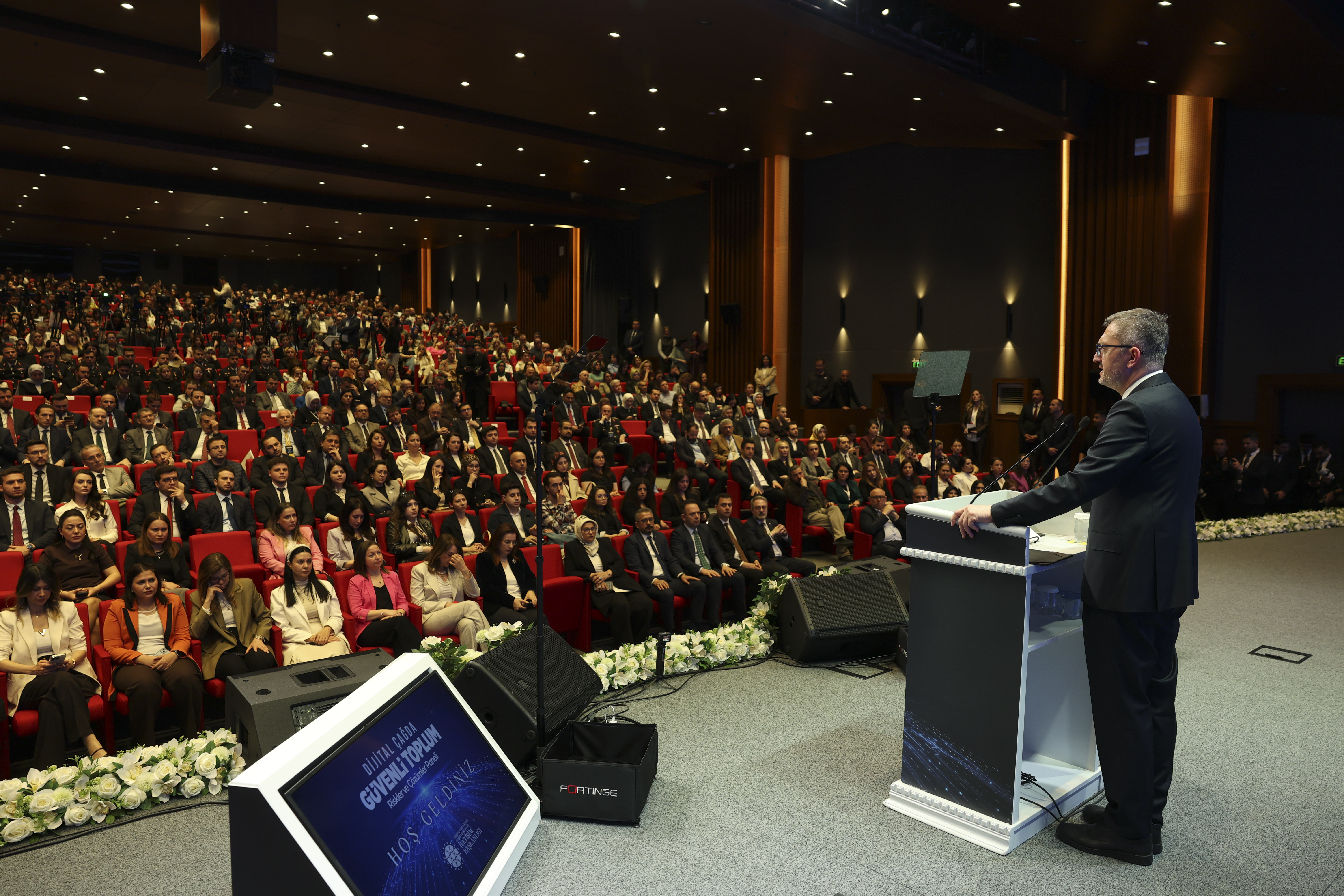
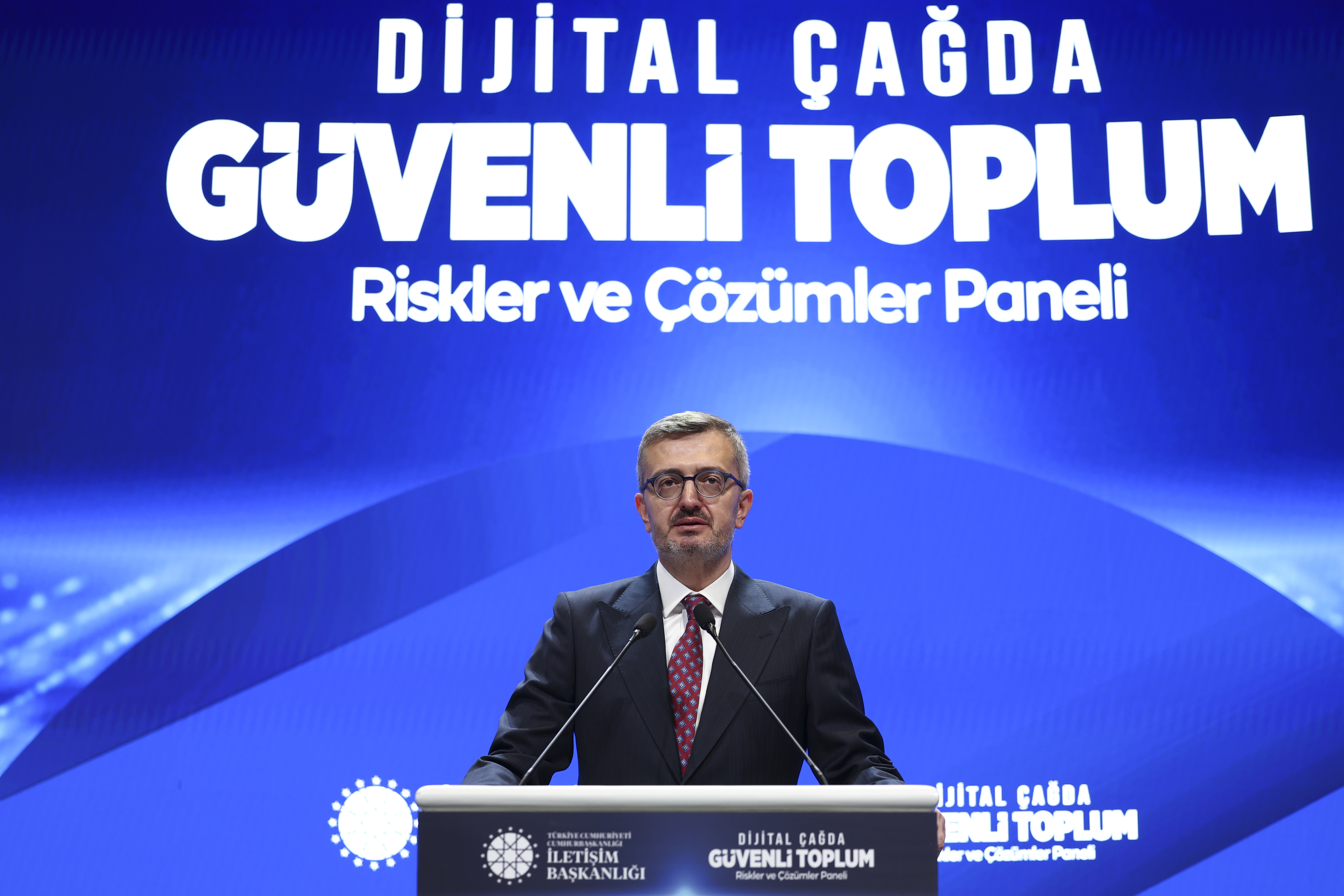
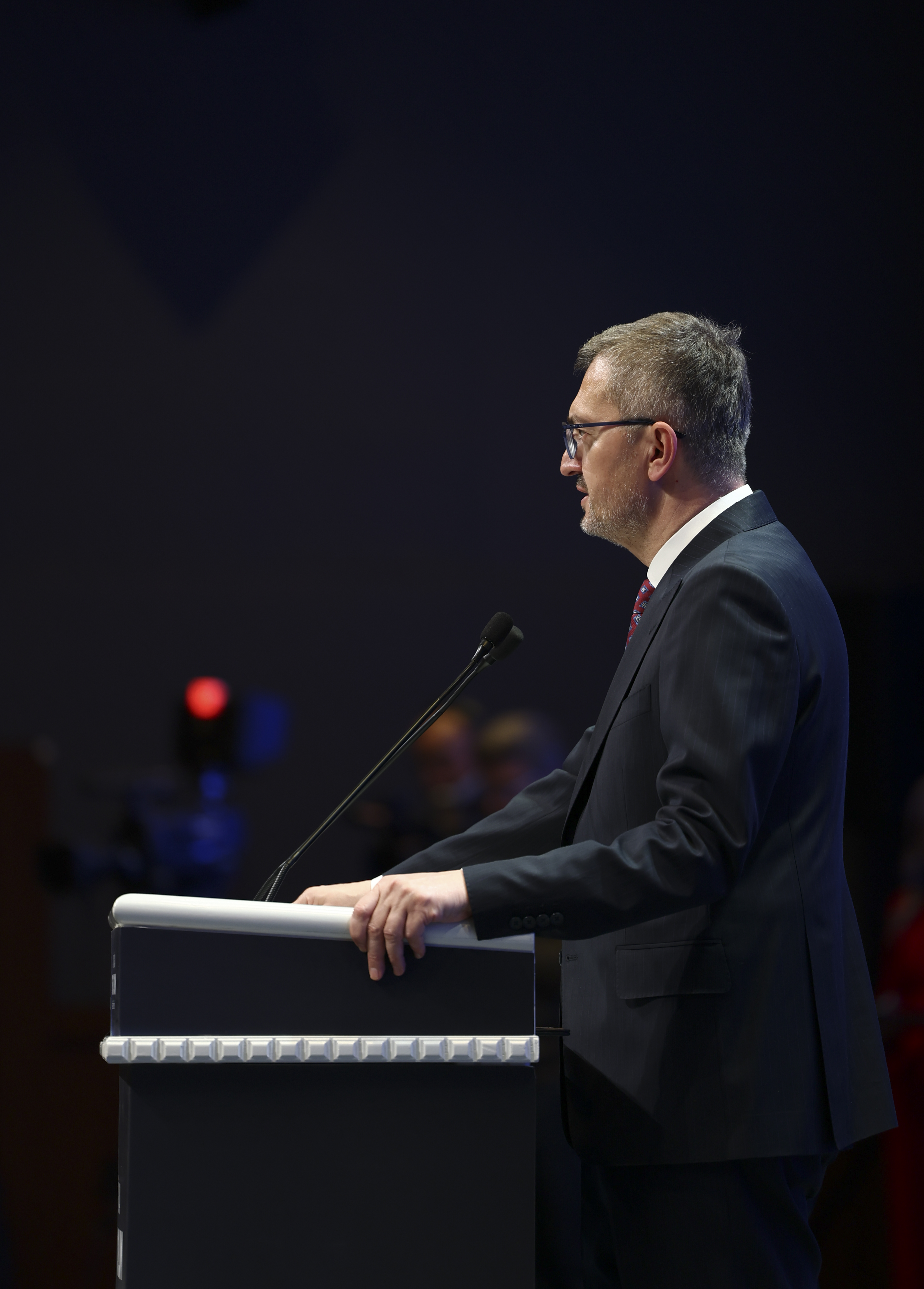
The Presidency's Head of Communications, Burhanettin Duran, drew attention to the risk that bullying encountered in digital environments may, in real life, lead to profound loneliness, in his remarks at the “Safe Society in the Digital Age: Risks and Solutions” panel organised by the Directorate.
In his opening address, Head of Communications Duran stated that humanity is witnessing one of the greatest and fastest transformations in its history, noting that we are experiencing a period in which access to information has become easier, communication reaches a global scale within seconds, and borders have largely lost their meaning.
Emphasising that the digital world has become an inseparable part of life, Head of Communications Duran underlined that today, nearly every aspect of life—from business and education to public services and intra-family communication—is shaped by digital capabilities.
Duran noted that while we benefit from the conveniences provided by the internet, social media, artificial intelligence, online platforms, and mobile applications, it must not be forgotten that every great opportunity also brings with it great responsibility.
Drawing attention to the fact that the digital age, alongside the opportunities it offers, also entails new threats and serious challenges, Head of Communications Duran continued: “We can list many threats, including cyberattacks, the misuse of personal data, disinformation, manipulation, digital addiction, online fraud, and cyberbullying. These threats, without a doubt, constitute critical security concerns that affect public institutions, media organisations, digital platforms, families, and society as a whole. In particular, information pollution and disinformation are today among the most insidious threats targeting the peace, the sense of unity, and the collective wisdom of societies. In an environment where truth and falsehood are intertwined, and accurate information can be rapidly discredited, finding truth and safeguarding it is a shared responsibility for us all.
As the Directorate of Communications, our primary objective is to establish a communication ecosystem centred on truth and justice. We are utilising all available means to combat disinformation and to prevent epistemological poisoning. By sharing accurate information with the public in a timely and reliable manner, we contribute to fostering a healthy communication environment."
Head of Communications Duran also noted that, as part of their latest initiative within this framework, they have made the websites of public institutions readable for large language models in response to the growing threats of AI-driven disinformation and fabricated content. He stated that, through this effort, they contribute to ensuring that AI tools take as reference not fabricated, false or inaccurate information but accurate and verified information.
“The time a child or a young person spends in front of a screen cannot be regarded merely as a form of passing time”
Head of Communications Duran drew attention to the fact that one of the most sensitive dimensions of the digital world concerns children and young people and continued:
"I would like to start by highlighting that today’s children and young people are born into the digital world. The internet, social media, video platforms, and online games are a natural part of their daily lives. When used properly, these channels are highly valuable tools that support learning, facilitate access to information, and enable communication with the wider world. However, when used in an uncontrolled and unregulated manner, the emergence of serious risks becomes inevitable. In the face of cyberbullying, digital addiction, violence, inappropriate content, fake accounts, the misuse of personal data, and manipulative content, children and young people can be left vulnerable. This is because the time a child or a young person spends in front of a screen cannot be regarded merely as a form of passing time. The screen they face directly influences their intellectual world, their emotions, their behaviour, their friendships, and the way they perceive life.”
Bullying encountered in digital environments may, in real life, lead to profound loneliness, even to a sense of meaninglessness. Regrettably, we have seen one of the most recent examples of this in Kahramanmaraş. The constant need for approval and validation undermines the self-confidence of our young people, while violent content erodes their sense of compassion.
Uncontrolled screen use adversely affects family bonds, social relationships, and one’s connection with real life. For all these reasons, we cannot turn a blind eye to the transformation of cyberspace into an environment of anarchy where various dangers run rampant. These issues clearly constitute a matter of national security and survival.”
Head of Communications Duran also recalled that a legislative measure aimed at protecting children and young people from the risks of the digital world was recently passed by Parliament. He stated that the law regulates access to social media platforms for children under the age of 15 and envisages age-appropriate protection and parental support mechanisms for young people aged 15 to 18.
Duran noted that the regulation obliges digital platforms to establish control mechanisms such as limiting usage time and managing accounts and also introduces a requirement for age-based classification of games.
Head of Communications Duran stated that serious sanctions are envisaged for gaming platforms in the event of non-compliance and continued, "Our State is striving to protect our children and young people against risks through such legal regulations adapted to new conditions. At this point, I would also like to refer to the Century of Türkiye Education Model, introduced by our Ministry of National Education. This model not only enhances digital literacy but also aims to protect individuals from such risks while accessing all forms of information.
While equipping our children with multidimensional competencies, it also safeguards them against these risks. The objective here is to ensure that our children grow into individuals who are not only able to access information but also capable of reading, analysing, and interpreting it in a healthy manner.”
“Our children should not remain silent out of fear of us; they should speak because they trust us”
Head of Communications Duran stated that, at this point, citizens and parents must assume their responsibilities and ask themselves certain questions and continued:
“Do we truly know where our children and young people stand in the digital world? Which platforms do they use? With whom do they communicate? What kind of content are they exposed to? What are the consequences of this? How do they feel in the face of what they are exposed to and see on these platforms? I believe these are questions that every family, every school, and every institution must now address seriously. Because the way to protect our children in the digital world is to equip them with the skills and awareness for safe, balanced and responsible use of digital technologies. None of us—neither families nor our educational institutions nor any segment of society—can evade this responsibility. Strengthening communication within the family is among the foremost steps we can take.
Our children and young people must be able to share, with ease, any threat, bullying, or harmful content they encounter in the digital world with their families. Monitoring and supervision are important; however, such oversight must be based not on pressure, but on mutual trust.
Our children should not remain silent out of fear of us; they should speak because they trust us. Just as it is essential to prevent uncontrolled screen use—which leads to addiction, distraction, sleep disorders, and social disconnection—it is equally essential to strengthen digital literacy. We cannot cut our children off from the digital world. Therefore, we must teach them that not every piece of information they encounter is accurate, not every account is reliable, and not every post is innocent. This is, of course, only possible if they develop the awareness to distinguish between accurate and false information. It is crucial to bear in mind that a young person with a strong sense of meaning, belonging, and purpose would be resilient against the harmful effects of the digital world.”
Head of Communications Duran emphasised that the family is the child’s first sphere of trust, noting that love, compassion, responsibility, respect, and moderation are all learned within the family.
“Our children and young people must not become confined to a passive, consumer role in the digital world”
Head of Communications Duran emphasised that today the most effective protective shield against digital threats is, once again, the family and continued: “Families who speak with their children, listen to them, devote time to them, and understand their digital world can, of course, protect them more effectively from digital dangers. Where the bond weakens, the screen grows stronger. Where the family falls silent, algorithms begin to speak.
The glow of screens may dazzle our children’s eyes. Yet we know that the true light illuminating their path comes from their families' love, their teachers' guidance, society's responsibility, and our values' strength. Our children and young people must not become confined to a passive, consumer role in the digital world. On the contrary, we are speaking of individuals and generations who seek the truth, question information, understand the boundaries of privacy, respect the rights of others accordingly, and are capable of producing beneficial content.”
Head of Communications Duran stated that, as the Directorate of Communications, they aim to maximise the resilience of the nation and the country against the new challenges brought about by technological advancement, adding that while carrying civilisational values and historical heritage into the future, they fully utilise—and will continue to utilise—the opportunities offered by technology.
Head of Communications Duran stated that in doing so, they aim to shape technology rather than be swept along by the winds of technology, and added the following:
“The late Erol Güngör, one of the distinguished figures of Turkish intellectual thought, points to this reality as follows: ‘If technological development were one day to render the whole world alike, in which soil would the seeds required for the transformation of modern civilisation into a more advanced and higher level take root?’ This question is of paramount importance, as it reminds us that while keeping pace with technology, we must preserve our national and spiritual values, as well as our unique cultural identity. I firmly believe that the seeds needed to carry civilisation forward are growing in these lands. I have no doubt that our children and young people will realise this.”
Emphasising that efforts will continue collectively towards building a secure, strong, and conscious society, Head of Communications Duran expressed his hope that the panel would contribute to new initiatives in this field.
The panel was also attended by Nazım Elmas, Chair of the Grand National Assembly of Türkiye’s Digital Platforms Commission; Çağrı Erhan, Deputy Chair of the Presidential Security and Foreign Policies Board; Mehmet Daniş, President of the Radio and Television Supreme Council (RTÜK); Mehmet Zahid Sobacı, Director General of TRT; Deputy Heads of Communications Ferhat Pirinççi and İlhami Giray Şahin; Oğuz Enis Peru, Deputy Director General of Anadolu Agency; Mehmet Güllüoğlu, Vice President of the Turkish Green Crescent (Yeşilay); and several members of parliament and representatives of media organisations.