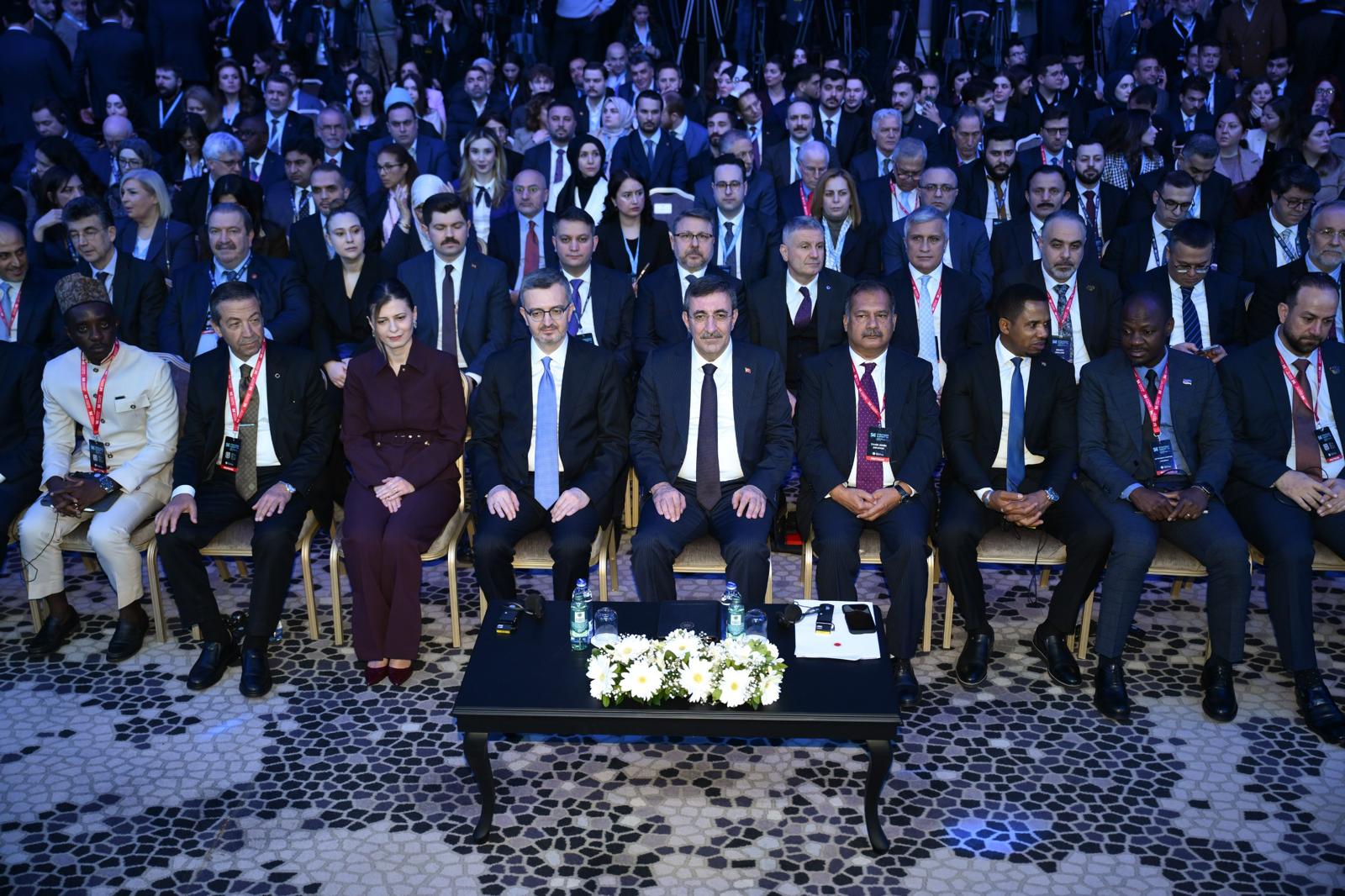
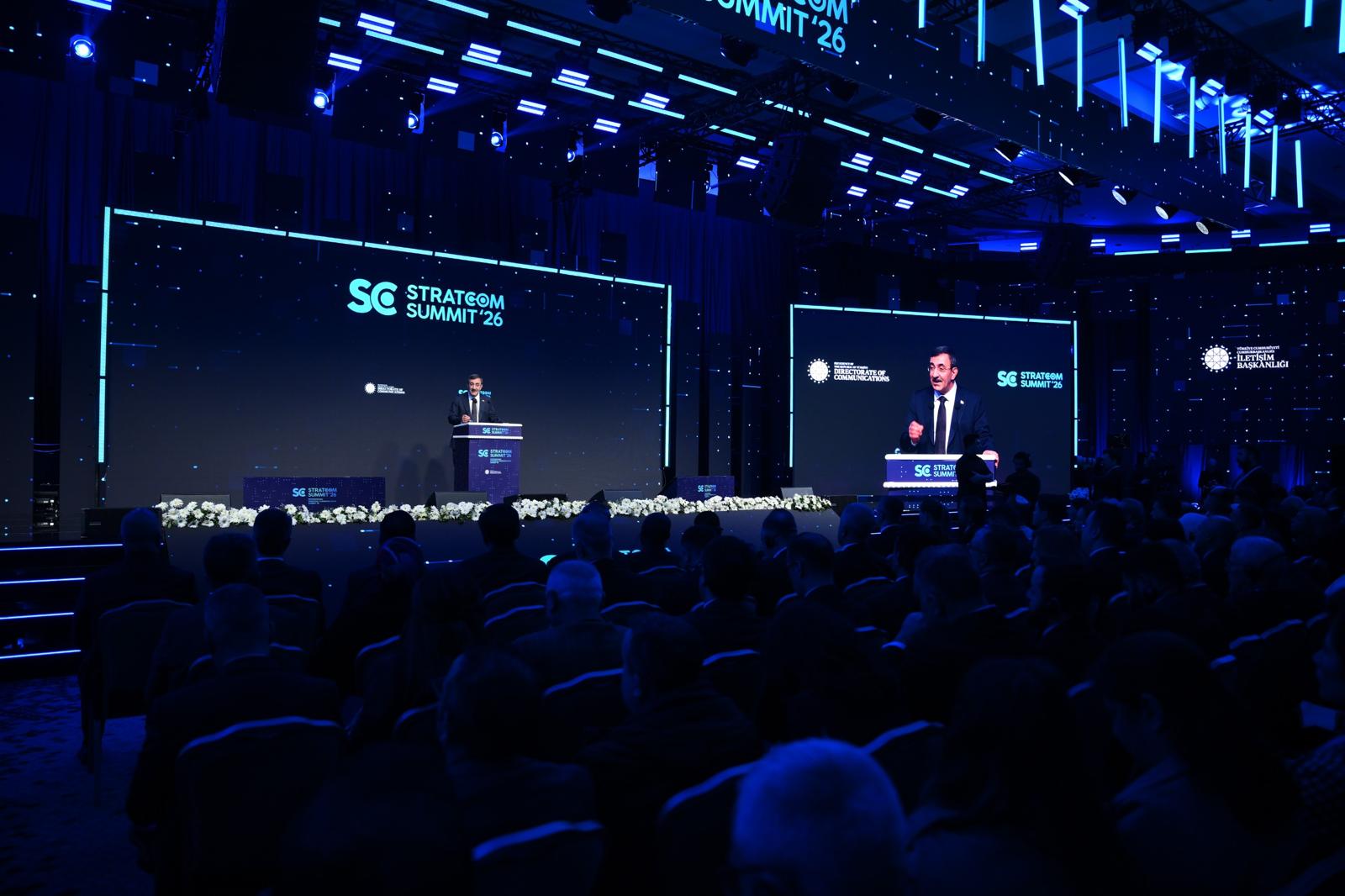
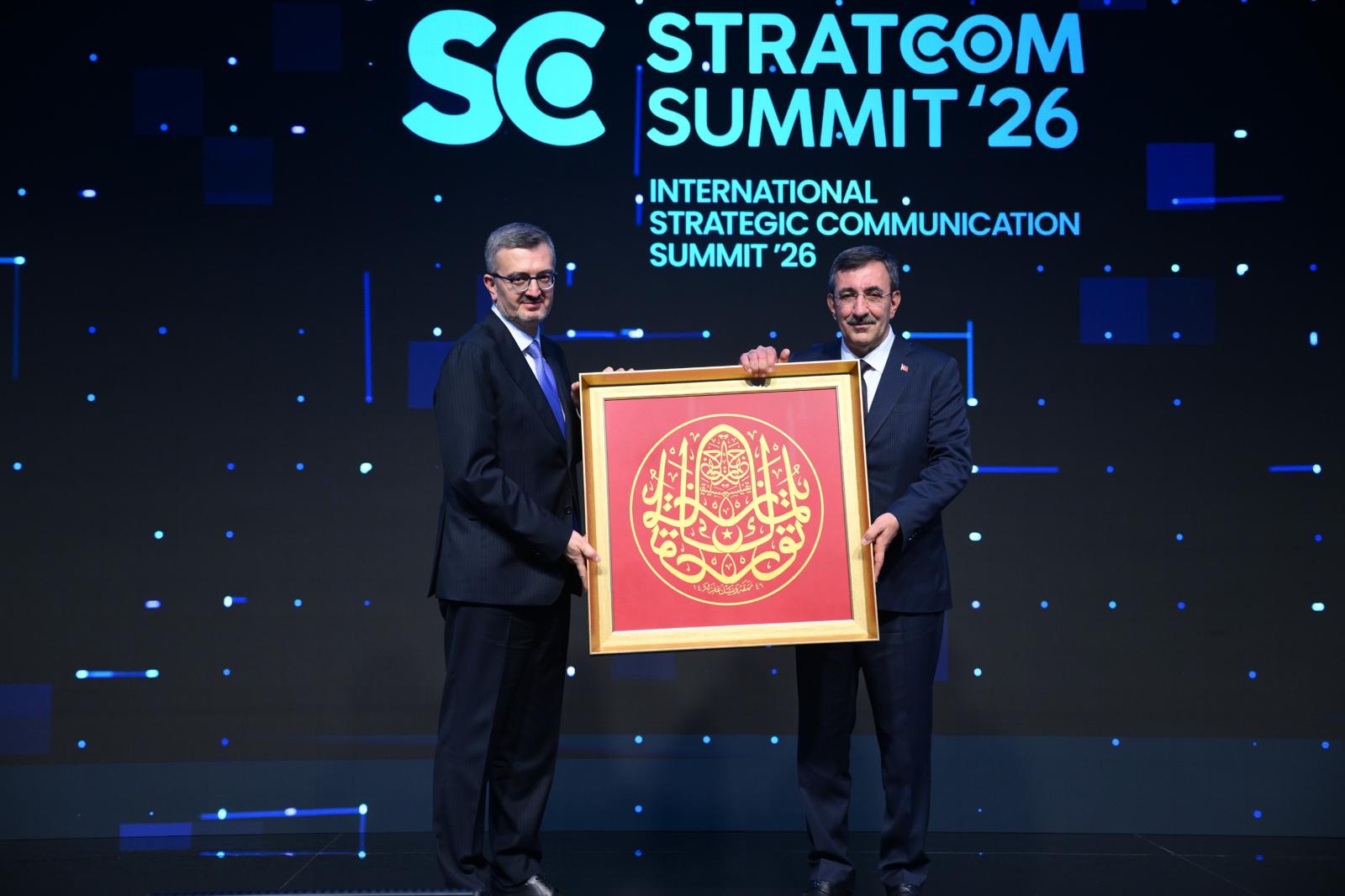
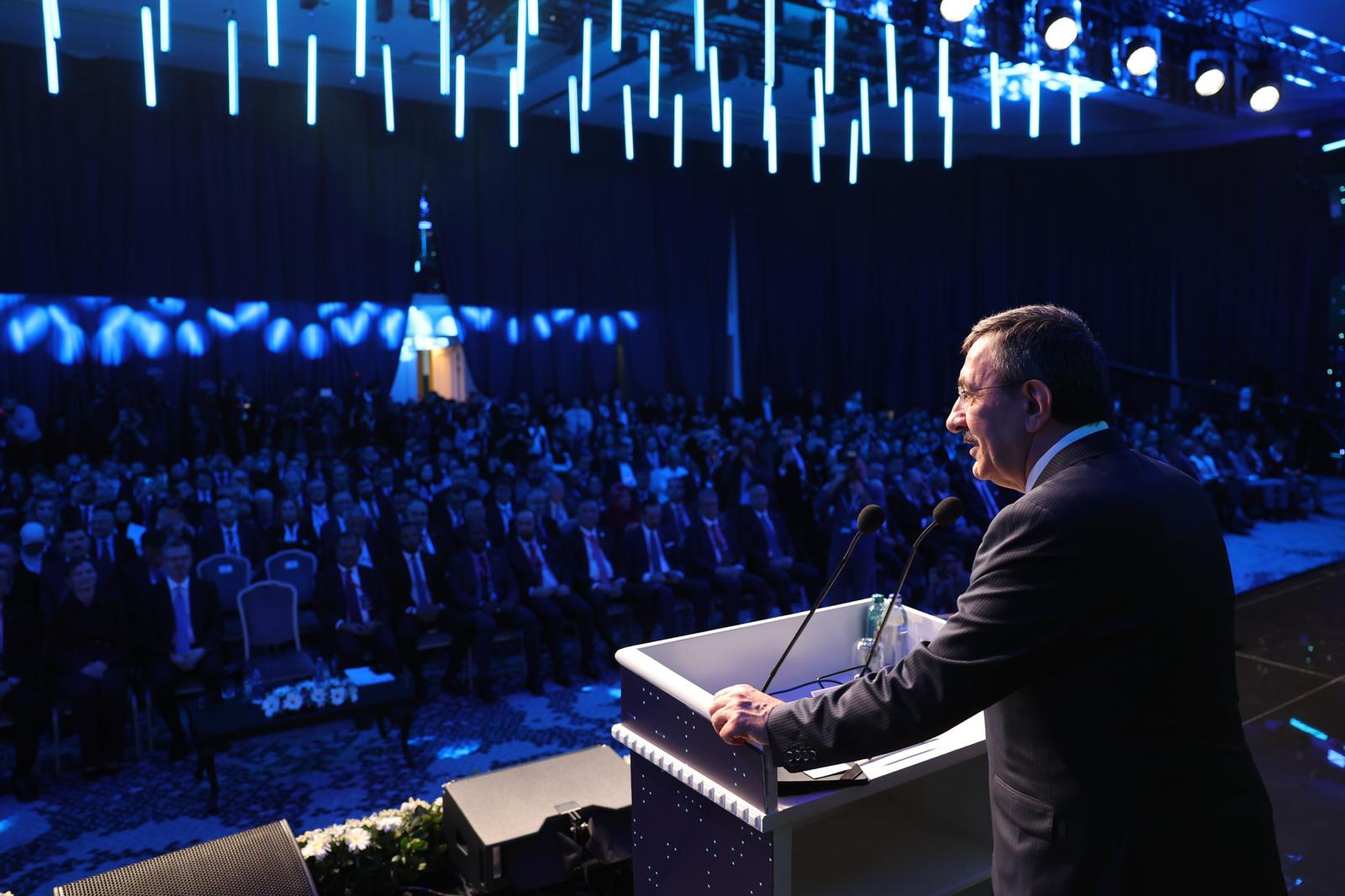
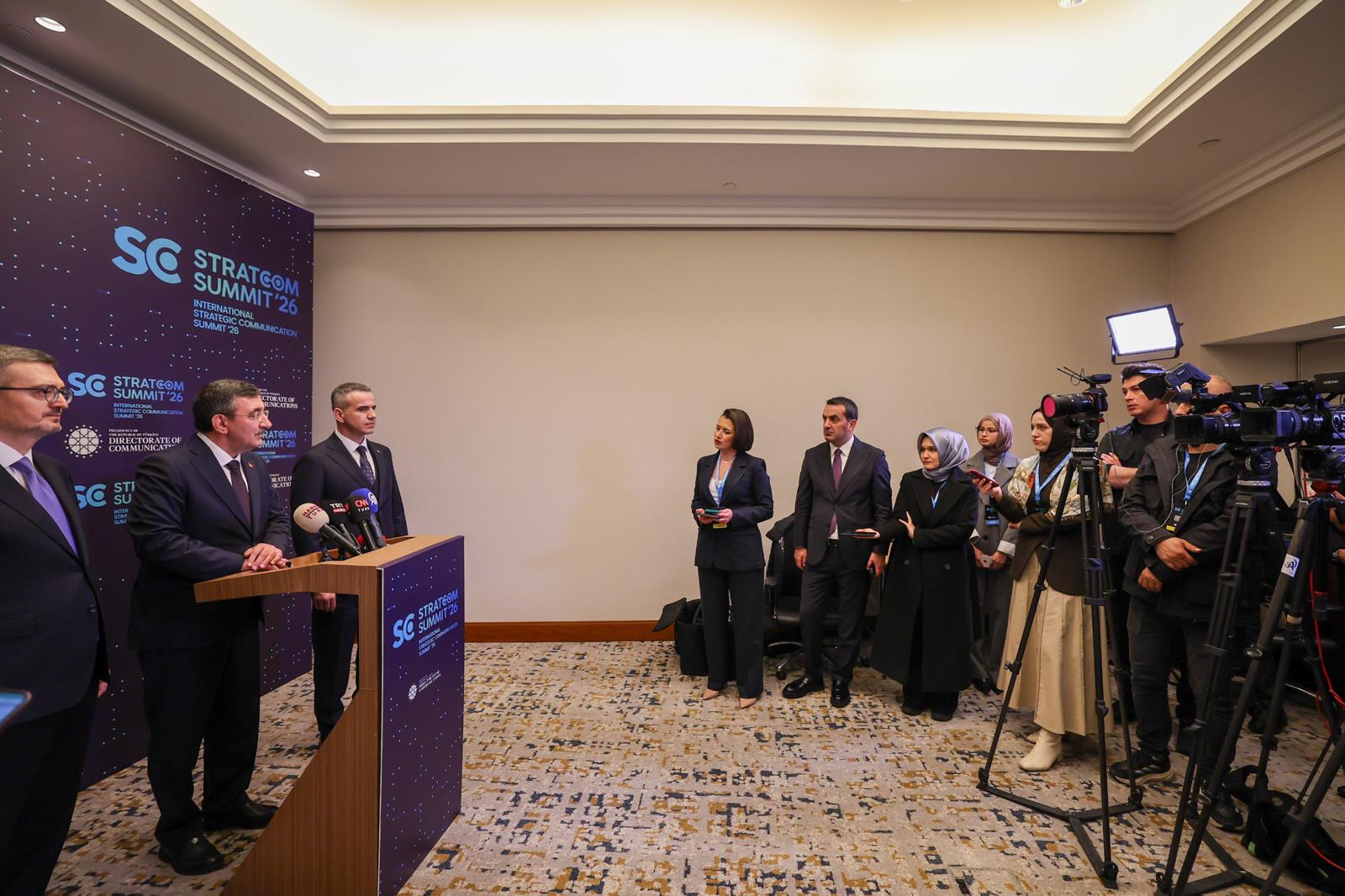
Vice President Cevdet Yılmaz attended the 5th International Strategic Communication Summit (STRATCOM), organised this year in İstanbul by the Directorate of Communications under the theme “Disruption in the International System: Crises, Narratives, and Search for Order.”
Speaking at the Summit, Yılmaz stated that the current period marks a process in which global and regional crises trigger one another and amplify their impact.
Yılmaz drew attention to the fact that today the international system’s capacity to deliver justice and ensure stability has been severely eroded, stating that, in this period of growing uncertainty, the situation has reached a point that has dealt a severe blow to the global economy.
Yılmaz noted that the rules‑based system discourse is yielding to power politics, with trust, legitimacy and narrative concurrently under scrutiny.
Yılmaz said that a mindset of “if I am strong, I can do whatever I want” weakens international law, while also leading to legitimacy crises in domestic politics and undermining democratic processes. He added, “The humanitarian tragedy unfolding in Gaza, the tensions spreading across the region, and Iran‑centred developments reveal the extent to which the international system, in its current structure, struggles to address such crises. Crises erupting one after another in health, security, economy, climate and migration are no longer exceptions but have become enduring elements of the political agenda.”
Yılmaz stated that each new development deepens existing fragilities and generates new areas of risk and continued:
"The most pressing issue right now is the ongoing war between Israel/US and Iran, which began with Israeli provocations. This war is exerting severe impacts on both regional and global stability. We are all witnessing the human costs of war, including its toll on children. Beyond the humanitarian costs, the economic and environmental costs are, unfortunately, evident. Especially through its disruption of trade, logistics, and tourism channels, and its impacts on agriculture and food, particularly on essential inputs such as fertiliser, the war has generated major costs worldwide. As the Republic of Türkiye, we expect this war to be brought to an end as soon as possible, beginning with a ceasefire and followed by diplomatic solutions that permanently eliminate the risk of renewed conflict. President Recep Tayyip Erdoğan, at the leaders’ level, together with our Minister of Foreign Affairs and institutions at various levels, consistently articulate Türkiye’s perspective across all platforms, with significant efforts being made in this regard.
Yılmaz said "While these event are unfolding in Iran, Israel’s actions in Gaza, its unlawful practices in the West Bank, its occupation of Lebanon—invading another sovereign country and displacing more than one million people—and its activities that threaten stability in Syria must also be underscored, as they are taking place in the shadow of the war in Iran and taking advantage of the atmosphere it has created.
Yılmaz emphasised that keeping Al‑Aqsa Mosque closed to worshippers even during the Eid prayer is in no way acceptable, noting that such actions are contrary to law, fundamental human rights and freedom of belief, and constitute a grave betrayal of the spirit of Al-Quds and the legacy of Prophet Abraham.
“Strategic communication is also becoming an element of internal security”
Yılmaz highlighted that communication is now an inseparable dimension of conflicts and wars and said, "Digitalisation has fundamentally accelerated the creation and dissemination of information.
Algorithms and platforms have risen to become decisive actors shaping global perception. The boundary between truth and perception is increasingly blurred, and disinformation emerges as a powerful political weapon both in domestic politics and in international relations.”
Yılmaz emphasised that in recent times there has been a marked increase in disinformation activities conducted through fake images and content produced using artificial intelligence, noting that the spread of such AI‑supported content demonstrates that, alongside content production, the control of communication infrastructures and data flows has also become a strategic arena of competition.
Yılmaz stated that, in the face of the growing influence of global technology companies, the issues of data sovereignty and digital independence have assumed a central place in states’ security perspectives, adding that such content emerges as part of organised initiatives aimed at exploiting social sensitivities to mislead public opinion and manipulate perception.
Yılmaz pointed out that while artificial intelligence further amplifies this dynamic in terms of speed and scale, it also raises questions of ethics, trust, and accountability, noting that another dimension of this trend is the increasing difficulty of accessing the source of information.
Restrictions on journalists’ access to conflict and crisis zones, interventions targeting communication infrastructure, and obstructions to broadcasting processes are making it increasingly difficult to obtain real‑time, verifiable information. “The journalists and press members who lost their lives while striving to convey these realities during the genocide in Gaza are the most powerful witnesses to these events,” said Yılmaz, noting that this situation creates a fertile ground for information gaps to be filled with manipulative content and makes the formation of public perception more fragile.
Yılmaz stated, ''Strategic communication is evolving beyond an instrument of external engagement, becoming also an element of internal security that strengthens societal resilience, facilitates access to accurate information, and enhances the public’s resistance to disinformation. All these developments have transformed strategic communication from a secondary tool into the very heart of governance.''
Emphasising the critical importance of relying on accurate and reliable information, closely following official sources, and refraining from circulating unverified content during this process, Yılmaz noted that defending the truth against systematic, increasingly internationalised disinformation also requires international effort and cooperation.
''The importance of leadership becomes even greater in stormy, chaotic times''
Yılmaz stated that, in such a turbulent context, every actor on the ground faces the choice of either ''being swept along by crises'' or ''demonstrating strong will to change the course for peace,'' and he continued:
''Türkiye, under the leadership of our President Recep Tayyip Erdoğan, has chosen the second choice and has demonstrated this choice to the entire world not merely through words, but with concrete actions. The continuity of contact between parties during moments of escalating crises is the sole guarantee for keeping processes under control. This contact relies, before institutional mechanisms, on the personal trust of leaders and their mutual responsibility.
Leaders are always important, and they remain so under all circumstances. However, the importance of leadership becomes even greater in stormy, chaotic times. In this regard, I would like to emphasise that the leadership of our President, who is an extremely important figure not only for our country but also for our region and the global order, has become even more valuable due to his resolute leadership. As the Russia-Ukraine war enters its fifth year, our President Recep Tayyip Erdoğan has become the leader able to engage with both sides and facilitate progress on issues affecting all of humanity and the global economy, such as the grain agreement.
In the South Caucasus, we all know the crucial role he has played in the Azeri-Armenian dialogue and peace efforts. Again, the whole world has witnessed his stance and success in addressing the Ethiopia-Somalia tensions in Africa. I would like to emphasise that Türkiye has taken a principled stance in the Balkans, in the Pakistan-Afghanistan conflict, and, in short, across all crisis areas.''
Yılmaz noted that this approach demonstrates a systematic attitude beyond a mere stance toward a crisis or incident, adding that it reflects an engagement with all parties and seeks peace and negotiation.
Yılmaz stated, ''The Republic of Türkiye, while remaining outside these wars and prioritising its stability and safeguarding the interests of its citizens at the highest level, also exerts every effort for peace with a principled stance.''
''We understand both the West and the East''
Highlighting that Türkiye is one of the rare countries in the region capable of engaging simultaneously with both the East and the West, Yılmaz stated, ''Türkiye’s geographical and historical heritage, as well as its civilisational legacy, are factors that strengthen this role.'' We possess a historical heritage and a geographical position that allow us to listen to and understand all regions of the world. We understand both the West and the East. We can recognise different concerns and perspectives, and I would like to highlight that this represents a value for all humanity.''
Yılmaz noted that Türkiye stands out for a national identity that aligns words with actions, never fully closes its doors, and embraces peace as a responsibility, adding that President Erdoğan’s call that "The world is bigger than five" carries even greater significance in this context.
Saying that, “Making the limits of the current international system visible and placing the pursuit of a fairer and inclusive order as a permanent item on the global agenda form the core axis of Türkiye’s foreign policy as well as its strategic communication,” Yılmaz added that, Türkiye accurately assesses the current context and realities and continues to lead efforts towards a fairer world with a medium- and long-term perspective.
Yılmaz emphasised that, in this sensitive period, strategic communication is no longer a secondary tool but has become an integral part of governance, noting that communication performs critical functions such as building trust, managing uncertainty, and strengthening societal resilience.
Noting that, in an era where the line between truth and perception is increasingly blurred, and artificial intelligence is fundamentally transforming every field, public diplomacy has moved beyond being a one-way communication tool and has become a multi-actor, interactive process, Yılmaz added, ''Just as the importance of international cooperation has grown, it has also become extremely valuable for the public, NGOs, academia, and the media to act in close dialogue and collaboration.''
At the conclusion of his speech, Vice President Yılmaz thanked the Presidency’s Directorate of Communications, the organiser of the STRATCOM Summit, the Presidency's Head of Communications Burhanettin Duran, and all those contributing to the summit.
After delivering his opening remarks, Yılmaz answered journalists’ questions, noting that the STRATCOM Summit, organised for the fifth time this year by the Presidency's Directorate of Communications, carries even greater significance in today’s context.