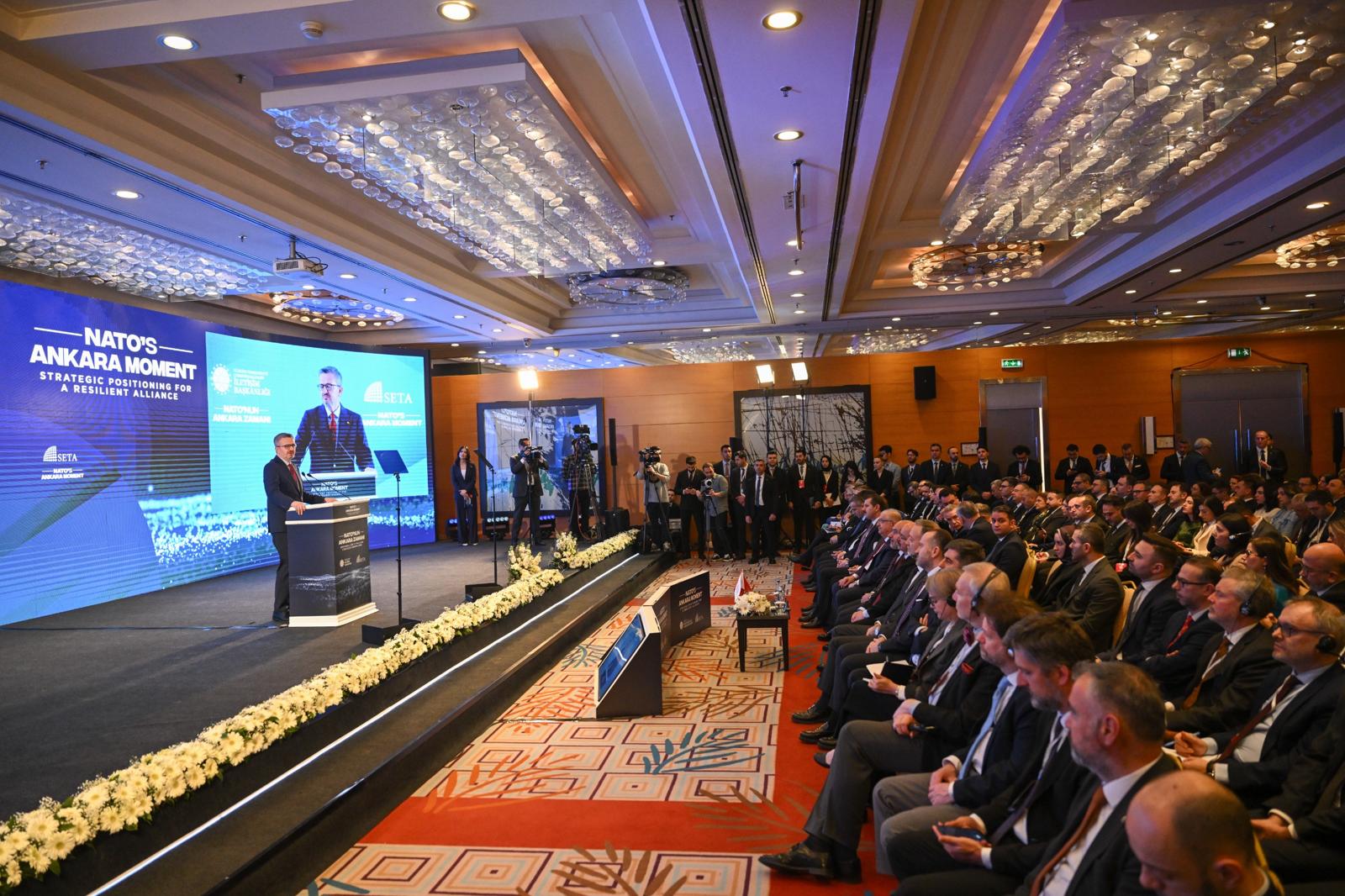
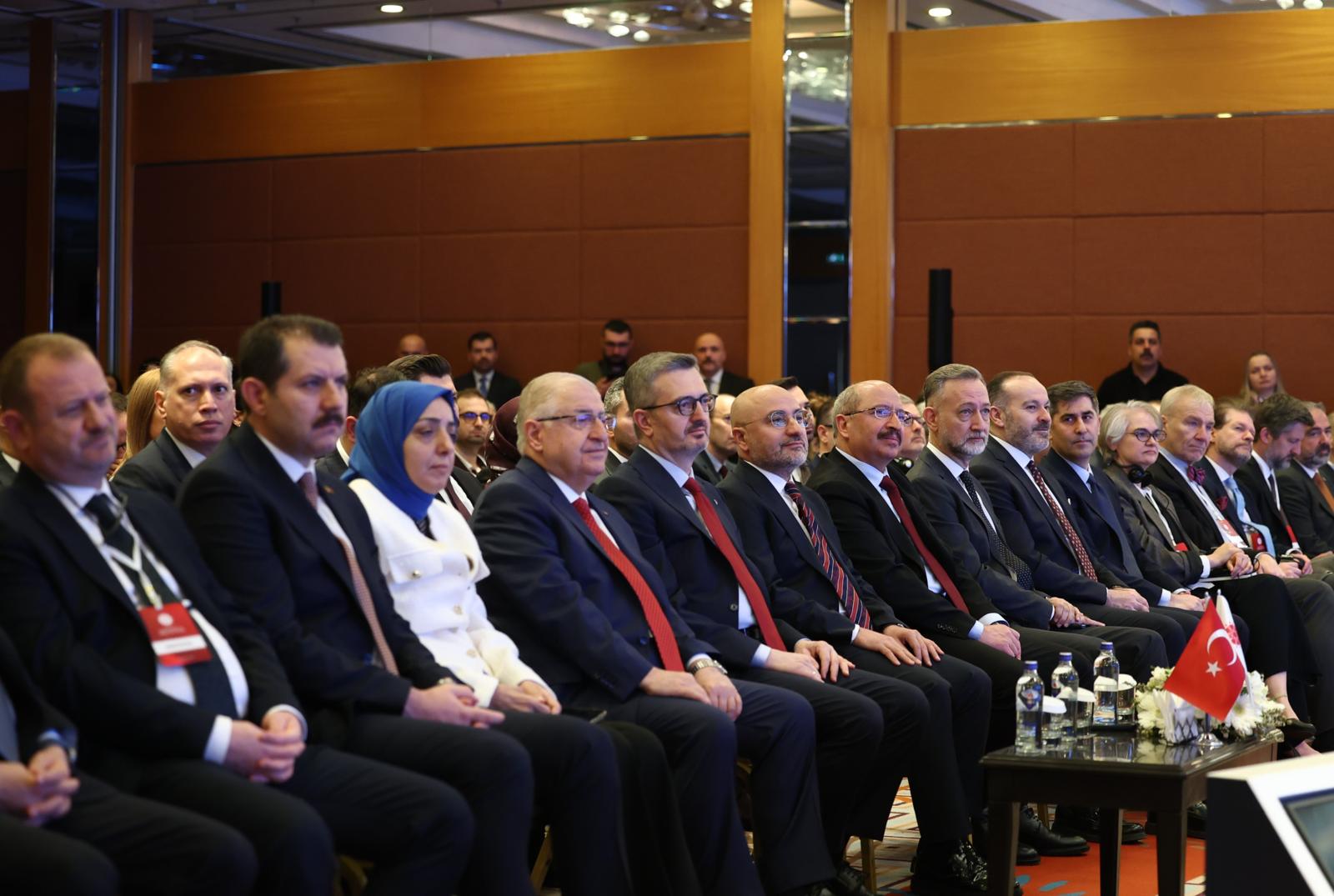
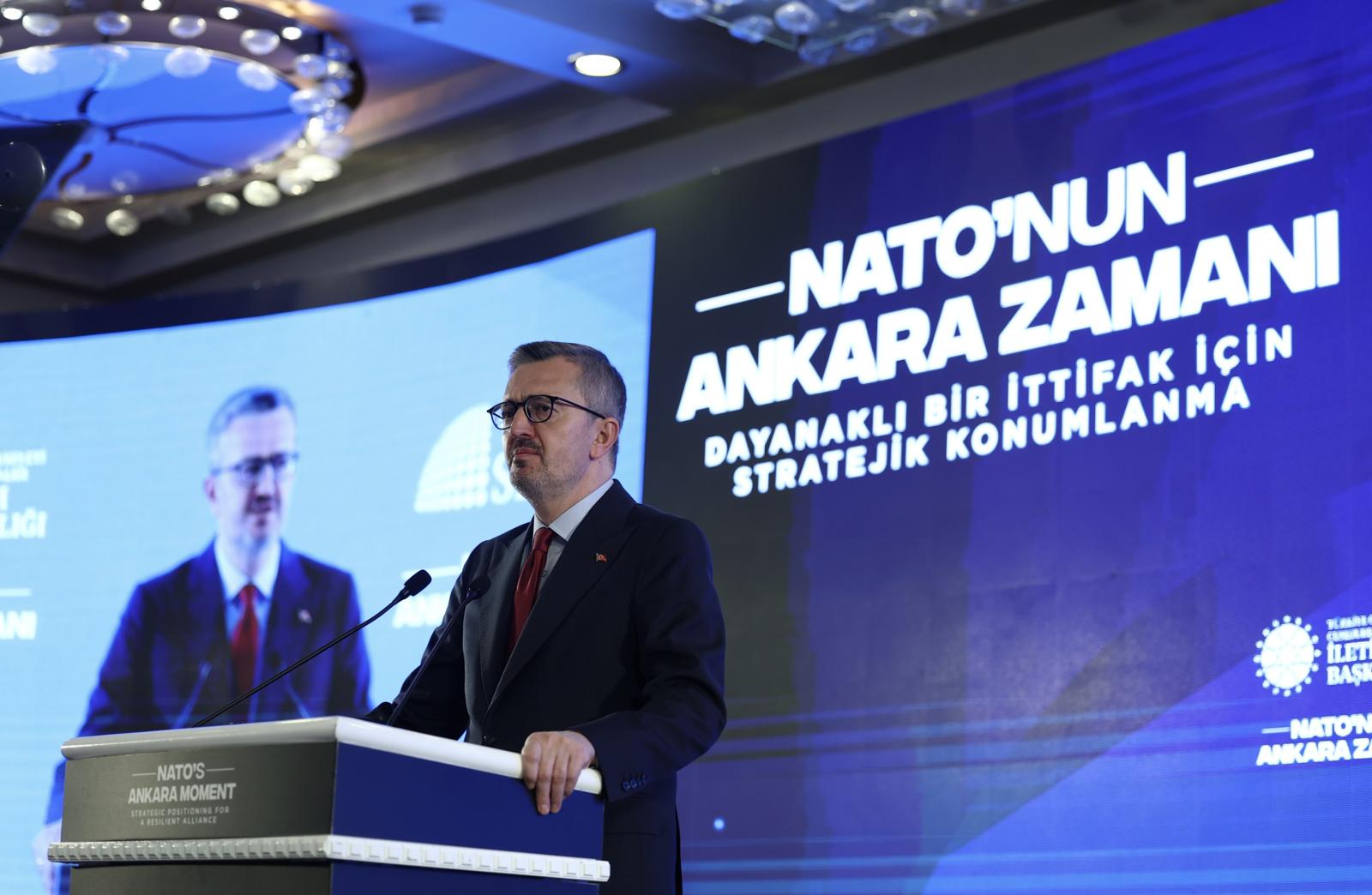
Presidency's Head of Communications Prof. Burhanettin Duran stated in his address at the conference titled “NATO’s Ankara Moment: Strategic Positioning for a Resilient Alliance”, organised by the Presidency’s Directorate of Communications and SETA, that NATO can ensure the security of its Allies only to the extent that it remains strong, underlining that Türkiye is, in this regard, one of NATO’s most strategic partners.
Noting that NATO was established during a period marked by a “Cold War” climate in order to guarantee the security of its allies and to create a collective defence and deterrence mechanism in response to the geopolitical tensions of the time, Duran said:
"Today, we see that NATO has largely fulfilled its mission this mission. However, with the end of the Cold War, the 1990s made it necessary for both NATO and global actors to reassess their approaches to security. At precisely this juncture, NATO went beyond its traditional understanding of defence and undertook a number of multidimensional tasks. This, in a sense, was also a manifestation of the Alliance’s capacity to adapt itself to evolving conditions. Today, the international system is once again confronted with a new conjuncture. Consequently, the NATO Alliance is once again under significant pressure to transform. When we examine the current landscape, we see that multiple crises—intersecting across different domains—are unfolding simultaneously, and that serious disruptions have occurred in the structures that sustain the international system. In other words, the international order is undergoing profound, multidimensional disruption. This process, which can be described not merely as a temporary period of crisis but as a phase of lasting and structural transformation, is not only giving rise to new challenges but also reinforcing the need for new solutions.
"NATO must transform itself and adopt an approach"
Highlighting that the Russia–Ukraine war represents one of the most significant challenges of the post-Cold War era, Head of Communications Prof. Burhanettin Duran emphasised that the development has also brought into question how security and defence in Europe should be ensured.
Noting that the new approach adopted by Donald Trump during his second presidential term, along with messages suggesting a possible withdrawal from NATO, has prompted European countries to strengthen their defence capacities and re-prioritise their security policies, Duran went on to say,
“In the face of this evolving landscape, Türkiye has emphasised—and continues to emphasise—the need to strengthen cooperation within the NATO Alliance and to further enhance its resilience in every respect. However, we observe that NATO member states, taking into account their own priorities, have adopted different defence paradigms, which has naturally given rise to certain divergences within the Alliance. This clearly shows that in an era of structural warfare, NATO must transform by embracing a strong, integrated approach that puts resilience, deterrence, and crisis management at its core. In this context, Türkiye possesses the strength and capacity to continue making substantial contributions to NATO, as it has done thus far. Likewise, NATO remains a highly important alliance in addressing Türkiye’s security needs."
“With its 360-degree security perspective, Türkiye is well placed to serve as a model.”
Head of Communications Burhanettin Duran underscored that, as today’s crises are being discussed, it should not be overlooked that the war between the United States, Israel and Iran has also given rise to concerns of escalation within the global system, and said:
“The tensions that lasted for 40 days keep alive the possibility that crises in different parts of the world may evolve into conflicts, while also triggering a transformation of the traditional security paradigm. This emerging geopolitical competition environment encompasses a wide range of risks, including arms races and ethnic and sectarian conflicts, as well as energy and trade wars. Moreover, it is a fact that international institutions and organisations, which play a significant role in the functioning of the global system, have remained ineffective in the face of this situation. Today, as you can see, the United Nations has largely lost its capacity to intervene in conflicts, stop them, or prevent them. These developments demonstrate just how vital it is for NATO to reinforce its internal resilience and cooperation.”
Emphasising that NATO can ensure the security of its Allies to the extent that it remains strong and can offer constructive solutions to crises in proportion to the resilience it builds, Duran said, “In this regard, Türkiye is one of NATO’s most strategic partners. It is a country that has made critical contributions to the Alliance across multiple domains, foremost among them 'stability'. With its geopolitical position and historical ties, Türkiye is an influential actor in the Middle East, and stands out within the Alliance in ensuring the security of the Black Sea and the Eastern Mediterranean. At the same time, with its 360-degree security perspective, Türkiye is in a position to serve as a model for NATO member states in managing modern threats. Through this security approach, our country addresses threats in the military, political, economic and technological domains, as well as risks emerging in the field of communication, in a holistic manner and ensures its security by integrating hard and soft power.”
“Türkiye continues to serve as a safe haven”
Noting that Türkiye has become a decisive actor at both regional and global levels through the capabilities it has advanced over the past two decades under the leadership of President Recep Tayyip Erdoğan, Duran said:
"Throughout this period, Türkiye has not limited itself to ensuring its own internal security; it has also demonstrated a resolute commitment to preserving and strengthening peace and security at both the regional and global levels. In this framework, through its foreign policy centred on peace and stability, Türkiye continues to serve as a land of peace and a safe haven in its region. As President Recep Tayyip Erdoğan has stated, 'Today, when peace, tranquility, and stability are mentioned, Türkiye is the first country that comes to mind; from Syria to Gaza, from the Gulf to the conflict between Russia and Ukraine, no framework can be established without Türkiye.' Looking at the recent past, we can see that Türkiye has played a constructive role in the Russia–Ukraine crisis, bringing the parties together at the negotiating table on numerous occasions through leader-to-leader diplomacy. Indeed, these constructive initiatives helped avert a potential global food crisis through the Black Sea Grain Initiative. Likewise, Türkiye played a key role in achieving a just resolution to the decades-long Karabakh conflict.”
“Türkiye engaged diplomacy to prevent the crisis from turning into war”
Drawing attention to the decisive role of President Erdoğan’s leadership in ensuring that the 13-year civil war in Syria concluded in a manner that preserves the unity and territorial integrity of the Syrian people, Duran stated:
"Similarly, Ankara has become the focal point for resolving the disputes between Somalia and Ethiopia. Finally, Türkiye has made significant contributions to achieving a two-week ceasefire between the United States and Iran. In fact, Türkiye had used all diplomatic means from the start to keep the crisis from escalating into war. We presented a variety of initiatives, including attempts to initiate dialogue among leaders. We demonstrated our commitment to preventing a conflict environment and ensuring peace by bringing the parties together in Istanbul. We attempted to minimise differences by contacting regional countries. We declared a broad diplomatic mobilisation following the outbreak of war, including direct talks with the United States and Iran. We made bilateral contacts with regional countries to prevent the war from spreading across the region. As part of this effort, we worked with regional countries, including Pakistan, Qatar, Egypt, Saudi Arabia, the United Arab Emirates, and Oman, to put an end to the conflict. Similarly, we held bilateral contacts with more than 20 global actors, primarily Russia, Spain, France, Italy, and Germany. As someone who has personally witnessed our President's efforts to secure peace, I believe we should be grateful for his leadership in this regard."
"Having the NATO Summit in Ankara this year is significant"
Burhanettin Duran went on to say that during this process, President Erdoğan closely monitored the efforts of all relevant institutions, especially the Ministry of Foreign Affairs and MİT, to establish peace, and said:
"In the future, under our President's leadership, we will continue to use all diplomatic means to find a solution based on justice in any crisis. Unfortunately, despite the recent ceasefire in the region, the Netanyahu government's attacks on Lebanon continue to undermine international efforts to establish peace and stability. Türkiye reiterates its unwavering support for Lebanon's sovereignty and territorial integrity, and we call on the international community to act immediately. All the processes we have discussed thus far demonstrate Türkiye's importance as a key actor in global peace and stability. Having the NATO Summit in Ankara this year is particularly significant in this context. The messages that leaders deliver in the capital of such a strategically important country will be critical to NATO's future."
"Communication has itself become an integral component of conflicts and wars"
Head of Communications Duran stated that today's problems cannot be solved by ignoring the field of communication and emphasised the following points:
"The domain of communication has itself become an integral component of conflicts and wars, shaped by disinformation, perception management, AI-generated false content, and other factors. States must implement a comprehensive strategic communication approach that includes the entire flow of information to combat hybrid threats in the field of communication. NATO has also prioritised improving its member states' strategic communication capacities. If we are to discuss a new strategic positioning that will strengthen NATO's resilience today, we must first examine the current global crises from a communication perspective and engage in an exchange of views on opportunities for cooperation in this field. Because the global security architecture that will establish peace and justice in the modern era must include a truth-based communication domain."