Presidency's Head of Communications Burhanettin Duran emphasised in his address at the TRT Humanitarian Film Festival, organised by TRT, that voices challenging cinema shaped in line with the interests of hegemonic powers are growing increasingly stronger.
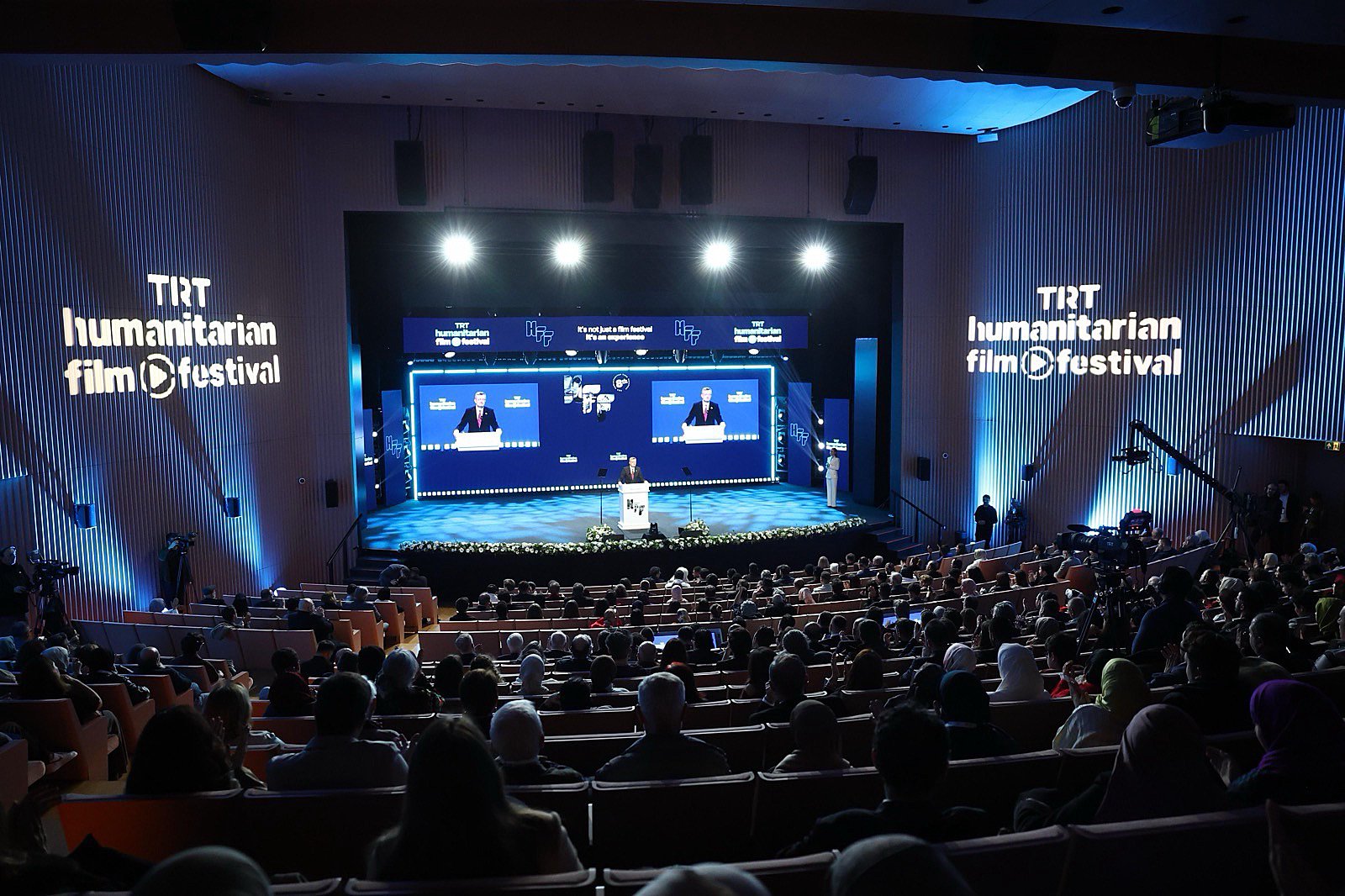
Presidency's Head of Communications Burhanettin Duran attended the award ceremony of the 8th TRT Humanitarian Film Festival, which aims to raise awareness of human rights and social issues and was held at the Atatürk Cultural Centre.
Noting that the silver screen had achieved global dominance transcending nation-states in the 20th century, Head of Communications Duran stated:
"Particularly during the Cold War, cinema served interests that were purportedly documented 'in the name of humanity'. Narratives rooted in power and authority were shaped to secure public consent for these interests. In the subsequent period, the cinema of the unipolar world was likewise devoid of empathy, deaf to the voices of the oppressed, insensitive to their suffering, and blind to their realities. Popular cinema and hero-driven narratives frequently emerged as instruments for legitimising dominant discourses. Behind the issues explored by cinema through imagery and ideas lay an unmistakable propaganda campaign. In the 21st century, technological capabilities created an even more conducive environment for this hegemonic production of consent."
Head of Communications Duran stated that the coordinated operation of algorithms served deliberate manipulation carried out through narratives, allowing practices of persuasion, targeting and labelling the other to persist in digital spaces as well.
Noting that, until recently, there was virtually no group, country, idea or community that the dominant narrative could not portray negatively or turn into a problem through its habitual alarmism, Head of Communications Duran said that society was confronted with a narrative whose fundamental communication strategy was built on the opposition between "us and them", yet never openly articulated this dichotomy.
Head of Communications Duran said they were now going through a period in which this mechanism was changing and that voices challenging this domination were growing stronger than ever before.
"I commend our festival, which set out with the aim of being the voice of conscience in a world where humanity is in agony"
Head of Communications Duran emphasised that these voices were turning Hollywood's narrative—which presents the world through a one-sided perspective shaped by its own perceptions—on its head.
Stating that this challenge had emerged as a powerful platform capable of confronting cultural imperialism, Head of Communications Duran continued:
"The TRT Humanitarian Film Festival holds a particularly important place in the world of art, making a significant contribution by giving a voice to people whom the hegemonic Western narrative has designated as 'the other' and reduced to one-dimensional characters. I commend our festival, which set out with the aim of being the voice of conscience in a world where humanity is in agony. We are pleased that TRT is once again bringing its mission of conveying to the world, through the arts, the realities of war victims whom Western media reduces to mere numbers, this time through this festival. Any society that cannot construct its own narrative, articulate its own 'us', and assert its own stance on war, terrorism, activism, and identity is bound to be defined and shaped according to other societies' interests and power ambitions."
Emphasising that the TRT Humanitarian Film Festival was a festival for those who refuse to entrust their own narratives to others, Head of Communications Duran said, "Rapid technological advances, economic fluctuations, shifting political balances, and transformations in social life, as well as wars, conflicts, humanitarian crises and climate change... All these are factors that reduce predictability in our age."
"As we take a firm stand against oppression, we assume responsibility on behalf of the oppressed"
Head of Communications Duran stated that Türkiye had a vision and said, "In the face of every uncertainty and every crisis, we take a stand for humanity, peace and justice, and strive to develop solutions. Under the leadership of our President Recep Tayyip Erdoğan, we maintain a resolute stance against oppression while assuming responsibility in support of the oppressed. We recognise this as a requirement of the values inherited from our ancient civilisation and of the Century of Türkiye vision."
Noting that the lines from “I Cannot Applaud Oppression”, a poem by Mehmet Akif Ersoy, the poet of Türkiye’s national anthem, “I cannot say, ‘Ignore it, just move on’; I do care. I trample and am trampled upon. I uphold what is right,” serve as a guiding principle for them, Head of Communications Duran said:
As Türkiye and the Directorate of Communications, we cannot and do not advocate the “ignore it and move on” approach when confronted with challenges such as humanitarian crises, warfare, environmental pollution, hunger, and poverty. We are assuming responsibility and working tirelessly to uphold justice. In this era, we relentlessly discuss on all platforms a genocide perpetrated by Israel under the gaze of the global community, ongoing for over three years. All of these messages, as well as our President's commitment to this issue, are simply aimed at constructing a global system that serves humanity, promotes peace, and is grounded in justice.
Stating that a crisis occurring anywhere in the world can be confined to the shadow of narratives and perceptions shaped through various communication channels and methods, Head of Communications Duran continued:
"We have all seen Israel, which is committing genocide in the Palestinian territories, attempt a genocide of truth in the sphere of communications. We need to use every resource at our disposal to stop this genocide. They attempt to manipulate international public opinion in their favour by spreading lies and misleading information. While exposing these lies, we attempted to provide accurate information to both our country's and the world's publics in the battle against disinformation. This truth is also made visible through the films that are presented to the public through this festival."
“Global media cartels have never given adequate coverage to the suffering that continues despite the ceasefire”
TRT Director General Mehmet Zahid Sobacı, for his part, said that they had organised the festival to bring real human stories to the fore through the narrative power of cinema.
Noting that the festival brings audiences together with short films by filmmakers who do not shy away from breaking free of formulaic narratives and confronting the real problems facing humanity, Sobacı continued:
“The number of Palestinians massacred by genocidal Israel since 7 October 2023 has approached 75,000. Each of these people had a name and a story. Yet no number can adequately convey the suffering of mothers unable to find a drop of milk for their crying babies, fathers embracing their shrouded children for the last time, and children who will never grow up, having waited for hours for help amid the lifeless bodies of their family members. Regrettably, global media cartels have never given adequate coverage to this suffering, which continues to this day despite the ceasefire.”
Drawing attention to digitalisation, Sobacı said, "Today, even images of the most profound human suffering are scrolled past on mobile phone screens within seconds, with a single swipe of a finger. In such an environment, filmmakers bear a great responsibility. For amid this endless stream in which everything is scrolled past, a film can make viewers stop and look where they would prefer to avoid. It shows them the name behind a number and the life behind that name. A good film does not end when the lights come on in the cinema. It follows viewers, stays in their minds for days and prompts them to question their prejudices towards others.”
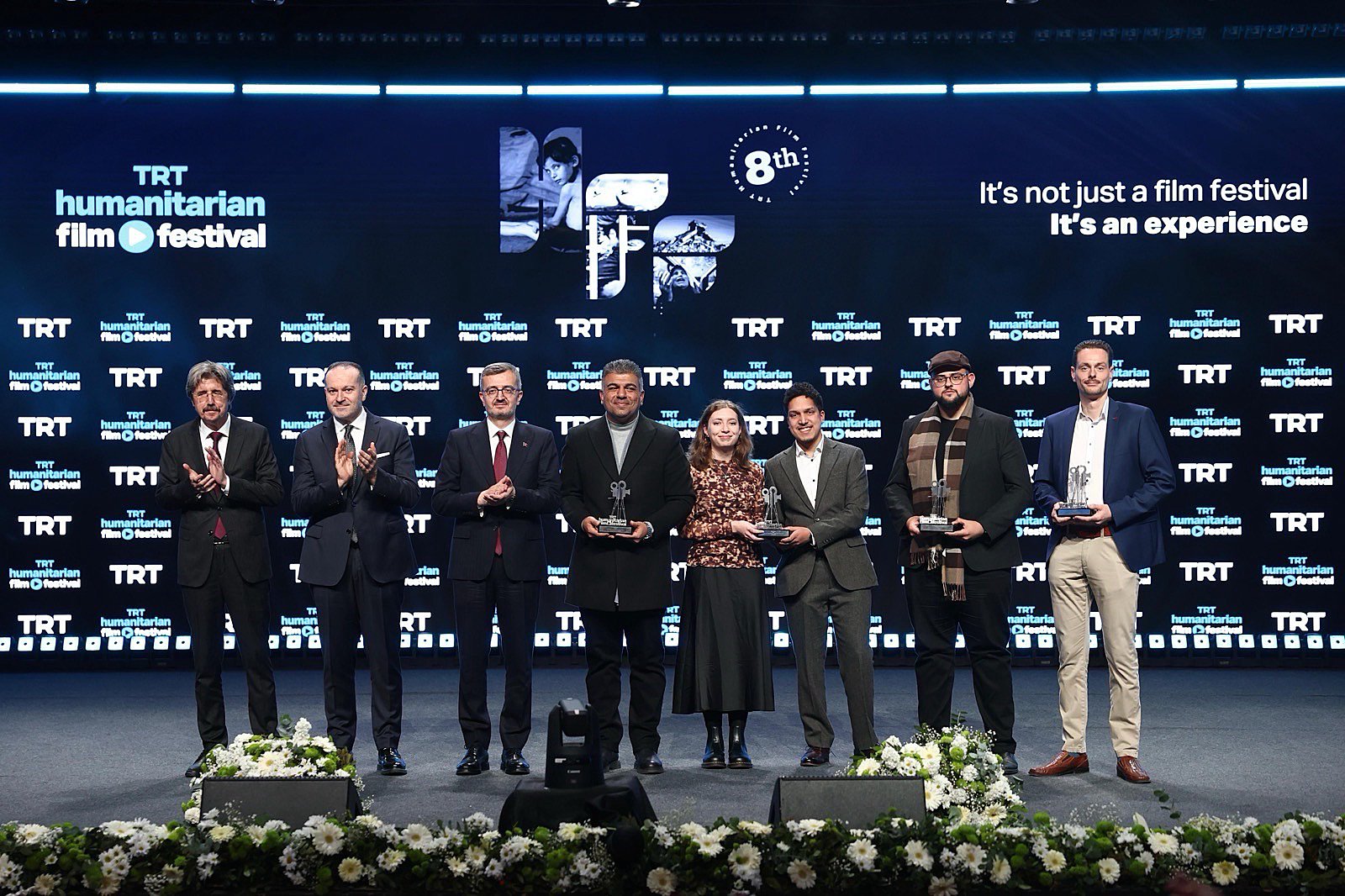
At the festival, Mohammad Ebrahim Shahbazi won first prize for his film “The Chink of Light”, while Hansel Rodrigues and Elizabeth Atherton took second prize for “Homing”, and Michael Vermaercke secured third prize for “Sound of the Somme”.
Omar Saleh, who participated in the festival with his film “Hopeless Clap”, won the TRT Special Award.
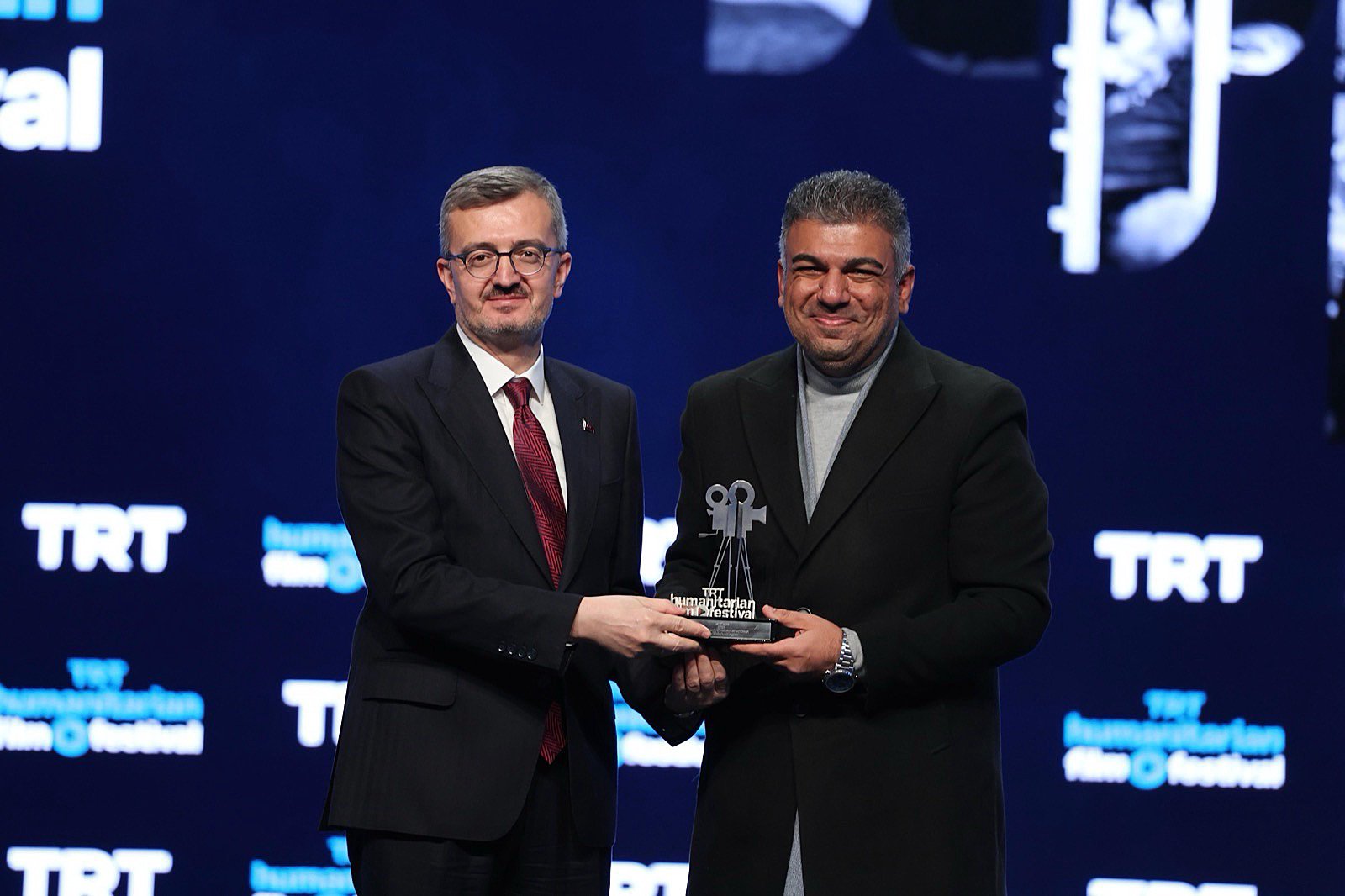
The festival winners received their awards from protocol officials.