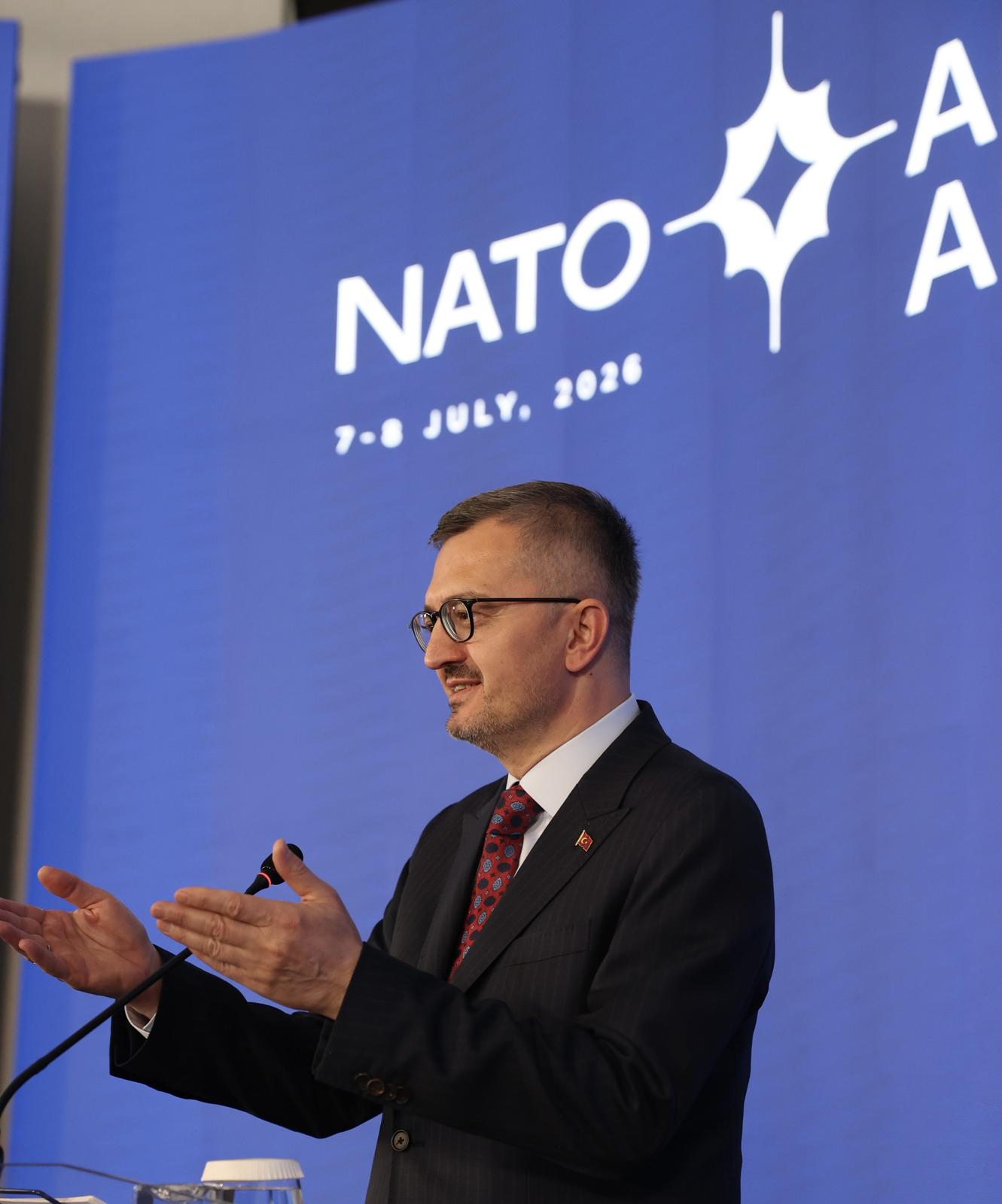
Head of Communications Duran stated, "These changes require NATO Allies to reassess emerging threat perceptions and redefine their collective priorities. In this regard, the Ankara Summit represents another turning point in NATO’s historical evolution."
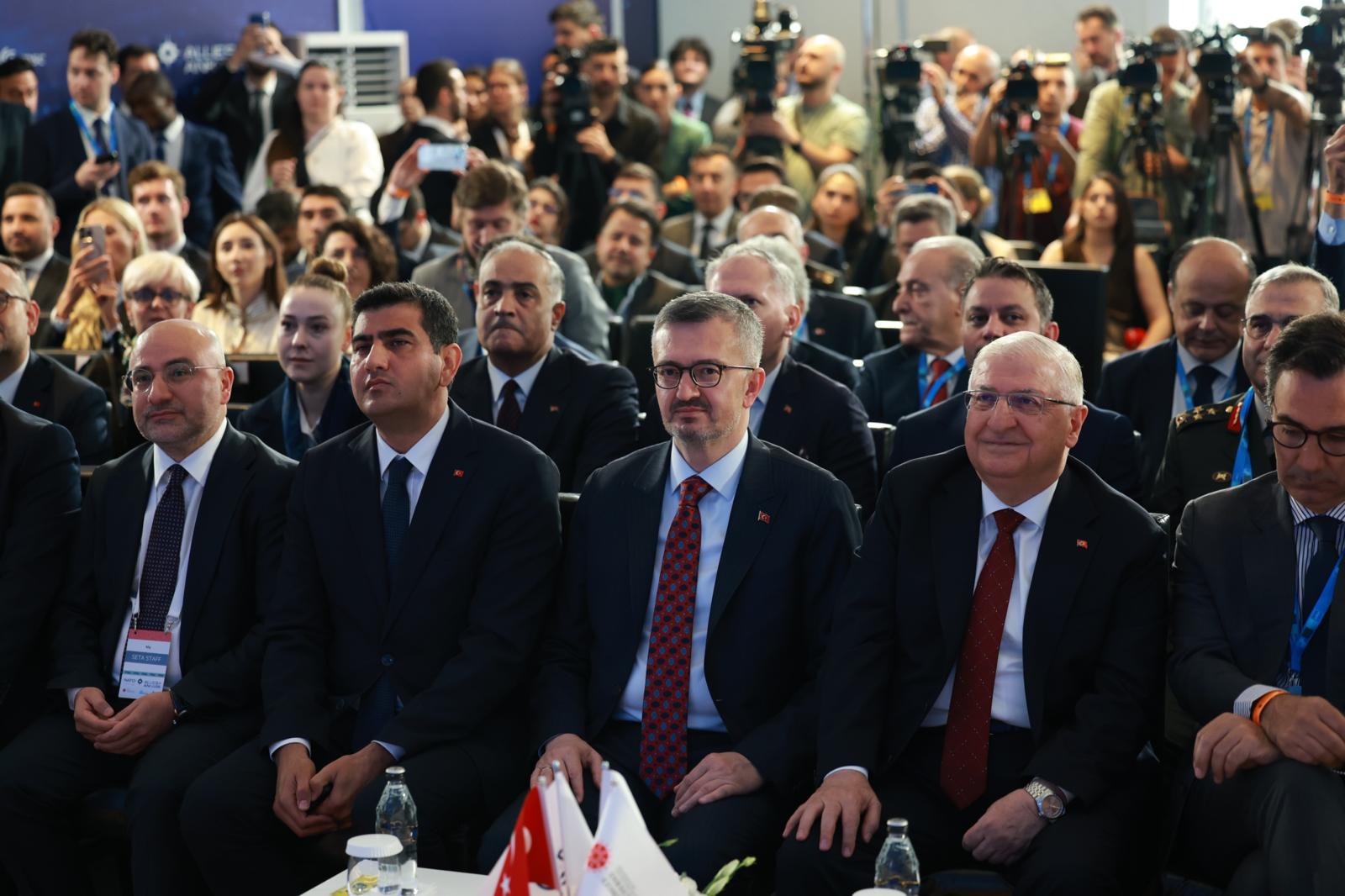
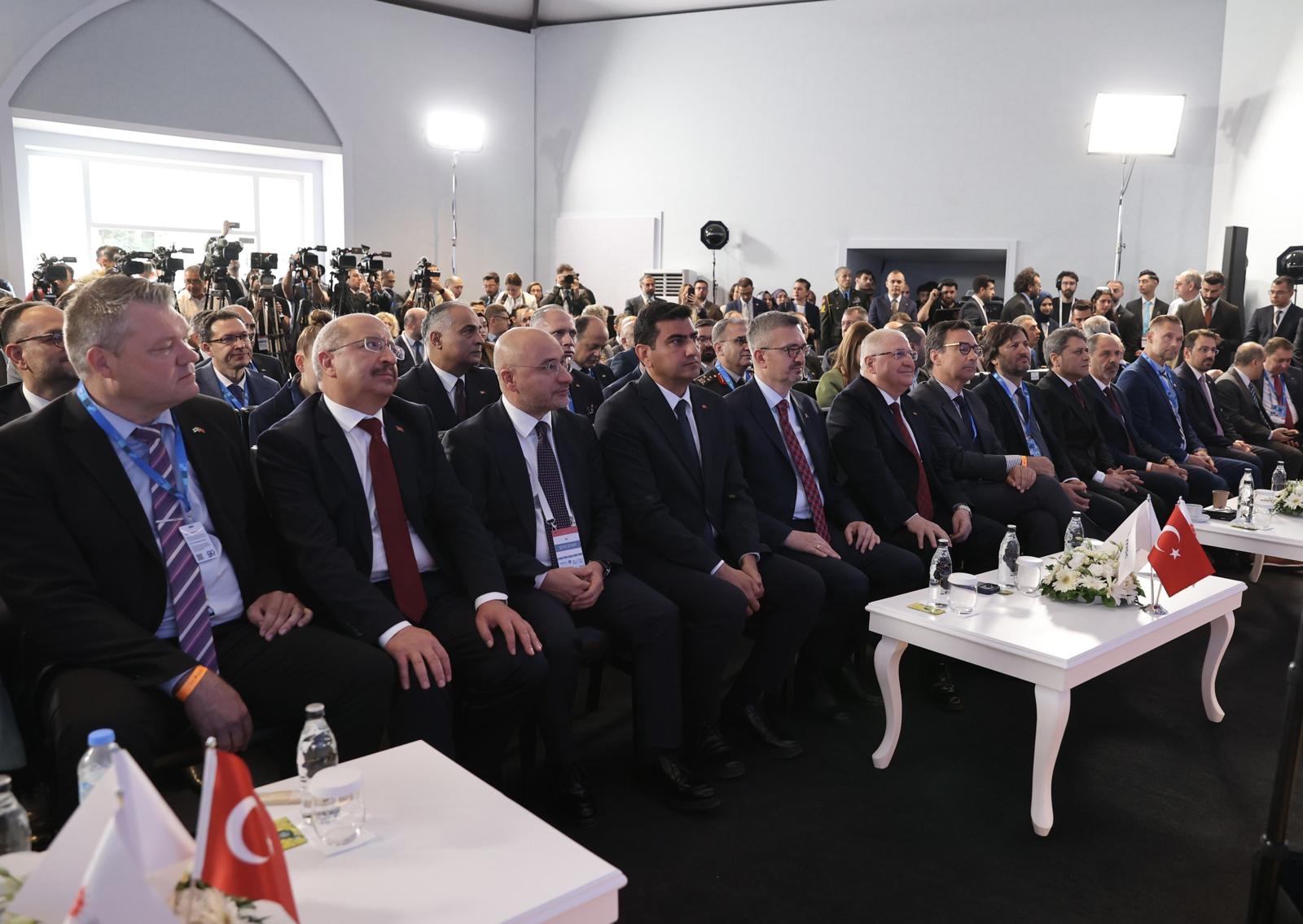
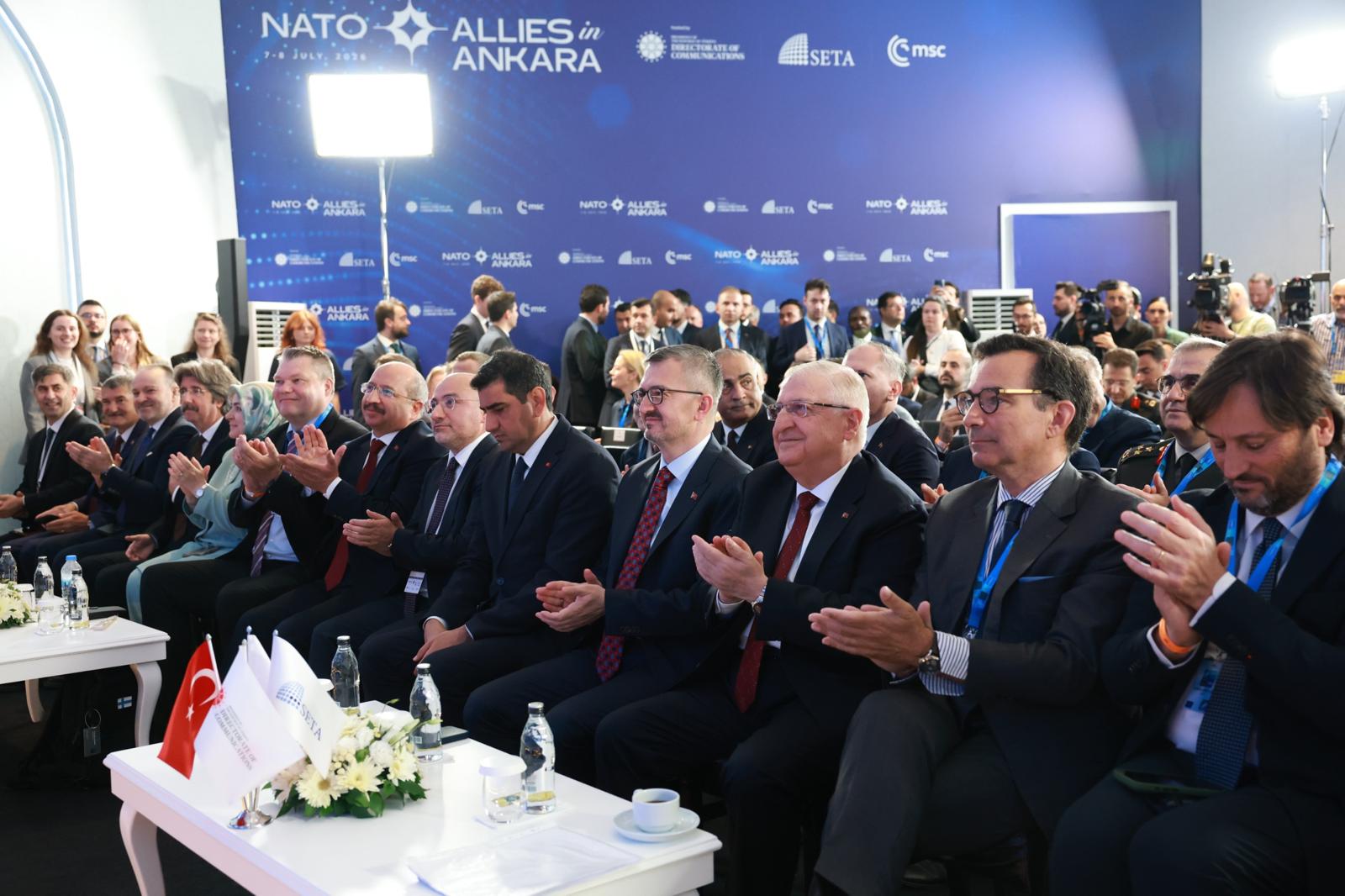
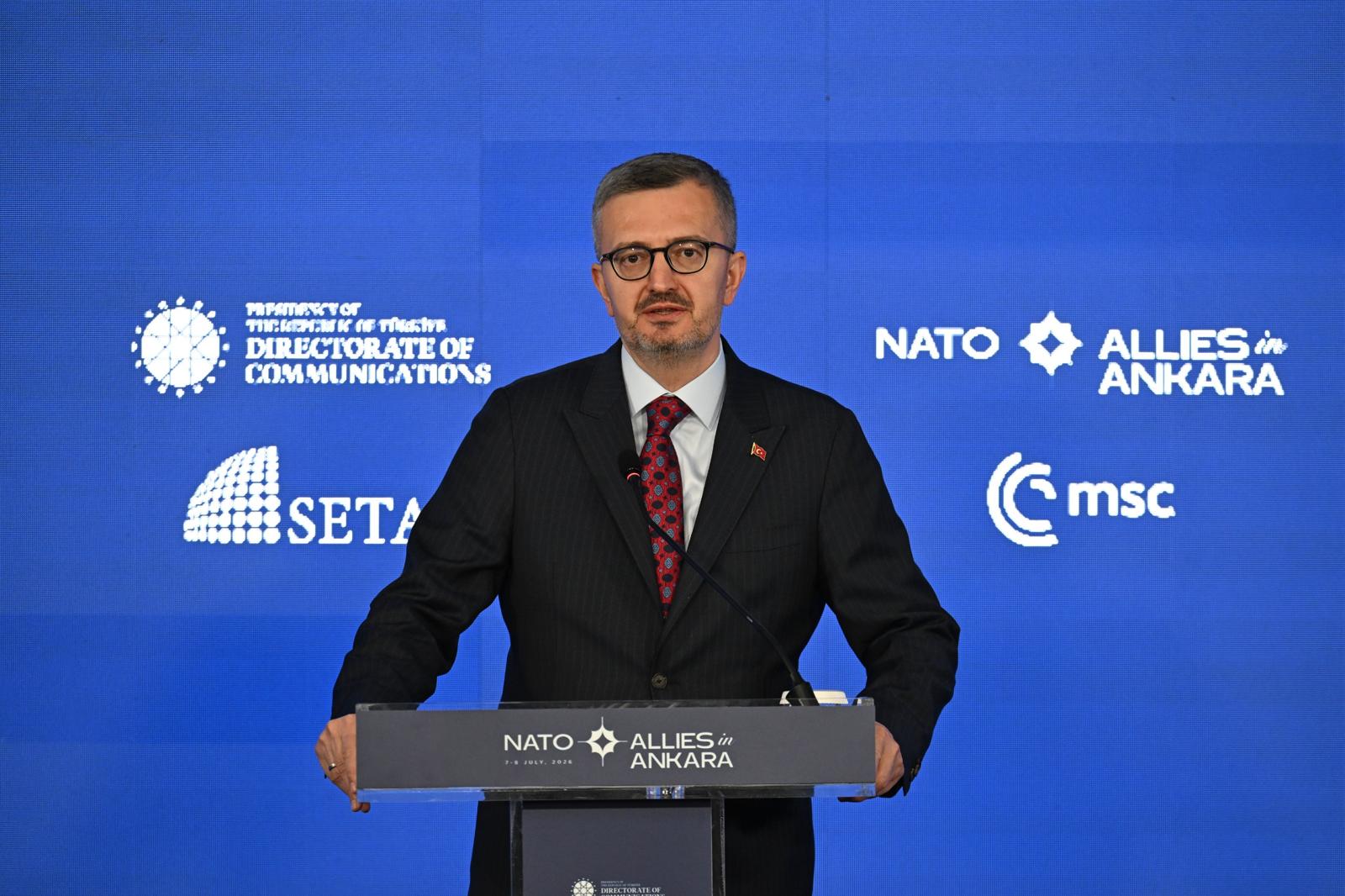
Head of Communications Burhanettin Duran participated in the "Allies in Ankara" programme, organised at Ankara Palas by the Presidency's Directorate of Communications in cooperation with the Munich Security Conference (MSC) and the Foundation for Political, Economic and Social Research (SETA), as part of the NATO Heads of State and Government Summit.
In his remarks, Head of Communications Duran noted that Türkiye is hosting the 36th NATO Summit today and tomorrow with the participation of Allied leaders, recalling that it is the second NATO Summit to be held on Turkish soil following the İstanbul Summit in 2004. Pointing out that both the dynamics of the international system and the challenges facing the Alliance today differ significantly from those of 2004, he said:
"As Allies, we now face a security environment that is increasingly complex, fragmented, and unpredictable—one shaped by great power competition, regional conflicts, technological transformation, hybrid threats, and growing pressure on the rules-based international order. These changes require NATO Allies to reassess emerging threat perceptions and redefine their collective priorities. In this regard, the Ankara Summit represents another turning point in NATO’s historical evolution. It is the place where the Alliance must ask itself a harder and more urgent question: What does collective defense actually require in a world where threats no longer come from one direction, in one form, or through one instrument?
"We need coherent policy tools and a shared understanding"
Head of Communications Duran noted that the Russia–Ukraine War has exposed both the changing character of warfare and the fragility of Europe’s security and defence architecture. He added that tensions surrounding Iran and the Gulf have once again demonstrated how energy flows and maritime routes directly shape Euro-Atlantic security.
Emphasising that instability in the Middle East cannot remain confined to the region and will inevitably generate broader security risks, Duran continued:
"In line with NATO’s 360-degree approach to security, the Alliance can no longer treat its eastern and southern flanks as separate files. The Strait of Hormuz, the Gulf, Syria, Iraq, the Eastern Mediterranean, North Africa, and the Sahel are all components of the same security equation. This means we need to rethink tsecurity itself. For that, we need coherent policy instruments and a shared understanding of how military and non-military tools can work together. This is, I believe, what NATO 3.0 stands for."
"Türkiye fields NATO’s second-largest military"
Recalling that Türkiye has been a steadfast member of NATO since 1952, Head of Communications Duran stated that the country has consistently contributed to the Alliance’s collective defence, deterrence, and command structure.
"As we prepare to mark the 75th anniversary of our NATO membership next year, Türkiye’s role should be understood through the lens of its strategic autonomy, operational experience, and unique contribution to Euro-Atlantic security," remarked the Head of Communications Duran and continued:
"Türkiye fields NATO’s second-largest army. From Afghanistan to Kosovo, and from Bosnia to Iraq, Türkiye has made significant contributions to crisis management, peace support operations, military training, and post-conflict reconstruction." Its participation in NATO’s largest exercise, Steadfast Dart 2026, with around two thousand personnel and nationally produced equipment, showed that Türkiye’s capabilities are mobile, interoperable and relevant far beyond its immediate geography. Türkiye has maintained open channels with both Ukraine and Russia.
It is also among the few countries able to engage with both Iran and the United States at the same time. As you all know, President Recep Tayyip Erdoğan maintains good and sincere relations with the leaders of these countries simultaneously. This is a major diplomatic opportunity. Türkiye is often described as a bridge between East and West. Yet in many of the crises we face today, Türkiye is between West and West, through its diplomatic reach and its capacity to contribute to de-escalation.
"The real issue is not merely numerical"
Head of Communications Duran emphasised that Türkiye is building a national defence architecture ecosystem under the leadership of President Recep Tayyip Erdoğan.
Recalling that NATO Secretary-General Mark Rutte had described this system as a “defence industry revolution” during his recent visit, Head of Communications Duran said, “Today, Türkiye offers NATO a combination of battle-tested systems, air defence capabilities, artificial intelligence-enabled capabilities, engineering capacity and scalable production."
Recalling that Türkiye had raised its defence spending above the 2 per cent threshold, Head of Communications Duran stated that the defence budget, which stood at 13 billion in 2021, had risen to approximately 32 billion dollars by 2025. Head of Communications Duran noted that defence, space, and aerospace exports have exceeded the 10 billion dollar mark, while the rate of domestic production in the defence industry has reached 82 per cent, and went on to say:
"But the deeper point is not only numerical. The real value lies in what may be called 'four-dimensional depth' in the defence industry. Quality, quantity, combat-tested performance, and sustainability. High-quality systems alone are not enough if they cannot be produced at scale. Recent wars have taught us that even powerful armies can face strategic paralysis if they lack continuous and resilient production. Türkiye’s defence industry has become a national asset with direct value for Allied collective deterrence.
"Public opinion must be protected against systematic manipulation"
Head of Communications Duran stated that attacks no longer target only military installations but that public opinion, communication networks, financial systems, and social psychology can also be targeted, adding that cyber-attacks, disinformation campaigns, and AI-enabled manipulation are no longer exceptional occurrences.
Highlighting that these factors are now operating environment of strategic competition, Head of Communications Duran noted that deterrence must therefore be considered in conjunction with overall resilience. Stating that "Public opinion must be protected against systematic manipulation" Head of Communications Duran continued his remarks as follows:
"Türkiye has direct experience in this field. Disinformation, cyber threats, the instrumentalisation of migration and terrorism are not theoretical risks for us. We have faced them and built institutional capacity against them. Through verification mechanisms, strategic communication and public diplomacy, Türkiye treats information integrity as a core element of national and collective security. These topics, such as cybersecurity, artificial intelligence, and critical infrastructure protection, must not remain secondary topics for NATO now. They must be integrated into the Alliance’s defence doctrine."
Pointing out that NATO’s future will be shaped on such platforms, where strategic ideas are tested, developed and turned into policies, Head of Communications Duran said that the "Allies in Ankara" programme was not a side conversation but rather reflected the complexity of the new security agenda.
Head of Communications Duran expressed hope that the Ankara Summit would help reduce the gap between what NATO declares and what it can deliver.
On the other hand, Head of Communications Duran, in a message released on his NSosyal account, shared his assessments regarding the “Allies in Ankara” program.
In his message, Head of Communications Duran stated the following:
“The “Allies in Ankara” programme, jointly organised by the Directorate of Communications of the Presidency of the Republic of Türkiye, the Munich Security Conference, and the SETA Foundation, provided an important platform to assess NATO’s evolving security paradigm and Türkiye’s strategic role within the Alliance.
The security environment we face today is far more complex and multidimensional than ever before. Emerging challenges ranging from hybrid threats and cyberattacks to disinformation and AI-enabled risks require a comprehensive and integrated approach to security.
In this context, the NATO Summit in Ankara represents a historic gathering where critical decisions shaping the future of the Alliance will be made. The concept of NATO 3.0 reflects a renewed security vision that addresses both military and non-military dimensions while placing resilience and collective action at the heart of the Alliance’s strategic outlook.
Under the leadership of President Recep Tayyip Erdoğan, Türkiye continues to be one of NATO’s strongest and most reliable Allies through its capable armed forces, advancing defence industry, diplomatic capacity, and constructive contributions to regional and global crisis resolution. Today, Türkiye is not only an indispensable actor in its own region but also a key pillar of Euro-Atlantic security.
Türkiye is often described as a bridge between East and West. Yet, in many of the crises we face today, Türkiye stands as an essential actor between West and West, thanks to its broad diplomatic reach and its capacity to contribute to de-escalation efforts.
I am confident that the discussions held in Ankara will make a meaningful contribution to strengthening the spirit of the Alliance, deepening our shared understanding of security, and promoting stability across our region. I would like to express my sincere gratitude to our Minister of National Defence, Mr. Yaşar Güler, for honouring our program with his presence, and to thank the Munich Security Conference, the SETA Foundation, and everyone whose dedication and efforts made this event possible.”